‘Not just software’: SC seeks deeper NTA reforms to stop paper leaks and protect exams
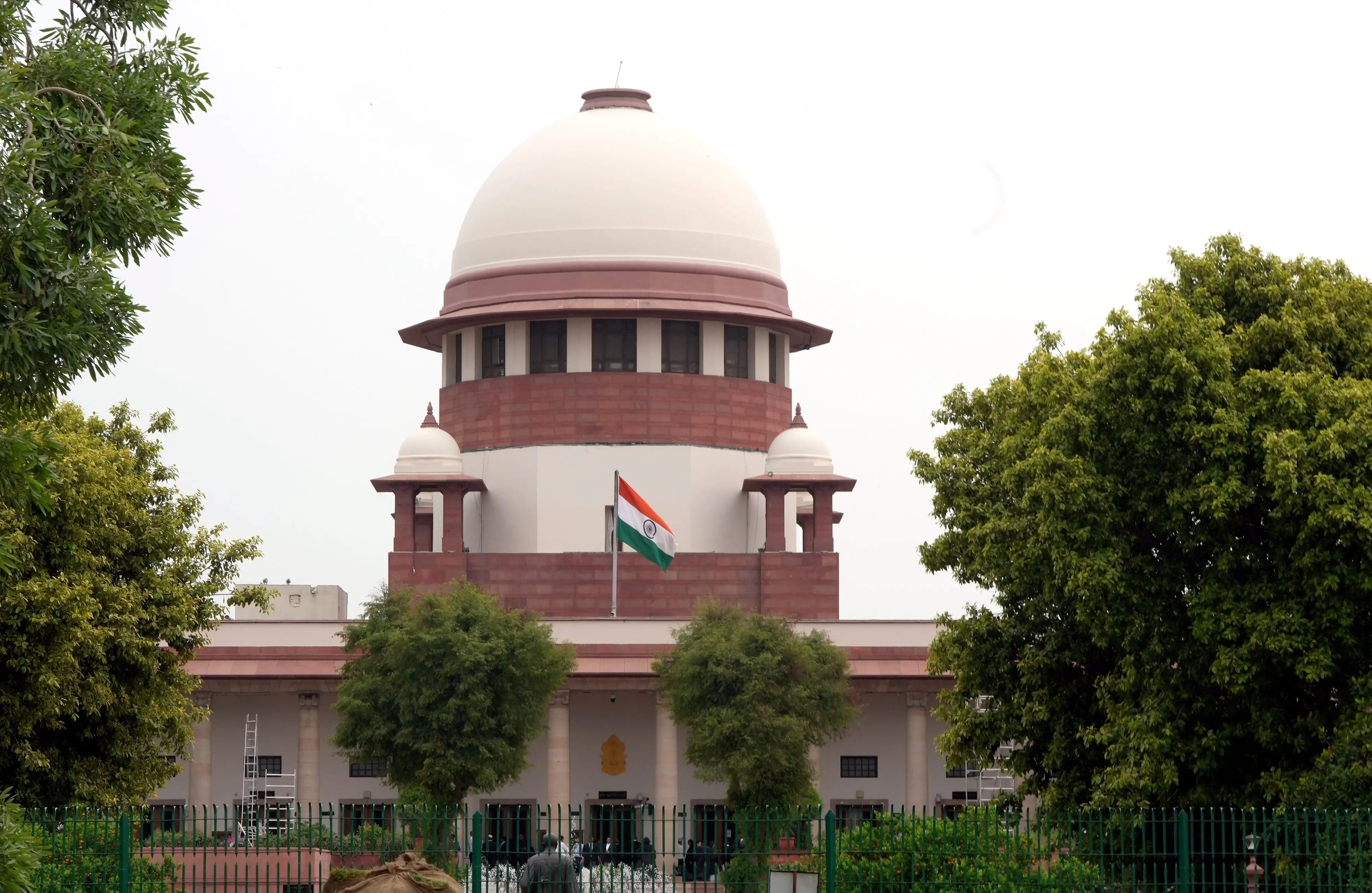
New Delhi: The Supreme Court has sought details from the Centre on steps being taken to overhaul the National Testing Agency following repeated concerns over examination irregularities and question paper leaks.
A bench of Justices P S Narasimha and Alok Aradhe asked the government to explain how recommendations made by the K Radhakrishnan committee and the Nandan Nilekani-led task force are being implemented.
The court's focus is not limited to preventing another paper leak. It wants the examination system to be built around a permanent institution capable of retaining expertise and improving its processes over time.
Supreme Court wants NTA ‘institutionalised’
The bench stressed that the NTA needs to develop into a permanent and robust institution rather than relying on temporary measures after every examination controversy.
The court raised questions about the agency's office infrastructure, staffing, security arrangements, technology and institutional memory.
It also pointed to the Union Public Service Commission (UPSC) as an example of an institution that has developed expertise over years of conducting examinations.
The court said experienced personnel should not simply be transferred after individual examinations because that can result in the loss of institutional knowledge.
Technology overhaul in focus
The Supreme Court also wants greater use of technology across the examination process.
The reforms being considered include computer-based testing for certain examinations, technology-enabled monitoring and stronger digital security systems.
The court indicated that simply developing specialised software for individual examinations would not address the larger structural problem.
It wants the NTA to develop permanent research, development and security capabilities.
What happened after the NEET controversy?
The demand for reforms comes against the backdrop of the NEET-UG paper leak controversy and subsequent concerns about the security and reliability of India's high-stakes examination system.
The NTA conducts some of the country's largest entrance examinations, including NEET-UG and JEE.
The agency was established in 2017 with the aim of bringing greater standardisation and expertise to the conduct of entrance examinations.
The scale of these examinations means that any leak or irregularity can affect a very large number of students.
What did the Radhakrishnan committee recommend?
The Centre had constituted the Radhakrishnan committee following the NEET-UG controversy to examine reforms in the examination system and recommend measures to strengthen the NTA.
The Supreme Court has now asked the Centre to provide details of the steps taken on those recommendations.
The court also wants the government to explain whether the proposed reforms have actually been converted into permanent systems and institutional practices.
What is the Nilekani task force doing?
The government subsequently set up a task force headed by technology entrepreneur Nandan Nilekani to examine technological and digital reforms in the examination system.
The Centre informed the court that the task force had held its first meeting.
The Supreme Court's questions indicate that it wants the recommendations of both expert panels to result in concrete changes rather than remain limited to reports and proposals.
600 experts removed from examination process
The NTA has already begun changing parts of its examination machinery.
Around 600 experts have reportedly been removed from the examination process.
The agency is also planning a four-tier system for checking examination papers, alongside stronger security arrangements at its offices.
These measures are intended to strengthen different stages of the examination chain, from question creation and verification to printing, transportation and delivery to examination centres.
How are question papers currently secured?
Solicitor General Tushar Mehta, appearing for the Centre and NTA, told the court about several security measures already being used.
For a 100-question Physics paper, for example, moderators initially create a pool of around 500 questions. These are then shortlisted to create multiple versions of the examination paper.
The final papers are printed at designated facilities under CCTV surveillance, with security arrangements involving the CISF.
After printing, the papers are placed in secure boxes fitted with locks that cannot be opened before the designated stage.
Vehicles carrying the question papers are fitted with GPS tracking systems.
Two sets of question papers are also stored separately in bank strong rooms, generally at SBI or Canara Bank branches.
On examination day, the NTA Director General decides which set will be used. The selected papers are then transported to examination centres under security arrangements and the process is videographed.
Why does the SC want more than security measures?
The court's concern is that security measures alone cannot solve the NTA's larger institutional weaknesses.
GPS tracking, CCTV cameras, sealed boxes and secure transportation can protect specific stages of the process. But the Supreme Court wants the organisation conducting the examinations to continuously develop its own expertise.
That means maintaining experienced personnel, creating dedicated security and research teams, upgrading technology and learning from problems encountered in previous examinations.
SC points to UPSC model
The Supreme Court specifically referred to the UPSC while discussing institutional memory.
The bench observed that an organisation conducting examinations year after year develops expertise and improves its systems based on experience.
The court wants the NTA to develop a similar institutional capacity so that personnel are trained not just to conduct one examination but to manage examinations over many years.
What happens next?
The Centre has been asked to place its roadmap before the Supreme Court, including details about infrastructure, manpower, technology, security and the implementation of recommendations made by the two expert panels.
The court's intervention comes as petitions have also sought stronger action over repeated paper leak allegations and questioned whether the NTA should continue in its present form.
For now, the Supreme Court's focus is on strengthening the existing examination system and building a permanent institutional structure, rather than simply responding to individual examination controversies.
Analysis
The significance of the Supreme Court's intervention is that it shifts the discussion from “How do we stop the next paper leak?” to “How do we build an examination institution that can prevent and respond to such failures over decades?”
The court's comparison with UPSC highlights the importance of institutional memory. A large examination body handling millions of candidates cannot depend entirely on temporary committees, individual officers or security measures introduced after a controversy.
The proposed reforms therefore cover several layers: secure infrastructure, permanent expertise, cyber security, technology, research and development, trained personnel and stronger monitoring.
The issue is particularly important for NEET-UG because it is a high-stakes examination affecting admission to medical education across India. Any major security failure can have consequences for students across the country.
The next significant step will be the Centre's roadmap and the court's assessment of whether the recommendations of the Radhakrishnan committee and Nilekani task force have translated into functioning systems.