Can US divorce decrees be enforced in India? Key Supreme Court ruling
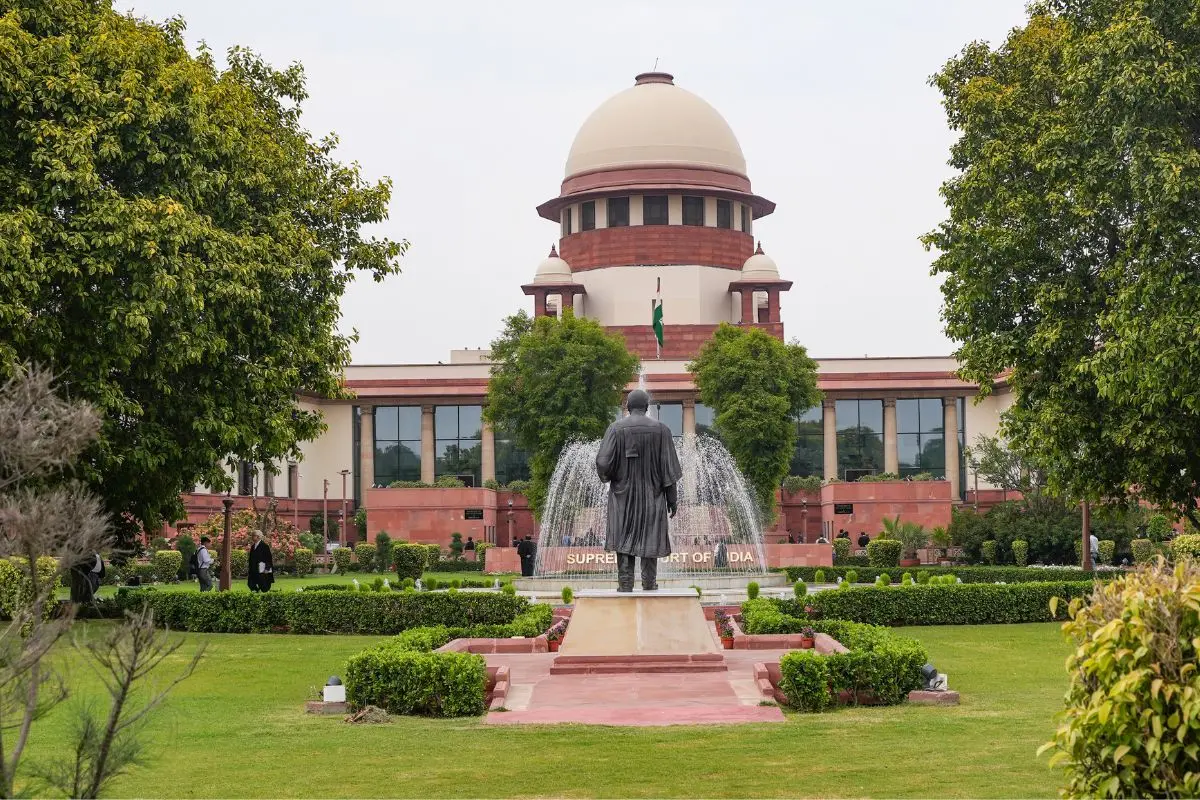
New Delhi: The Supreme Court of India has dissolved the marriage of a non-resident Indian (NRI) couple, invoking its powers under Article 142 of the Constitution to ensure “complete justice,” after determining that the relationship had irretrievably broken down with no possibility of reconciliation.
The Bench, comprising Justices Vikram Nath and Sandeep Mehta, allowed the husband’s appeal, setting aside a Bombay High Court judgment that had ruled Indian courts lacked jurisdiction and upheld a US divorce decree.
“It is evident that this is a case of irretrievable breakdown of marriage, with the respondent-wife having pursued a decree of divorce in the US and the appellant-husband pursuing one in India. There is clearly no dispute between the parties that the marriage has irretrievably broken down and that there is no prospect of reconciliation,” the Bench noted.
Also Read| India brings back 2.6 lakh people from West Asia as tensions escalate, flights from UAE continue
Background of the case
The couple married in Mumbai on December 25, 2005, according to Hindu rites, and later resided in the United States. Disputes arose within a few years, leading the wife to file for divorce in Michigan in September 2008, while the husband filed for divorce under the Hindu Marriage Act (HMA) before the Family Court in Pune the following month.
The US court granted a divorce in February 2009 on grounds of irretrievable breakdown and issued orders regarding property division and financial support. However, the Supreme Court ruled that such foreign decrees cannot be automatically recognised in India unless the grounds align with Indian matrimonial law and both parties effectively participate in proceedings.
The Bench emphasised that the husband had not meaningfully engaged with the US proceedings and had merely filed a written statement contesting jurisdiction. Citing its earlier ruling in Y Narasimha Rao vs Y Venkata Lakshmi, the court stated that a foreign decree is valid in India only if it meets the requirements of the Hindu Marriage Act and complies with principles of natural justice.
Also Read| Relief move: Centre offers additional 10 pc commercial LPG to states and UTs, pushes Shift to PNG
Supreme Court decision
Observing that the couple has been separated since 2008, the apex court granted a divorce decree on the ground of irretrievable breakdown of marriage, closing the pending Pune Family Court case. The court clarified that questions regarding jurisdiction between Indian and US courts were now unnecessary.
IANS