'PM's office has sanctity': Centre defends CEC appointment law in Supreme Court
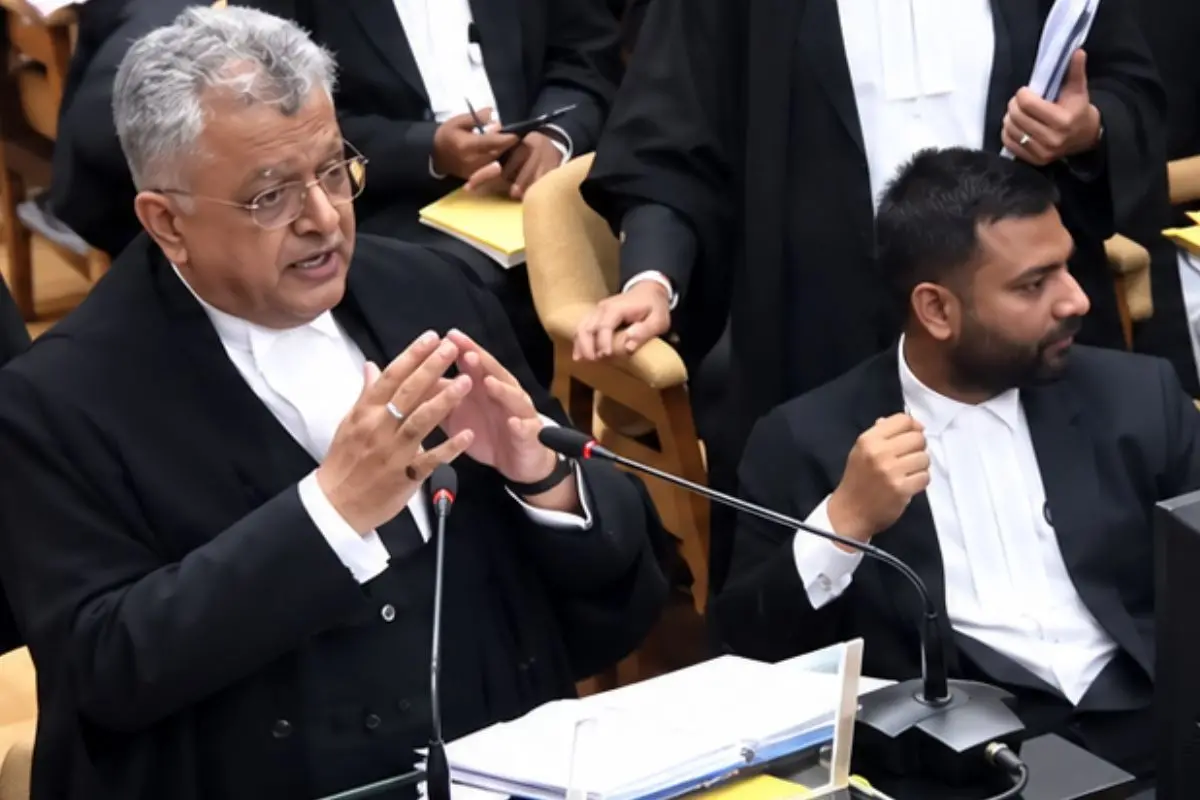
'The office of the Prime Minister has a sanctity attached to it.'
With that assertion, the Centre mounted a strong defence of the Chief Election Commissioner and Other Election Commissioners (Appointment, Conditions of Service and Term of Office) Act, 2023 before the Supreme Court on Friday.
The top court, however, underscored that the dispute is about ensuring fairness in appointments, not questioning the Prime Minister's integrity.
The case has reopened a key constitutional debate over who should appoint India's Election Commissioners, an institution expected to function independently while overseeing the country's electoral process.
Appearing for the Centre, Solicitor General Tushar Mehta argued that there was no constitutional basis to distrust the Prime Minister-led selection panel. He maintained that courts cannot begin with the assumption that the executive would act against democratic values or constitutional principles.
Referring to demands that the Chief Justice of India be restored to the selection committee, Mehta argued that such reasoning would imply elected constitutional authorities cannot be trusted.
He also questioned whether similar logic should apply to Cabinet appointments, saying the Prime Minister cannot be expected to consult an outsider or former judge for executive decisions.
The government further contended that Parliament's legislative wisdom should not be undermined merely because it chose a different composition for the appointment panel after the Supreme Court's 2023 interim ruling.
The 2023 law replaced the Chief Justice of India with a Union Cabinet Minister on the three-member selection committee, leaving the Prime Minister, a Union Minister and the Leader of the Opposition to recommend appointments.
Critics argue the change gives the ruling government greater influence over the process.
Attorney General R Venkataramani urged the court to refer the matter to a Constitution Bench, saying the petitions raise substantial questions on the interpretation of Article 324 of the Constitution and Parliament's power to legislate on appointments to the Election Commission.
The Centre argued that the Supreme Court's 2023 verdict had only created an interim arrangement until Parliament enacted a law, and did not make the inclusion of the Chief Justice a permanent constitutional requirement.
The bench of Justice Dipankar Datta and Justice Satish Chandra Sharma, however, indicated that the issue was not about doubting the Prime Minister but about ensuring that appointments inspire public confidence.
Justice Datta observed that Election Commissioners must be independent and questioned whether the process should visibly reflect fairness.
The petitions challenging the 2023 law contend that Parliament effectively diluted the Supreme Court's earlier directions by replacing the Chief Justice with a Cabinet Minister.
The legislation was enacted months after a Constitution Bench had directed that, until Parliament framed a law, appointments should be made by a committee comprising the Prime Minister, the Leader of the Opposition and the Chief Justice of India.
After hearing arguments from both sides, the Supreme Court reserved its order on whether the challenge should first be referred to a larger Constitution Bench and allowed both parties to submit additional written arguments.