Supreme Court declines interim plea to restore Friday namaz at Bhojshala
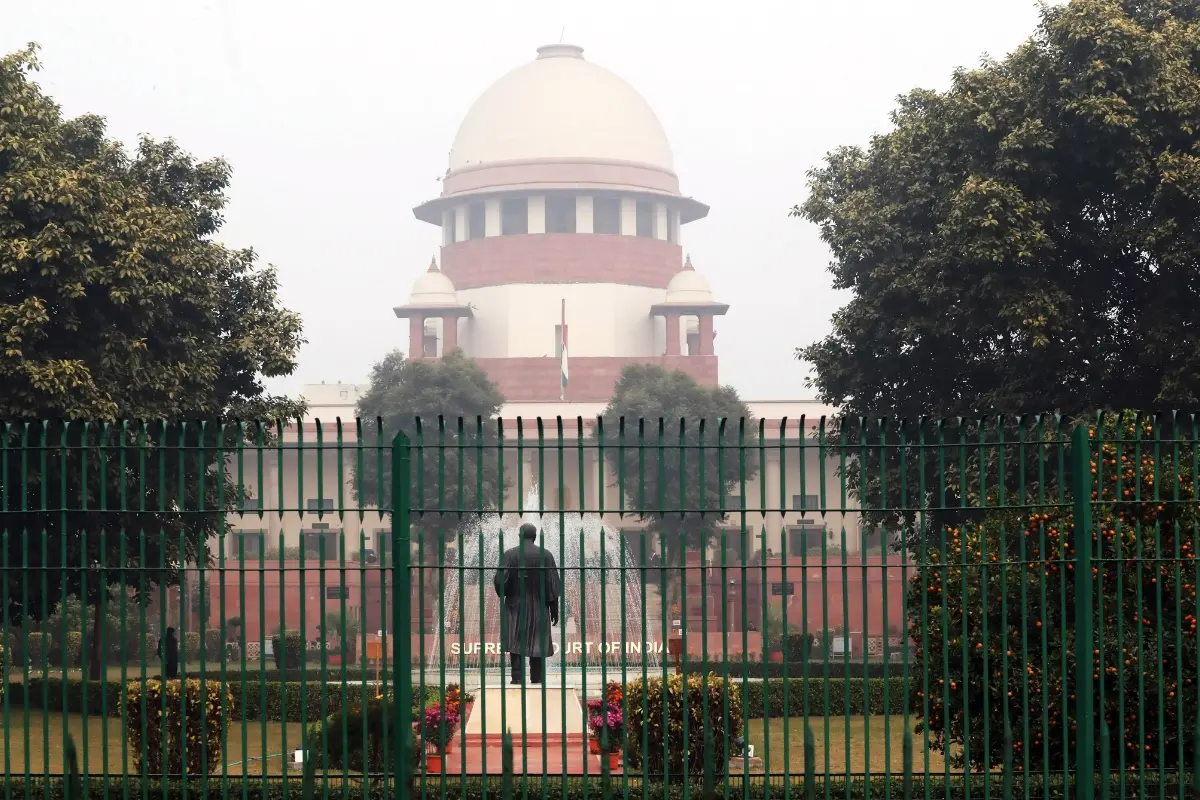
The Supreme Court on Tuesday agreed to examine appeals filed by Muslim parties against the Madhya Pradesh High Court's ruling that recognised Bhojshala in Dhar as a temple.
At the same time, the apex court declined to grant interim permission for Friday namaz inside the disputed complex.
Instead, the court directed the Madhya Pradesh government to identify and provide an open area next to the site where Muslims can offer Friday prayers between 1 pm and 3 pm until the matter is decided.
A bench headed by Chief Justice Surya Kant, along with Justices Joymalya Bagchi and V Mohan, observed that the dispute is highly sensitive and said every word used by the court must be measured.
It assured both sides that the appeals would be heard on a day-to-day basis to ensure an early resolution.
The court also instructed the Archaeological Survey of India (ASI) not to undertake any structural modifications at the disputed site without prior permission from the Supreme Court.
The appeals challenge the Madhya Pradesh High Court's May 2026 verdict, which set aside the ASI's 2003 arrangement that had allowed Muslims to offer Friday namaz and Hindus to worship on Tuesdays at the complex.
In its judgment, the High Court cited historical and archaeological material suggesting that Bhojshala was originally a temple and a centre of Sanskrit learning dedicated to Goddess Saraswati.
The dispute centres on competing claims over the site. Hindu petitioners maintain that Bhojshala is an ancient Saraswati temple built during the reign of Raja Bhoj, while Muslim parties contend that it has functioned as the Kamal Maula Mosque for centuries.
The High Court's decision relied in part on the ASI's extensive scientific survey, which concluded that an older structure from the Parmar period existed beneath the present complex and that several temple elements had been reused in the later construction.
While Hindu petitioners say the findings support their claim, Muslim parties have questioned the survey's neutrality and challenged its conclusions before the Supreme Court.