Supreme Court asks states to consider raising district judges' retirement age to 61
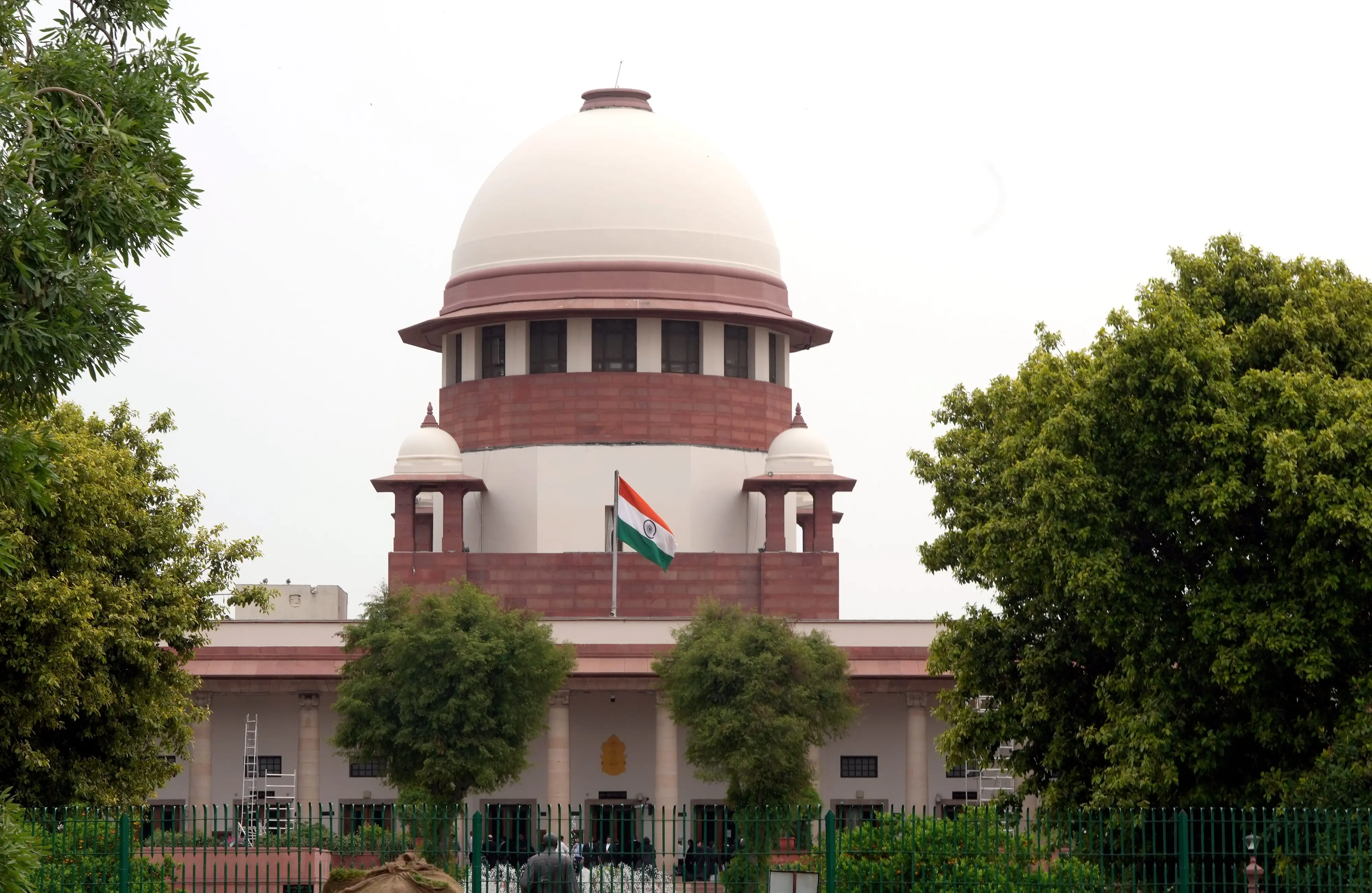
New Delhi: The Supreme Court on Wednesday directed all states and Union Territories to consider extending the retirement age of judicial officers from 60 to 61 years, allowing eligible judges to continue in service where both the state government and the respective High Court agree. The interim arrangement will take effect from April 1, 2026, while the court continues to examine whether the retirement age should eventually be increased uniformly to 62 years across the country.
The order was passed by a Bench comprising Chief Justice Surya Kant and Justices Joymalya Bagchi and V. Mohana while hearing a petition seeking a nationwide enhancement of the retirement age for district judiciary judges from 60 to 62 years.
The top court clarified that the extension to 61 years is only an interim arrangement and will not influence its final decision on the larger legal question of whether all district judicial officers should retire at 62 years.
The Bench directed every state government and Union Territory to consult its jurisdictional High Court and communicate its stand within two weeks. High Courts have also been asked to submit their responses within the same period.
States and High Courts that already support raising the retirement age need only file a brief statement confirming their concurrence instead of detailed affidavits.
What does the Supreme Court's order mean?
The latest order does not automatically increase the retirement age of district judges across India. Instead, it creates a framework under which judicial officers can continue in service until the age of 61 if there is consensus between the state government and the concerned High Court.
The Supreme Court will later decide the broader issue of whether the retirement age should be uniformly increased to 62 years for district judicial officers nationwide.
The case stems from long-standing demands for a uniform retirement age for the subordinate judiciary.
In 2002, the Supreme Court had declined to accept the recommendation of the Justice K. Jagannatha Shetty Commission, which proposed increasing the retirement age of district judges to 62 years. Since then, however, some states have revisited the issue and moved towards extending the service period of judicial officers.
During Wednesday's hearing, the court was informed that the Full Court of the Madhya Pradesh High Court has passed a resolution recommending an increase in the retirement age of judicial officers from 60 to 62 years.
Different states have taken different positions
The hearing also highlighted the differing approaches adopted by states and High Courts.
While states such as Telangana and Madhya Pradesh have shown support for increasing the retirement age, some High Courts, including the Punjab and Haryana High Court, have opposed the proposal. They have argued that the retirement age of government employees in their respective states remains 60 years or lower.
Noting these divergent positions, the Supreme Court said the matter required an early resolution and introduced the interim mechanism allowing an extension to 61 years wherever both the state government and the High Court are in agreement.
Previous orders on the issue
The latest direction builds on earlier interim relief granted by the Supreme Court.
On November 20 last year, a Bench headed by the then Chief Justice of India B.R. Gavai raised the retirement age of judicial officers in Madhya Pradesh from 60 to 61 years. The Bench had also referred to a similar decision involving Telangana, observing that judicial officers should not be denied the benefit when the state government was willing to extend their service.
The court had noted that judicial officers and other state government employees are paid from the same public exchequer and observed that where other government employees retire at 62 years, there should be a valid justification for maintaining a lower retirement age for judicial officers.
Current retirement age of judges in India
The retirement age varies across different levels of the judiciary:
| Judicial Office | Retirement Age |
| District judicial officers (most states) | 60 years |
| High Court judges | 62 years |
| Supreme Court judges | 65 years |
With PTI inputs