Supreme Court approves Aravalli hills definition; halts new mining leases
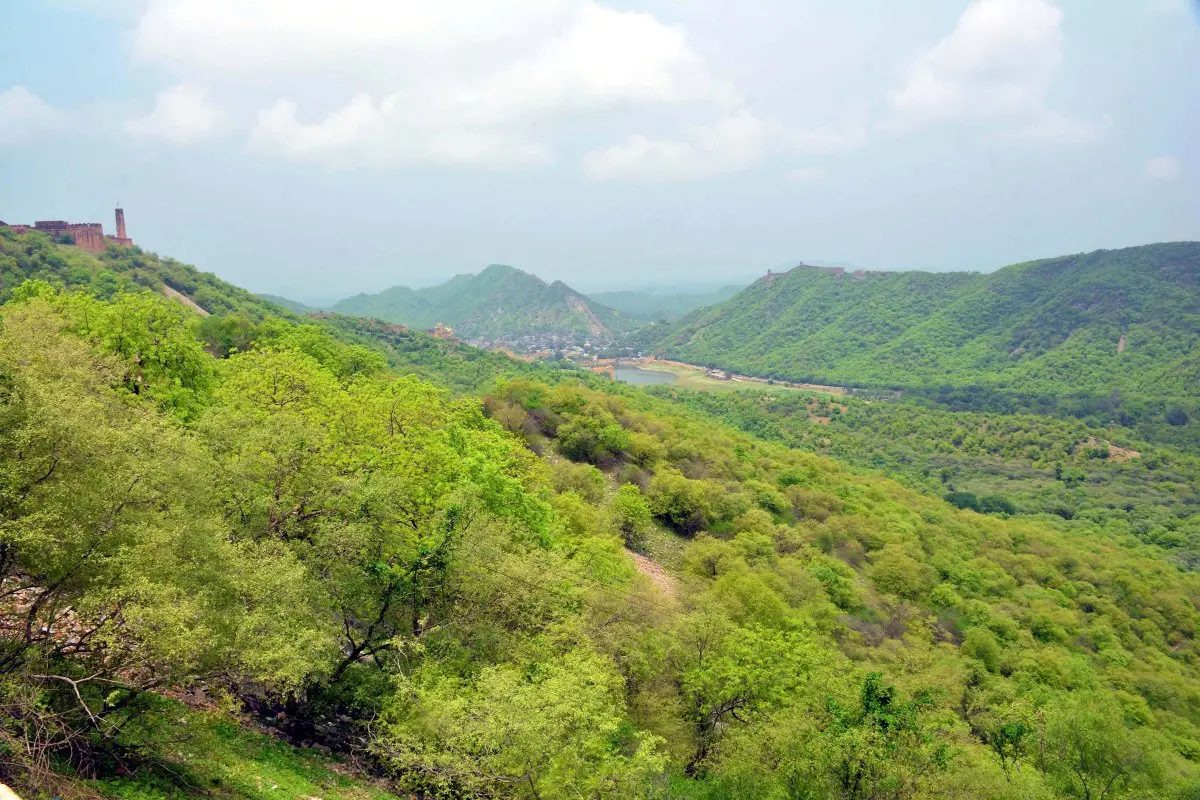
New Delhi: In a significant development for environmental conservation, the Supreme Court of India has accepted a uniform policy-level definition for the Aravalli Hills and Ranges, mandating a freeze on all new mining leases until a comprehensive sustainable mining plan is finalized.
The order, which comes as a boost to the ecological protection of the ancient mountain range, validates the recommendations of a committee led by the Ministry of Environment, Forest and Climate Change (MoEFCC).
The committee included the Secretaries of departments of forest from UT of Delhi, Haryana, Rajasthan, Gujarat, as well as representatives of the Forest Survey of India, the Central Empowered Committee and the Geological Survey of India.
Uniform definition to end ambiguity
For decades, the definition of what constitutes the "Aravallis" has been a subject of contention across the states of Delhi, Haryana, Rajasthan, and Gujarat. The Supreme Court has now stamped its approval on a clear, scientific criterion:
Aravalli Hills: Any landform rising 100 meters or more above local relief will be legally defined as an Aravalli Hill. This inclusion covers the entire landform, including its supporting slopes, ensuring that foothills vital for groundwater recharge are not exploited.
Aravalli Range: To maintain ecological connectivity, any two or more Aravalli Hills located within 500 meters of each other will be grouped as an "Aravalli Range." This cluster-based approach safeguards the valleys, wildlife corridors, and intervening slopes between peaks.
The committee noted that while Rajasthan had been following a similar 100-meter criterion since 2006, the new definitions are more objective and will now apply uniformly across all states sharing the range.
Moratorium on new mining
Acknowledging the critical role of the Aravallis as a barrier against desertification and a "green lung" for the National Capital Region, the apex court has directed an interim moratorium on all new mining leases. This freeze will remain in effect until a "Management Plan for Sustainable Mining" (MPSM) is prepared by the Indian Council of Forestry Research and Education (ICFRE).
The Court directed that the MPSM must be modeled on the plan previously created for the Saranda Forests in Jharkhand. The MPSM must identify areas within the Aravalli landscape where mining may be permitted, as well as ecologically sensitive, conservation-critical and restoration-priority zones where mining must be strictly barred or allowed only in exceptional, scientifically justified cases.
The exercise should also include a comprehensive assessment of cumulative environmental impacts and the region’s ecological carrying capacity, along with detailed measures for post-mining restoration and rehabilitation.
Strict prohibitions and exceptions
Under the accepted framework, mining remains absolutely prohibited in "core/inviolate areas." This includes:
- National Parks and Tiger Reserves
- Eco-Sensitive Zones (ESZ)
- Wetlands and CAMPA plantation sites
However, the Court has carved out specific exceptions for national interests. Mining may be permitted for critical, strategic, and atomic minerals (Atomic minerals notified in part B and Critical and Strategic minerals notified in Part D of the First Schedule of MMDR Act) even in certain restricted zones, subject to stringent clearances.
Crackdown on illegal activity
Addressing concerns about enforcement, the MoEFCC statement outlined a robust surveillance framework. The new measures include the use of drones, night-vision CCTV cameras, and high-tech weighbridges to prevent illegal mining. District-level task forces comprising revenue, police, and forest officials will oversee compliance.
Existing mines currently in operation have been permitted to continue, provided they strictly adhere to the new sustainable mining recommendations and existing environmental clearances.
Government stance
In its statement, the government pushed back against what it termed "alarmist claims" regarding the destruction of the Aravallis. "Contrary to alarmist claims, there is no imminent threat to the Aravallis' ecology," the statement stated, emphasizing that the new definitions and the upcoming MPSM will ensure the range is preserved for future generations while balancing responsible development.