SpiceJet's financial troubles reach Delhi airport as Dubai suspends check-in services over unpaid dues
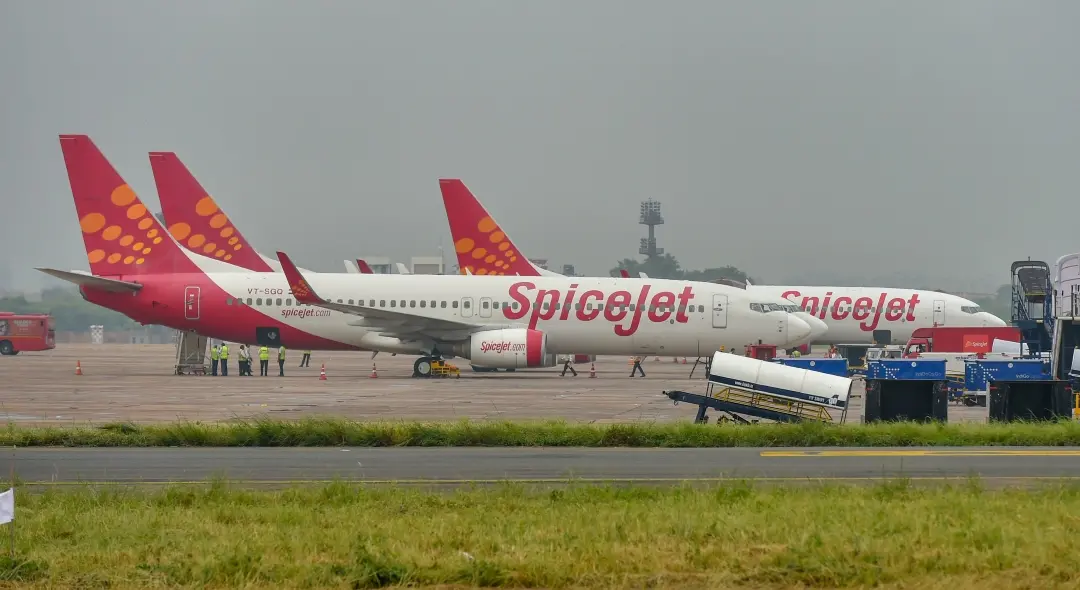
New Delhi: SpiceJet is facing fresh operational pressure, with Delhi's Indira Gandhi International Airport warning passengers about possible flight disruptions involving the airline, a day after four of its flights were cancelled at Dubai airport following the suspension of check-in services over unpaid dues.
In an advisory posted on X at 10.05 am on Friday, November 13, Delhi International Airport Limited (DIAL), which operates the Indira Gandhi International Airport, asked passengers to contact SpiceJet directly for the latest information about their flights.
The airport cited operational challenges faced by the airline but did not specify how many flights could be affected or provide details about the potential disruptions.
Passengers travelling on SpiceJet flights to or from Delhi have been advised to check their flight status with the airline before leaving for the airport and again at the terminal.
Dubai airport suspends check-in services
The Delhi advisory came a day after SpiceJet faced disruption at Dubai airport, where ground-handling company DNATA suspended check-in services over unpaid dues.
According to an email exchange reviewed by media, SpiceJet owed DNATA more than 14 million UAE dirhams, equivalent to approximately Rs 36 crore. The suspension took effect on November 12 and resulted in the cancellation of four SpiceJet flights scheduled to operate from Dubai.
Reports said only two SpiceJet flights were permitted to take off that day, with the restrictions applying to the November 12 operations.
The Dubai Civil Aviation Authority also summoned the airline's station manager and directed SpiceJet to arrange alternative travel, hotel accommodation and transport for affected passengers.
The suspension highlights how outstanding payments to service providers can translate directly into disruptions for travellers, particularly when they affect essential airport services such as passenger check-in.
Flight cancellations and delays add to pressure
The Dubai incident is the latest in a series of operational difficulties faced by SpiceJet.
According to an IANS report published on November 11, the airline was cancelling between 15 and 20 flights daily despite operating approximately 65 scheduled services. Some flights were reportedly cancelled after delays of three to five hours.
Reports have linked the disruptions to unpaid dues involving aircraft lessors, oil marketing companies, airport operators and ground-handling agencies.
The airline's operational capacity has also reportedly contracted sharply. Its fleet is said to have fallen to around 12 aircraft, with three grounded over payment-related issues involving lessors. This compares with a peak fleet of approximately 100 aircraft.
What the latest disruption means for passengers
The developments point to a problem that extends beyond individual flight delays. When an airline faces payment disputes with ground handlers, lessors and other service providers, its ability to maintain regular operations can come under pressure.
For passengers, the immediate consequences include cancellations, longer waits, last-minute changes and uncertainty over alternative travel arrangements.
The Delhi airport advisory does not confirm that all SpiceJet flights will be affected. However, it signals that passengers should not assume their scheduled flights will operate as planned without checking directly with the airline.
Why the Dubai incident matters beyond four cancelled flights
The cancellation of four flights at Dubai airport may appear limited in scale, but the circumstances behind the disruption raise wider questions about SpiceJet's financial and operational position.
1. Unpaid dues are becoming an operational problem
An airline's payment obligations are not confined to its balance sheet. Ground handling, airport services, fuel supplies and aircraft leasing are essential to keeping flights operational. If payments are delayed and service providers restrict access to their services, the consequences can quickly reach passengers.
2. The size of the outstanding payment raises questions
The reported dues of more than 14 million UAE dirhams, or around Rs 36 crore, are significant because they relate to services required to operate flights at an important international airport. The incident raises questions about the airline's ability to meet routine operational expenses and maintain relationships with service providers.
3. A smaller fleet leaves less room for disruption
If the reported reduction in SpiceJet's fleet is accurate, the airline has fewer aircraft available to manage its schedule. A smaller operational fleet can make it harder to accommodate technical problems, delays and aircraft availability issues without affecting other services.
4. The passenger impact could extend beyond cancellations
The immediate concern is not limited to flights that are called off. Delays, uncertainty, disrupted connections and the need to arrange alternative travel can affect passengers even when their flights eventually operate.
5. The larger question is operational sustainability
The latest developments do not, by themselves, establish the airline's long-term financial position or prove that all its services are at risk. However, repeated flight disruptions alongside reported payment disputes and fleet constraints make its ability to sustain regular operations an important question.
For now, the key concern for passengers is whether their flights will operate as scheduled. For SpiceJet, the bigger challenge is restoring operational reliability and ensuring that outstanding payments do not repeatedly interrupt essential services.