South India’s utopian township sees an eviction row: Why has Union govt been at odds with Auroville?
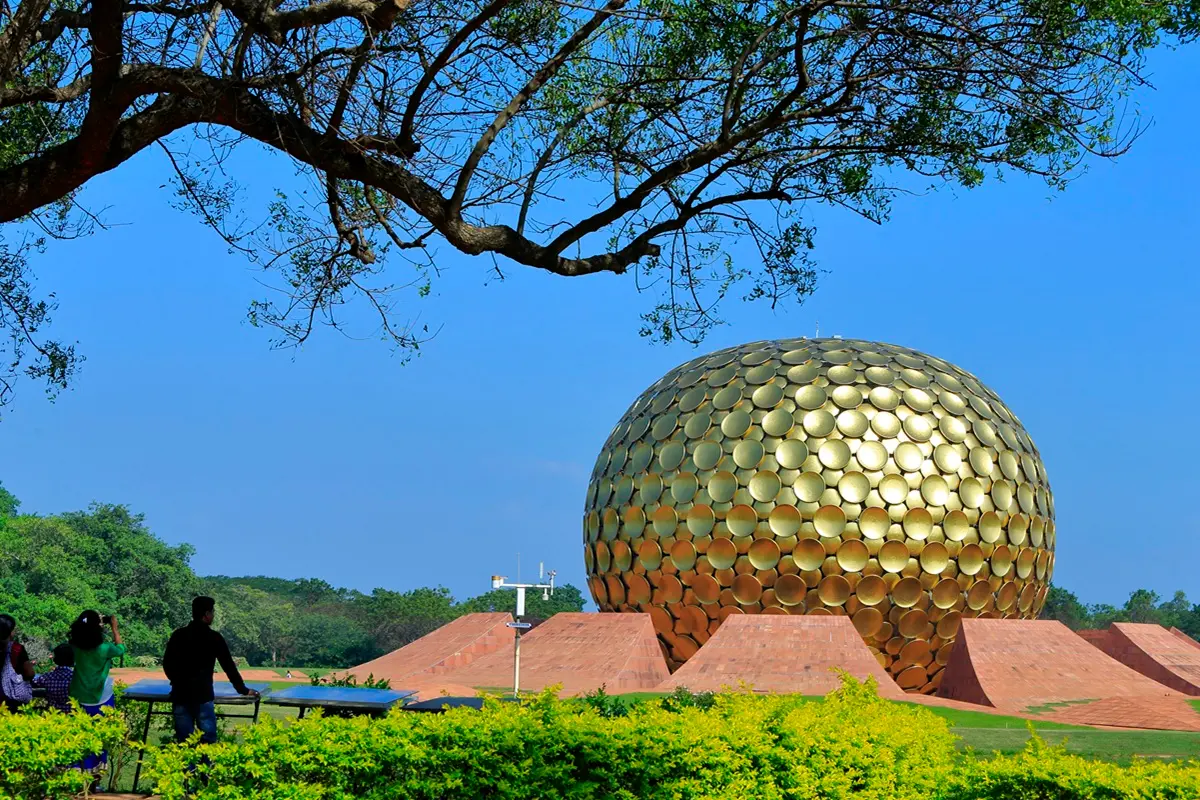
Situated near Puducherry in southern India, Auroville was established in 1968 by Mirra Alfassa, a French spiritual collaborator of philosopher Sri Aurobindo. Conceived as an international, money-free township dedicated to human unity beyond national or religious boundaries, it grew around a central meditation sphere called the Matrimandir. Today, the settlement houses approximately 3,300 residents from over 60 nations, traditionally combining central oversight with local self-governance through a Residents' Assembly.
A utopian vision meets central authority
Disputes erupted in 2021 when the Union government appointed Jayanti Ravi to head the Auroville Foundation. Officials moved to implement a statutory Master Plan designed for 50,000 people, deploying heavy machinery to fell trees and construct a circular road network. Residents protested the environmental impact and loss of community autonomy, while foundation officials countered that infrastructure is essential for the township's development and that cleared trees represent a small fraction of millions planted. Supreme Court rulings subsequently upheld the Master Plan.
Visas, land deals, and farm eviction
Tensions have extended to community governance, land transactions, and residency rights. Foreign nationals, who make up half the population, report visa delays and non-renewals, whilst over 250 residents faced stipend suspensions and a major local magazine ceased publication. Critics questioned remote land swaps, though officials maintained all exchanges were land-for-land trades cleared legally without financial loss. The friction escalated in September 2026 when the foundation issued a ten-day notice to clear 100 acres at Annapurna Farm—a certified organic site, Auroville’s largest organic farm, providing 30 per cent of the community's food—for an IIT Madras campus. A parliamentary committee chairman has since urged the government to halt evictions and seek alternative locations.