South India key to Akasa Air’s international takeoff, says Co-Founder
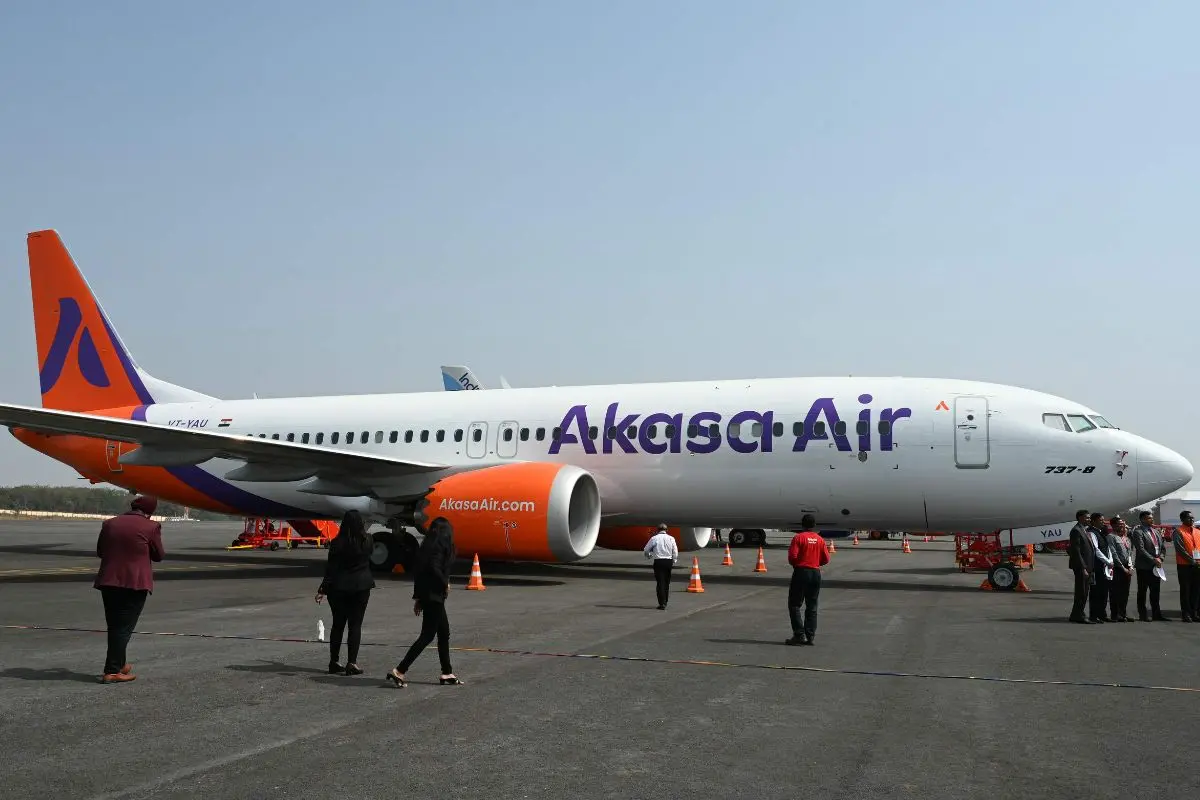
In just three years, Akasa Air has emerged as India’s fastest-growing airline, connecting 30 destinations and redefining air travel with its people-first culture, signature hospitality, and disciplined growth strategy. As the airline steps into its next phase with international expansion and a strong presence in South India, Praveen Iyer, Co-Founder and Chief Commercial Officer of Akasa Air, spoke to Mathrubhumi English about Akasa’s growth journey, challenges, and ambitions for the future.
Q: Akasa has been steadily expanding its domestic presence and now exploring more international destinations. Can you roughly tell us about the next routes on the cards?
A: Akasa Air has successfully expanded its network to 30 destinations in less than three years of operations. This journey reflects our steadfast commitment to weaving together the country’s diverse geographies with dependable and affordable air connectivity, reinforcing our position as the fastest-growing airline in the history of Indian civil aviation.
As we look ahead, our focus is to steadily build a well-rounded international network that connects India in all four directions,north, south, east, and west. We are evaluating opportunities to expand northwards into Central Asia, eastwards into Southeast Asia, and westwards to the east coast of Africa. Potential destinations under consideration include countries such as Kazakhstan, Uzbekistan, Sri Lanka, Bangladesh, Nepal, Malaysia, Singapore, Thailand, Indonesia, Hong Kong, as well as Tanzania, Egypt, and Kenya.
Our ambition is to thoughtfully grow Akasa’s global footprint while ensuring our customers continue to experience the signature Akasa hospitality, reliability, and affordability on every journey.
Q: With growing competition on regional and international routes, how do you balance network expansion with profitability?
A: There is significant gap between demand and supply not just within India domestic but international as well. Whilst domestic has had this gap over the past 6-7 years with a CAGR of no more than 3%, international has had this lag over the past 2 decades. This is the golden period for the industry where we will end up having a win-win-win for all stakeholders.
Q: Recently, new routes like Bengaluru–Phuket have been announced. How do you gauge passenger demand before entering such leisure-heavy markets?
A: At Akasa Air, our growth strategy has always been guided by thoughtful expansion and a long-term vision. By focusing on underserved routes, we are addressing unmet demand and tapping into emerging markets with strong growth potential. This allows us to provide greater connectivity while ensuring network profitability.
In less than three years, we have scaled our fleet to 30 aircraft and built a network of 30 destinations: 24 domestic and six international. Each new route is the outcome of careful fleet deployment and demand analysis, ensuring sustainable growth. Looking ahead, we will continue to strengthen our presence in key markets like Delhi and leverage upcoming infrastructure such as Navi Mumbai and Noida International Airports to build a more comprehensive network.
Our international strategy includes expanding into new regions such as SAARC and ASEAN over the next few years, thereby enhancing India’s global connectivity. Backed by strong financial fundamentals, a resilient culture, and an unwavering commitment to excellence, Akasa Air is being built with purpose, scale, and foresight to lead for generations to come.
Q: South India contributes some of the highest outbound traffic in India, both business and leisure. How important is South India to Akasa Air’s growth story?
A: As highlighted, there is a need gap across India. South India continues to witness a similar trend and traffic within and to international points are extremely strong from the South-India markets as well and like every other region, South India is also very important for us.
Q: Currently, Akasa operates flights from Bengaluru, Kochi, and Chennai. Can you share plans for expanding connectivity to other South Indian cities such as Trivandrum, Calicut, or Coimbatore?
A: We view South India as a long-term strategic market, both in terms of passenger volumes and its critical role as a gateway for international connectivity. Our network planning has consistently reflected this priority, with strong capacity deployment across key cities such as Bengaluru, Chennai, Kochi, and Hyderabad. We are also progressively adding more destinations from South India to our network, with Kozhikode being our most recent addition, and we will continue to deepen connectivity in the region. As we scale, South India will continue to be a cornerstone of our expansion, allowing us to deepen domestic connectivity while also serving as a launchpad for our international expansion.
Q: With Bengaluru being a technology hub and Kochi/Calicut gateways to the Gulf, how do you plan your network strategy to capture both leisure and diaspora traffic from the South?
A: Our network strategy remains consistent. We are focused on striking the right balance between these segments. In Bengaluru, we have invested in building dense domestic connectivity across metros and emerging business cities to serve the needs of frequent flyers, while also enhancing international connectivity. In markets like Kochi and Kozhikode, our focus is on strengthening point-to-point domestic connectivity while also positioning these cities as strategic nodes for our future international operations.
As our fleet expands, you will see us progressively add more routes from South India that address both business and leisure demand, while also creating seamless onward connections for diaspora traffic. This dual approach allows us to stay true to our vision of making air travel reliable and affordable, while building a network that reflects the aspirations of India’s diverse travellers.
Q: How do you view competition in South India, where Indigo and Air India have a strong presence, and new players are eyeing growth as well?
A: At Akasa, we are not focused on competition. We have our horse blinders on and are fully focused on ourselves, on building a reliable airline, serving customers with kindness and empathy, and empowering our employees to deliver service excellence. That is what differentiates us and where we continue to invest our energy. India remains one of the most under-penetrated aviation markets in the world, with immense headroom for growth. We believe there is ample space for multiple successful airlines to co-exist, and our strategy is to ride on this demand by offering superior connectivity, a strong cost structure, and a people-first culture. South India, with its strong demand base, is a natural priority market for us, and we are confident that our customer-centric approach will allow us to grow sustainably in the region and beyond.
Q: Are Gulf and Southeast Asian markets the next natural step for Akasa from South India?
A: South India is uniquely positioned as a springboard for international growth, given its strong ties to both the Gulf and Southeast Asia. These markets are a natural extension of our network, catering to a healthy mix of diaspora, business, and leisure travellers. We have already taken a step in this direction as we recently announced daily direct service between Bengaluru and Phuket. The Gulf, with its large Indian diaspora and robust trade links, will also be a key focus area as we progressively scale our international footprint. As our fleet continues to expand, we will deepen connectivity from South India into both these regions. Our approach will remain measured and customer-centric, focusing on routes where we can create reliable operations, sustainable economics, and meaningful value for our passengers.
Q: Akasa has continued to expand its Boeing 737 MAX fleet. What is your fleet induction timeline for the next three years, and will South India get a larger share of new capacity?
A: We don’t provide specific fleet delivery guidance. What I can share is that we currently have 30 aircraft in our fleet and look forward to a steady stream of deliveries in the coming years, paving the way for sustained fleet and network expansion. South India will continue to play a very important role in this journey. Given the region’s strong demand across both business and leisure segments, as well as its significance as a gateway for international travel, it will naturally receive a meaningful share of our new capacity. Our network planning will remain demand-driven, with South India being a clear priority market as we scale.
Q: Are you looking at diversifying your fleet in the future, or will you continue with a single-type strategy?
A: No, we do not plan to diversify our fleet. At Akasa, our commitment is to be India’s most dependable airline, and operating a single aircraft type plays a critical role in achieving that. A homogenous fleet allows us to reduce operational complexities, streamline training and maintenance, and drive efficiencies across the board.
Q: With supply chain constraints still impacting aircraft deliveries worldwide, how is Akasa ensuring fleet induction stays on track?
A: Even with some of the well-known global supply chain challenges, Akasa has been able to deliver extraordinary growth of nearly 300% in less than three years — a scale-up that is unmatched anywhere in the world. We remain in constant dialogue with Boeing, who have been very good partners to us, and we are satisfied with their delivery guidance. In fact, our growth has been very much in line with our original plan of reaching 20 aircraft quickly, then slowing down marginally for a couple of years before ramping up again. This measured approach gives us both visibility and comfort in our long-term planning. As a result, we have been able to expand our network in a steady, disciplined manner while ensuring that customer experience and operational reliability remain at the core of our growth story.
Q: Looking back, what were the toughest challenges in building an airline from scratch in India, and what kept you motivated?
A: Our journey so far has been exhilarating. What kept us motivated was the conviction in our vision and the strength of our team. We truly believed there was space for an airline that could combine operational dependability with warmth and kindness. Ultimately, what drives us is the impact we are creating: opening up the skies to millions of first-time fliers, building a people-first airline, and playing a part in shaping India’s aviation growth story. That larger purpose has always kept us going.
Q: Akasa Air recently completed three years of operations, what are the biggest milestones that stand out for you since launch?
A: From its inaugural flight in 2022, Akasa has since become a formidable force in Indian aviation, underpinned by a bold ambition to reimagine air travel in India by setting new benchmarks in reliability, empathy, and service excellence.
In just 36 months, we have served over 20 million passengers and continue to register industry-leading load factors of over 87%, which reflects the growing trust that travellers place in us.
Operationally, we crossed 100,000 total departures, including 3,800+ international flights, while consistently maintaining the lowest cancellation rate and industry-leading on-time performance in Indian aviation. Moreover, we have transported over 131,000 tonnes of cargo and built a portfolio of more than 1,150 corporate partners, making Akasa a preferred airline for both business and logistics.
On the network side, we have grown our fleet to 30 aircraft and now serve 30 destinations, including 24 domestic and six international cities. Each of these achievements underscores the discipline and precision with which we have scaled, combining speed with stability.
But beyond the numbers, what truly stands out is the culture we have built: a people-first airline that delivers consistent value to passengers, employees, partners, and the broader aviation ecosystem. These milestones lay a strong foundation for our next phase of growth as we aspire to become one of top 30 airlines globally by the end of this decade.
Q: Many in the industry see Akasa as a "disruptor." Do you feel you’ve lived up to that tag so far?
A: We have always believed that true disruption in aviation doesn’t come from gimmicks, but from building something enduring. If disruption means reimagining what an airline can stand for in India - reliability, empathy, and service excellence, then yes, we believe Akasa has lived up to that tag.
From day one, Akasa Air has focused on raising the bar for air travel in India, with multiple industry-first and customer-friendly offerings. In just three years, we have scaled to 30 aircraft, served over 20 million passengers, and consistently maintained industry-leading on-time performance and load factors. Just as importantly, we have built a culture rooted in kindness and customer centricity. This combination of speed, stability, and service excellence is rare in aviation, and it is what truly sets us apart.
That said, we don’t get carried away by labels. For us, the focus has always been on creating long-term value for our passengers, employees, and the broader ecosystem. If in doing so we are seen as disruptors, it is only because we’ve chosen to challenge conventions with discipline and purpose.
Q: How do you see Akasa contributing to the growth of India’s secondary airports and regional connectivity push?
A: India’s aviation growth story will not be written by metros alone; the real unlock lies in strengthening connectivity to and from secondary airports. From the beginning, Akasa’s network strategy has been built around this belief. We have steadily added routes that connect emerging business hubs and smaller cities to the larger metro network, thereby making air travel more accessible and affordable for a wider set of travellers. As India continues to invest in airport infrastructure, Akasa is well-positioned to play a catalytic role by stimulating demand, opening up new trade and tourism corridors, and helping realise the vision of making air travel a mass transportation option for millions of Indians.
Q: Akasa Air has completed three years and demonstrated strong financial growth in a highly competitive market. What factors have enabled you to build a resilient business model so quickly?
A: Akasa’s growth has been matched by strong financial stewardship. In FY 25, we registered a 49% increase in revenue year-over-year, driven by disciplined expansion and rising unit profitability. Capacity in terms of Available Seat Kilometres (or ASKs) grew at a staggering rate of 48% compared to FY24, and this growth was carefully calibrated to ensure both scale and sustainability.
One of the key pillars supporting our financial strategy is our expanding ancillary revenue ecosystem. A key enabler of our financial performance has been the expansion of our ancillary revenue ecosystem. Today, we offer more than 25 ancillary products, which not only provide customers with greater choice and flexibility but also generate additional revenue streams, helping us build a more resilient and diversified business model.
Cargo has been another important pillar of our strategy. We have carried over 131,000 tonnes of cargo, positioning Akasa as an emerging force in India’s cargo landscape. This function will continue to play a vital role as we scale further. While profitability is a longer-term journey, these building blocks of disciplined growth, diversified revenues, and a cost-efficient model give us strong confidence in the financial trajectory of the airline. Our focus remains on creating a sustainable, dependable business that delivers value to passengers, employees, and stakeholders alike.