The restaurant where Sonia met Rajiv Gandhi, the dish Rahul Gandhi hated and a love story India can't stop talking about
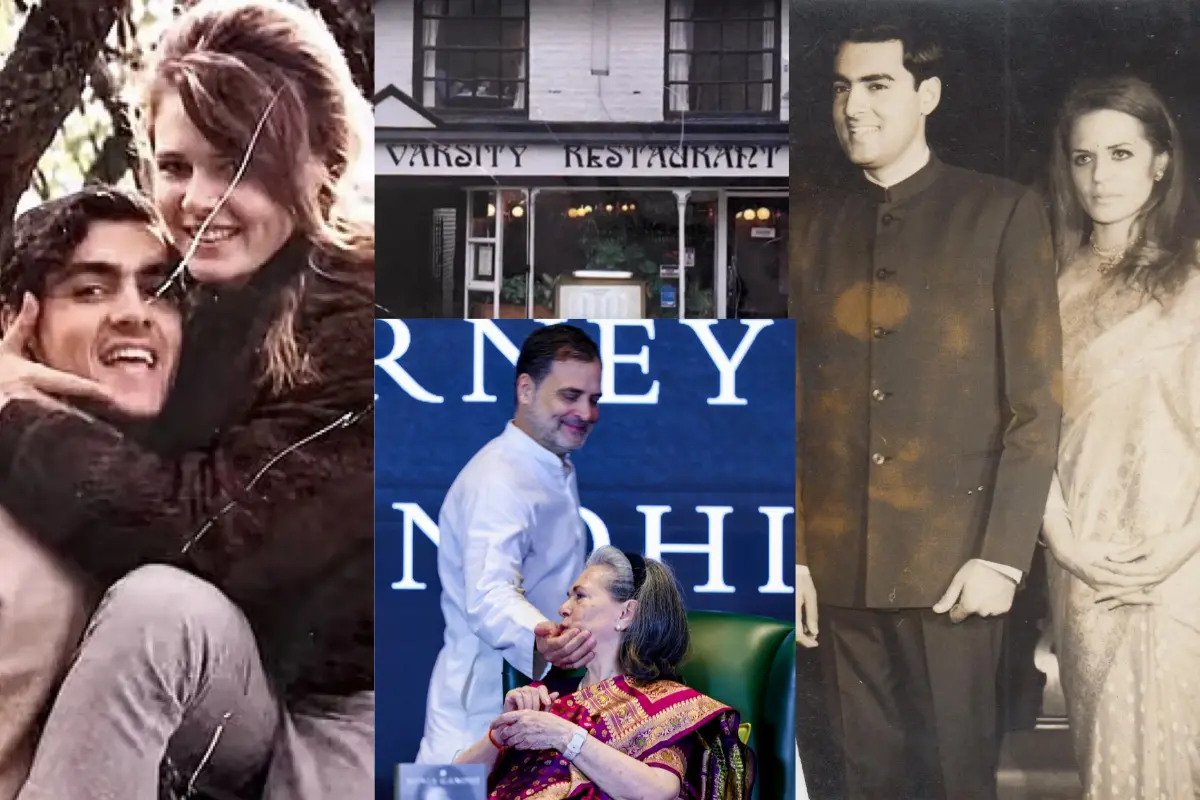
A small restaurant in Cambridge, a young Italian student, an Indian engineering student and a meeting that would eventually become part of one of India's most recognised family histories. More than six decades later, the story of how Sonia Gandhi met Rajiv Gandhi at the Varsity Restaurant is finding a new audience, this time through a mix of romance, family memories and Rahul Gandhi's rather unflattering review of its food.
At a time when political exchanges between the Congress and the BJP often dominate conversations around the Gandhi family, it is the more personal side of their story that has caught public attention. Sonia Gandhi's memoir, Belonging: A Journey of Love, has brought back memories of her early relationship with Rajiv, while Rahul's account of visiting the same restaurant years later has given the story an unexpectedly humorous twist.
The appeal lies in its simplicity. Before they were the wife of a prime minister and the prime minister himself, Sonia and Rajiv were two young people who met over a meal in a university town. Their story began not at a political gathering or an official event, but at a modest restaurant where students came to eat.
Varsity Restaurant: Where a chance meeting became a lifelong relationship
In her memoir, Sonia recalls meeting Rajiv at the Varsity Restaurant in Cambridge in 1965. She was then studying English in the city, while Rajiv was an engineering student at Trinity College.
A mutual friend, Christian von Stieglitz, introduced them. Sonia describes the instant attraction as un colpo di fulmine, an Italian expression meaning a bolt of lightning or love at first sight. She remembers being struck by Rajiv's appearance and gentle manner.
At the time, Sonia had little idea of the political history of the family she was getting to know. Rajiv was the son of Indira Gandhi, who would go on to serve as India's first woman Prime Minister, and the grandson of Jawaharlal Nehru, independent India's first Prime Minister, who led the country from 1947 to 1964.
Their relationship grew over time, and they married on February 25, 1968. Then she moved from Italy to India and into the Nehru-Gandhi household, becoming part of a family whose story was closely intertwined with the country's political journey. For years, she largely stayed away from active politics, even as she witnessed the demands and pressures that came with being part of the family. The assassinations of her mother-in-law, Indira Gandhi, in 1984 and her husband, Rajiv Gandhi, in 1991 would profoundly alter her life.
Sonia eventually entered active politics in 1997 and became Congress president in 1998. She went on to become the party's longest-serving president, led its campaign in the 2004 general election and chaired the United Progressive Alliance (UPA), the coalition that governed India for two consecutive terms. Although she declined the post of Prime Minister after the 2004 victory, she remained a central figure in national politics and the opposition to successive governments. Today, her son Rahul Gandhi is the Leader of the Opposition in the Lok Sabha, while her daughter Priyanka Gandhi Vadra is also an elected MP.
What began as a meeting between two students in Cambridge eventually connected Sonia to a country, a political legacy and a public life she had not originally set out to pursue. Yet, decades later, the restaurant where she first met Rajiv remains a reminder of the personal story that came before the politics.
Rahul Gandhi returned to the same restaurant — but had a food complaint
At the launch of Sonia's memoir in Delhi on November 16, Rahul Gandhi added another chapter to the Varsity story.
He recalled visiting the restaurant years later with his girlfriend because he wanted to see the place where his parents had first met. He remembered its yellow door and the man at the entrance recognising the story when Rahul explained who his parents were.
Curious about the menu, Rahul asked what he should order. The recommendation was chicken chasseur. He ordered two portions, but the experience did not live up to the restaurant's romantic reputation.
Rahul joked that anyone wanting to fall in love should visit Varsity, but should never order its chicken chasseur. His parents, he said, seemed to remember the food as fantastic.
The anecdote brought laughter at the book launch. It also offered a glimpse of Rahul beyond his public role: a son curious about the place where his parents' relationship began, retracing a small part of their past and sharing the experience with humour.
What is chicken chasseur, the dish Rahul Gandhi disliked?
There is an interesting culinary detail behind Rahul's complaint. Although Varsity was known as a Greek restaurant, chicken chasseur is a classic French dish. Its name translates to 'hunter's chicken'.
The preparation commonly includes chicken, mushrooms, shallots, garlic, tomatoes, butter, chicken stock, herbs and white wine. It is generally served with a rich, savoury sauce.
The presence of a French dish on a Greek restaurant's menu was not unusual in Varsity's case. The restaurant's culinary identity reflected the backgrounds of its founders.
Why did a Greek restaurant serve French food?
Varsity was established in 1954 by a family with Cypriot and French roots. According to the Food and Drink Eating Out Guide, the founder's Cypriot background and French family connection shaped the restaurant's menu.
Rather than following one cuisine exclusively, it brought together Cypriot and French dishes with other influences. Its food was freshly prepared and served in generous portions, making it popular among students.
One of its known specialities was kleftico, a slow-cooked lamb dish seasoned with oregano and served in the evenings. The menu also featured desserts such as tiramisu, crème brûlée and white chocolate cheesecake.
The restaurant's unusual combination of dishes was part of its character. It was a place where different food traditions met, much like the international student community that Cambridge attracted.
The restaurant has closed, but its place in the story remains
Varsity operated from 35 St Andrew's Street in Cambridge and was regarded as one of the city's older restaurants. It eventually closed during the Covid-19 pandemic. The premises were subsequently taken over by Korean barbecue restaurant Yori.
The restaurant may no longer operate under the Varsity name, but its place in the Gandhi family's personal history has given it a new kind of recognition.
Why this love story is resonating beyond politics
The response to Sonia and Rajiv's story points to something that political arguments often leave out: public figures are also people with private histories, relationships, memories and losses.
The BJP has criticised aspects of Sonia Gandhi's memoir, including its treatment of historical events such as the Emergency and the 1984 anti-Sikh violence. Congress leaders, in turn, have defended the book against what they describe as attempts to politicise personal recollections.
But the Varsity episode has travelled beyond that political exchange. Its appeal is not rooted in a party position or a political argument. It is about a young couple meeting in an ordinary place, a relationship that endured for decades, and a son who still feels drawn to the spot where it began.
Rahul's description of his parents' bond at the launch added another emotional dimension. His recollections showed how deeply their relationship shaped his childhood and how his mother's life changed after Rajiv's assassination.
That is perhaps why the story has connected with so many people. The restaurant is a setting, the chicken chasseur is the comic detail, but the lasting attraction is the human story behind them. A love that began over a meal in Cambridge continues to be remembered in India, long after the restaurant itself has closed.