‘Dropped my laptop thinking it would float, but luckily...’ : Shubhanshu on life after space
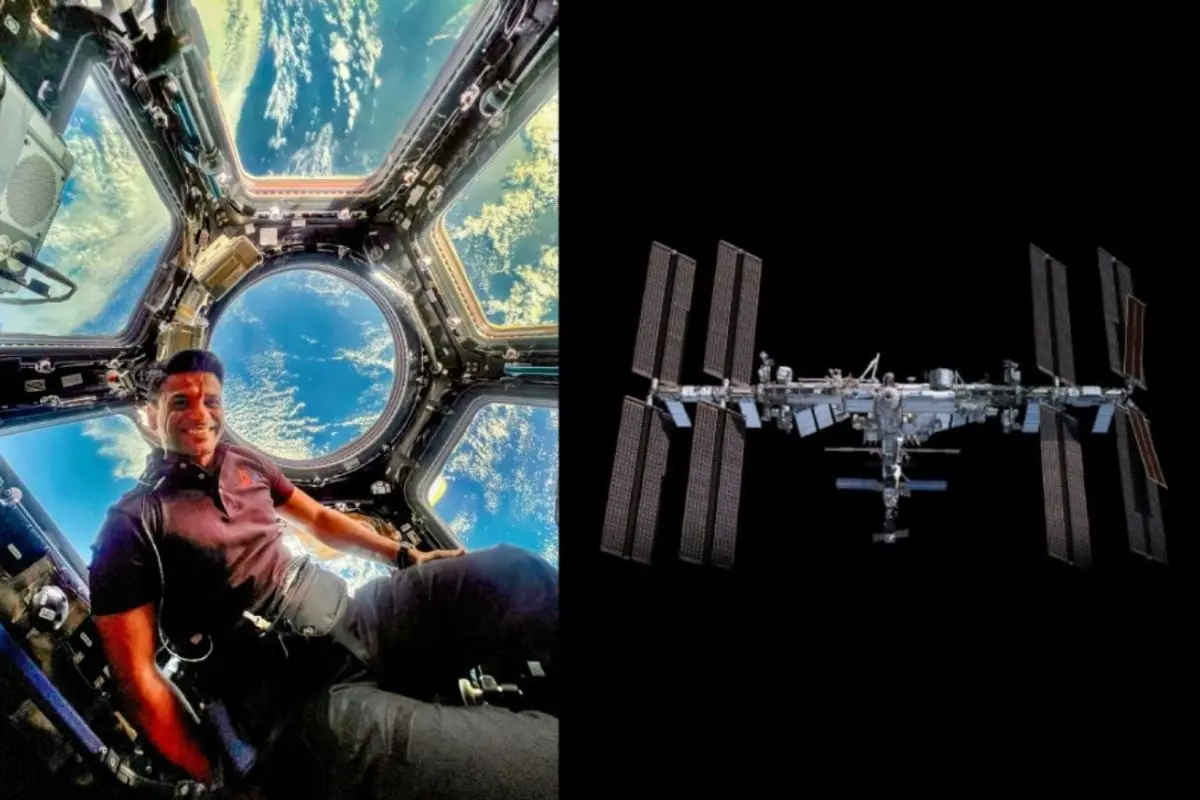
New Delhi: Weeks after returning from the historic Axiom-4 mission, astronaut Shubhanshu Shukla shared his experiences of readjusting to life on Earth--recounting how even a mobile phone felt unexpectedly heavy, and how he mistakenly dropped his laptop thinking it would float like it did in space.
Speaking at a virtual press conference on Friday, Shukla and his fellow Axiom-4 crewmates reflected on their 20-day mission, which included an 18-day stay aboard the International Space Station (ISS).
“After 41 years, a Bharatiya returned to space. But this time, it was not a solitary leap--it was the beginning of India’s second orbit. And this time, we are ready, not just to fly, but to lead,” Shukla said.
Shukla, born in Lucknow, became the second Indian to travel to space after Rakesh Sharma’s landmark flight in 1984 as part of a Soviet mission. The Axiom-4 mission lifted off from NASA’s Kennedy Space Centre in Florida on 25 June and returned to Earth on 15 July.
Recalling a poignant moment during his time in space, Shukla highlighted his conversation with Prime Minister Narendra Modi on 28 June. “That moment, with the tricolour floating behind me, symbolised India’s re-entry into the conversation--not as a spectator, but as an equal participant,” he said.
Back on Earth, the adjustment to gravity has posed its own challenges. “I asked for a phone to take a picture, and the moment I held it, it felt so heavy. The same phone we use all day--it just felt very different,” he said.
In another humorous incident, he shared: “I was working on my laptop while sitting on my bed. I shut it and left it to the side, thinking it would float. Of course, it dropped--but luckily, the floor was carpeted.”
Shukla described the Axiom-4 mission as exceeding expectations, adding that the knowledge he gained would be invaluable for India’s upcoming Gaganyaan mission. “I wasn’t just a spacefarer, but a messenger--showing what’s possible.”
He confirmed that he had meticulously completed all the “homework” the Prime Minister had assigned him. “I was asked to document everything we did, and I’ve done that diligently. I’m confident that it will be of immense help to our space programme.”
Shukla noted that one of the most important outcomes of his journey was the inspiration it has sparked among India’s youth. “Children have already started asking how they can become astronauts. That is a huge success for this mission.”
“The true spark is about inspiring young Indians to believe they can be explorers too. That, for me, is the most meaningful part of this mission,” he added.
Shukla is expected to return to India in mid-August, where he will share further insights with ISRO officials and contribute directly to India’s growing human spaceflight ambitions.