Shashi Tharoor responds to Trump’s praise for India’s voter ID system
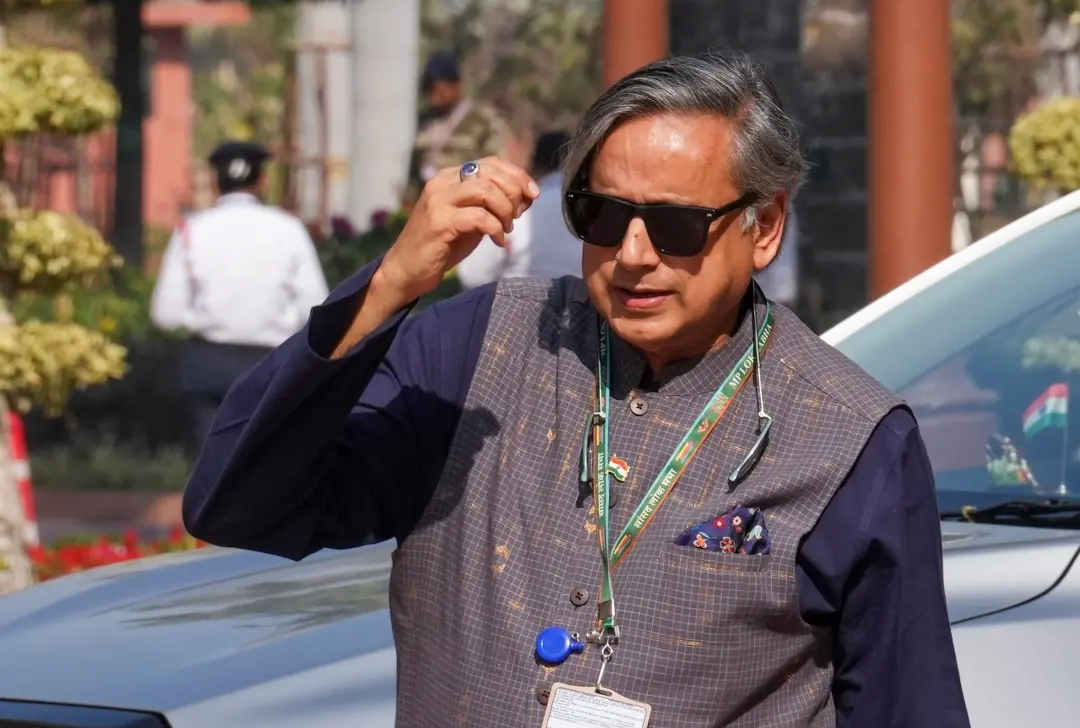
New Delhi: Congress MP Shashi Tharoor has welcomed United States President Donald Trump’s recent recognition of India’s voter ID system. Trump referenced India’s system in his latest executive order, which aims to reform the US federal election process. The order mandates proof of citizenship for federal elections and imposes new restrictions on mail-in voting, drawing comparisons with election systems in India and other nations.
Reacting to Trump's remarks, Tharoor highlighted that India has had a robust voter verification system in place since 1952.
“The interesting thing in America is that when you go to vote, you just self-declare your citizenship. In India, we have a list, ID cards, a whole system where we verify that the person voting is actually a citizen. It has been going on since 1952,” he said.
Tharoor further noted that India's well-established system has gained international recognition.
“Certainly, there is a lot of respect around the world... for the American President to acknowledge India by example as a country that got this right and his country, he says, has not gotten right, I think that is something we all should be happy about.”
Trump’s executive order highlights global practices
Trump's order contrasts the US election process with systems in other countries. It specifically notes that India and Brazil link voter identification to biometric databases to improve accuracy, whereas the US primarily relies on self-attestation of citizenship, which raises concerns over verification.
The order also refers to voting methods in Germany and Canada, where paper ballots are publicly counted by local officials, a practice aimed at reducing election disputes. By comparison, the US follows a decentralised system that can create issues with chain of custody.
Mail-in voting restrictions in other countries
The executive order also highlights mail-in voting restrictions in several nations. It mentions that Denmark and Sweden allow postal ballots only under specific conditions and reject late-arriving ballots, regardless of postmarks. In contrast, many US states permit widespread mail-in voting, with some even accepting ballots without postmarks or those that arrive well after Election Day.
ANI