SC order on Waqf Act sparks hope among clerics: ‘Justice for the poor’
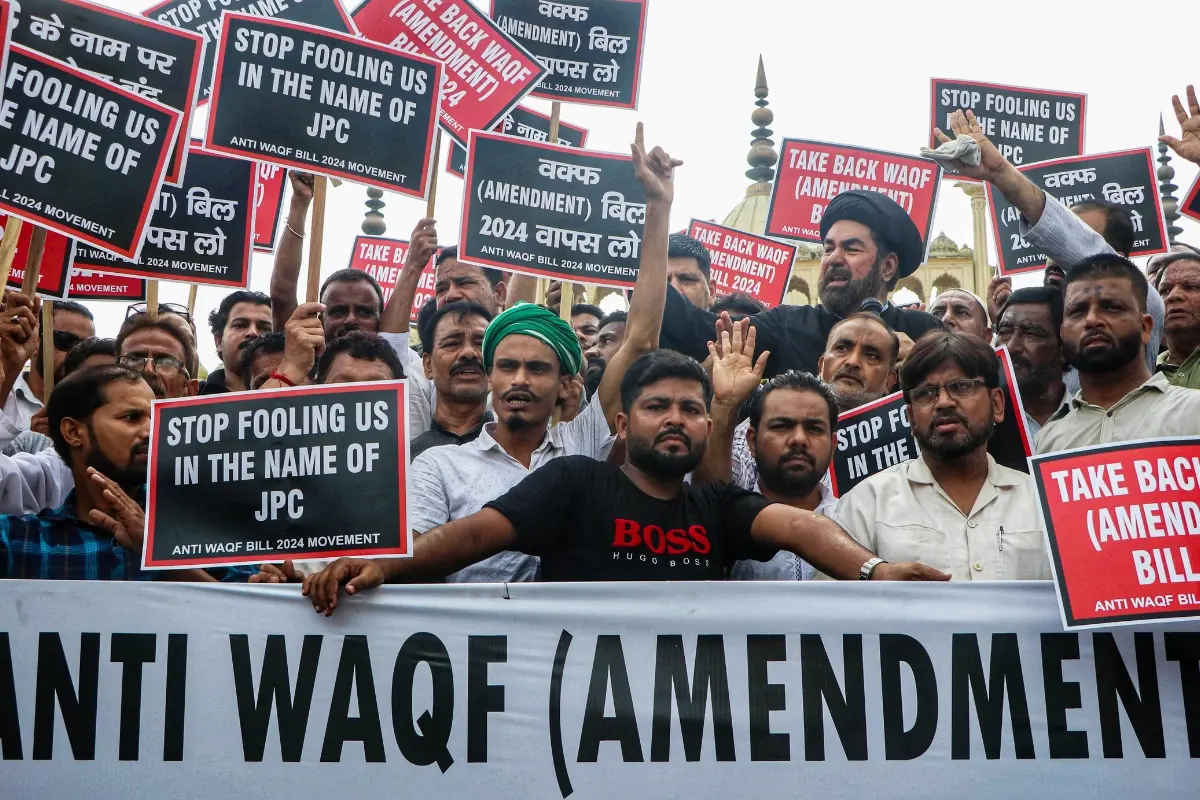
New Delhi: Several prominent Muslim clerics on Monday welcomed the Supreme Court’s interim stay on key provisions of the Waqf (Amendment) Act, calling it a “significant relief” for the community and expressing hope that the final verdict would go further in protecting Muslim interests.
The apex court, while refusing to stay the entire Waqf Act, put a hold on some contentious provisions — including the requirement of five years of practising Islam to create a Waqf, and the power given to revenue officers to unilaterally decide on Waqf property disputes.
Maulana Khalid Rasheed Firangi Mahali, a senior cleric, described the Supreme Court’s interim decision as a “very welcome step.”
“Regarding the Waqf Amendment Act, the Supreme Court has issued an interim order today. We have received significant relief from this interim order. Although our demand was for a stay on the entire law, the relief granted is still substantial. Efforts will continue, as no final direction has been issued yet,” he told IANS.
He added that the ruling also upheld the condition that the Waqf Board CEO must be a Muslim — a key issue raised by petitioners.
Mahali said the stay on Sections 3 and 4 was a "very welcome step" and expressed hope that the final judgment would be "in favour of Muslims.”
All India Muslim Jamaat President, Maulana Shahabuddin Razvi Barelvi, also praised the verdict, saying it paves the way for reclaiming Waqf properties that had been “illegally occupied by wealthy individuals.”
“Once implemented, those wealthy individuals who had illegally occupied Waqf lands will be removed, and these lands will be used to build schools, colleges, hospitals, mosques, madrasas and orphanages, and the income from it will be spent on widows and orphans and poor Muslims,” Barelvi said.
He also called for reforms in the Waqf Boards, claiming they had become “dens of corruption” in recent years.
Mohammad Sulaiman, President of the Indian National League and a founding member of the All India Muslim Personal Law Board (AIMPLB), said the community had hoped for a complete stay on the Act but welcomed the partial relief.
“We had demanded a stay on the Act in its entirety. We do welcome the interim decision, but we hope that this also gets converted to the final decision with a stay on more provisions. Partially, we are satisfied,” he said.
AIMPLB spokesperson Syed Qasim Rasool Ilyas said the order was “satisfactory,” especially with the court staying the five-year religious practice clause.
“Not all our points have been accepted, but some important points have been accepted. This five-year practising Muslim condition has been maintained, which is significant,” he said.
Maulana Chaudhary Ifraheem Husain also supported the verdict, saying it would ease hardships faced by poor and backward Muslims.
“The PM Modi-led Centre had introduced it, but there were several challenges. But now, with the Supreme Court's order, life will ease for poor and backwards Muslims, whose rights were snatched by a few powerful people.,” he said.
He added that the community would support any decision made in its interest by the apex court.
Background: What the SC stayed
On Monday, a bench led by Chief Justice B.R. Gavai and Justice A.G. Masih stayed:
The clause requiring five years of practising Islam for creating a Waqf.
The provision allowing a designated officer to decide on Waqf property disputes, which the court said violates the principle of separation of powers.
A portion of the law concerning non-Muslim representation on Waqf Boards.
The court, however, upheld the presumption of constitutionality of the statute and said it would intervene in the Act only in rare cases — indicating a cautious but considered approach.
IANS inputs