Sabarimala review hearing begins today: What Supreme Court will decide on faith vs equality
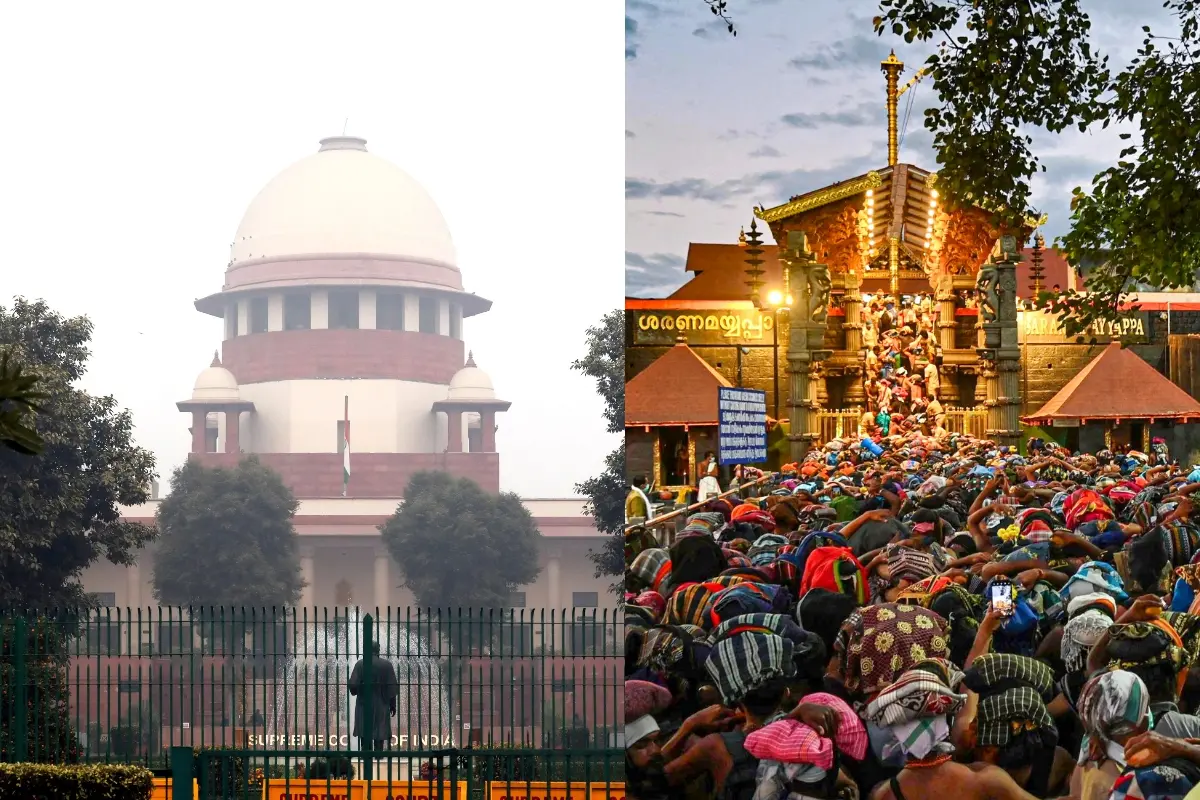
New Delhi: The Supreme Court of India has begun final hearings before a nine-judge Constitution Bench on the long-pending Sabarimala review, reopening a key constitutional debate on whether religious practices can be examined in light of equality and constitutional morality.
Led by Chief Justice Surya Kant, the bench will revisit the implications of the 2018 verdict concerning the Sabarimala Temple in Kerala while also addressing broader questions on the balance between fundamental rights and religious freedom across different faiths.
The long-running Sabarimala issue centres on the entry of women of menstruating age into the Sabarimala Temple, a major pilgrimage site dedicated to Lord Ayyappa, who is traditionally worshipped as a celibate deity. The controversy has evolved over decades, shaped by religious customs, historical practices, and constitutional interpretation.
Earlier Supreme Court verdict
In 2018, the Supreme Court of India, in a 4:1 majority decision, ruled that restrictions preventing women of all ages from entering the temple were unconstitutional. The judgment held that such exclusion violated fundamental rights, particularly equality and non-discrimination, triggering widespread public debate and protests across Kerala and beyond.
Review petitions and reference to larger bench
Following the verdict, multiple review petitions were filed by various groups seeking reconsideration. In 2019, the Supreme Court referred the matter to a larger Constitution Bench, noting that the case raised wider constitutional questions that extended beyond the Sabarimala temple and could impact multiple religious practices across communities.
Nine-judge bench hearing in 2026
On April 7, 2026, a nine-judge Constitution Bench headed by Chief Justice of India Surya Kant begins final hearings on the review petitions. The bench has been constituted to examine not only the original Sabarimala judgment but also broader legal principles governing the relationship between religious freedom and constitutional rights.
Key constitutional questions
The bench is expected to deliberate on seven significant constitutional issues, including:
- Whether constitutional morality can override essential religious practices
- How courts should determine what constitutes an “essential religious practice”
- Whether individuals outside a religious community can challenge its internal customs
- The balance between Article 25 (freedom of religion) and Article 14 (equality before law)
- The extent to which courts can intervene in matters of faith
Wider implications beyond Sabarimala
The proceedings have expanded to include broader questions affecting multiple religious communities. Alongside Sabarimala, the Court is expected to consider issues such as the entry of Muslim women into mosques and dargahs, the rights of Parsi women who marry outside their faith to access fire temples, and practices within the Dawoodi Bohra community, including female genital mutilation and excommunication.
Arguments from stakeholders
Petitioners supporting the review argue that religious traditions and community practices must be protected from judicial reinterpretation. On the other hand, opposing views emphasise that constitutional guarantees of equality and dignity should take precedence over exclusionary customs. The Union government has indicated support for the review petitions, adding another dimension to the proceedings.
What the hearing aims to resolve
The nine-judge bench is not merely revisiting a single temple dispute but attempting to establish a broader constitutional framework. The outcome is expected to clarify how Indian law reconciles individual rights with collective religious freedoms, and whether courts can adjudicate matters that involve deeply rooted religious beliefs.
Significance of the case
The final judgment is likely to have far-reaching consequences for constitutional law in India. It will shape how future disputes involving religion, gender equality, and personal freedoms are interpreted, potentially influencing legal reasoning across a wide range of cases involving diverse faiths and practices.