RSS Magazine sounds alarm on demographic imbalance, urges national population control policy
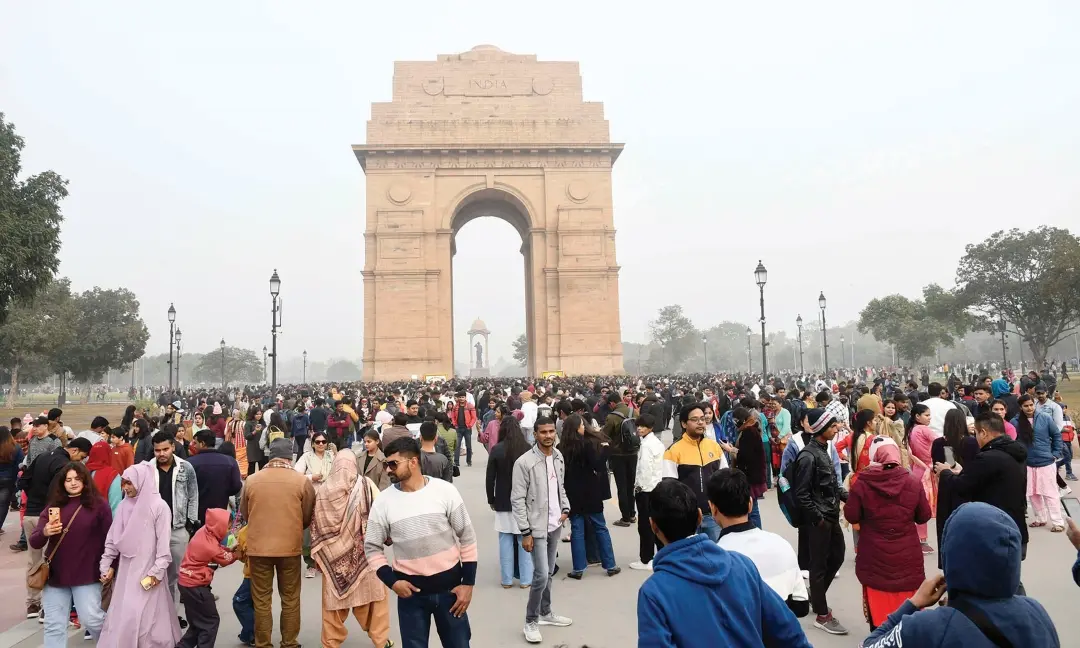
New Delhi: A recent editorial in Organiser Weekly, a magazine linked to the RSS (Rashtriya Swayamsevak Sangh), has stressed the urgent need for a comprehensive national population control policy. The magazine points to a "demographic imbalance" emerging in certain areas of India, particularly where there is significant Muslim population growth.
"Despite stabilizing the population at the national level, it is not the same across all religions and regions. There is significant Muslim population growth in certain areas, especially in bordering districts," the editorial states.
The editorial highlights regional imbalances in population growth, noting that states in the west and south of India are implementing population control measures more effectively. However, these states fear losing parliamentary representation if population bases are altered following the Census.
"The states from the west and south are doing relatively better regarding population control measures and, therefore, fear losing a few seats in Parliament if the base population is changed after the Census," it said.
The editorial also raises concerns about "unnatural" population growth in frontier states such as West Bengal, Bihar, Assam, and Uttarakhand, attributing this to "illegal migration" across borders.
"In a democracy, numbers are critical for representation, and demography decides destiny. We must be cautious of this trend," the editorial warns.
The editorial criticizes political figures like Rahul Gandhi and West Bengal Chief Minister Mamata Banerjee, accusing them of leveraging religious sentiments for political gain. It also mentions Dravidian parties, claiming they exploit population imbalances to consolidate minority vote banks.
"Politicians like Rahul Gandhi can afford to insult Hindu sentiments now and then. (West Bengal Chief Minister) Mamata (Banerjee) can play the blatant Muslim card even to accept the atrocities on women by the Islamists, and Dravidian parties can take pride in abusing Sanatan Dharma only because of their confidence in the consolidation of the so-called minority vote bank developed with the population imbalance," it charged.
Drawing lessons from the Partition and migration issues in West Asian and African countries, the editorial emphasizes the urgency of addressing population control, echoing various RSS resolutions and judicial pronouncements.
"Learning from the horrors of the Partition and what is happening with the politically correct but socially and culturally incorrect migration from West Asian and African countries, we have to address this issue urgently, as pointed out by various Rashtriya Swayamsevak Sangh (RSS) resolutions and judicial pronouncements," it added.
The editorial further noted that regional imbalance is another critical issue that could impact the delimitation process of parliamentary constituencies. It also argues for a population policy that prevents disproportionate impact on any single religious community or region, which could lead to socio-economic disparities and political conflicts.
"Instead of being swayed by external agendas from international organizations, we should strive for a comprehensive national population policy that considers the country's resource availability, future needs, and demographic imbalances," the editorial urges.
The editorial references the 1974 Henry Kissinger Report, which discussed controlling the population of countries like India, and notes that the United Nations designated July 11 as World Population Day in 1989 to emphasize the urgency of population issues.
Countries like Japan face negative growth rates, while China has reversed its authoritative population control policies. This highlights the complexity and nation-specific nature of population issues, the editorial concludes.
The editorial calls for a national discussion to develop a comprehensive population policy for India, balancing the country's unique demographic and resource needs.
That makes population issues complex and nation-specific, with the core question of whether the population is a burden or an asset for the country. While discussing the population question in the Bharatiya context, we need a national discussion leading towards a comprehensive population policy," the editorial said.
PTI