RSS chief says regime-change protests rarely solve problems, warns foreign forces may exploit unrest
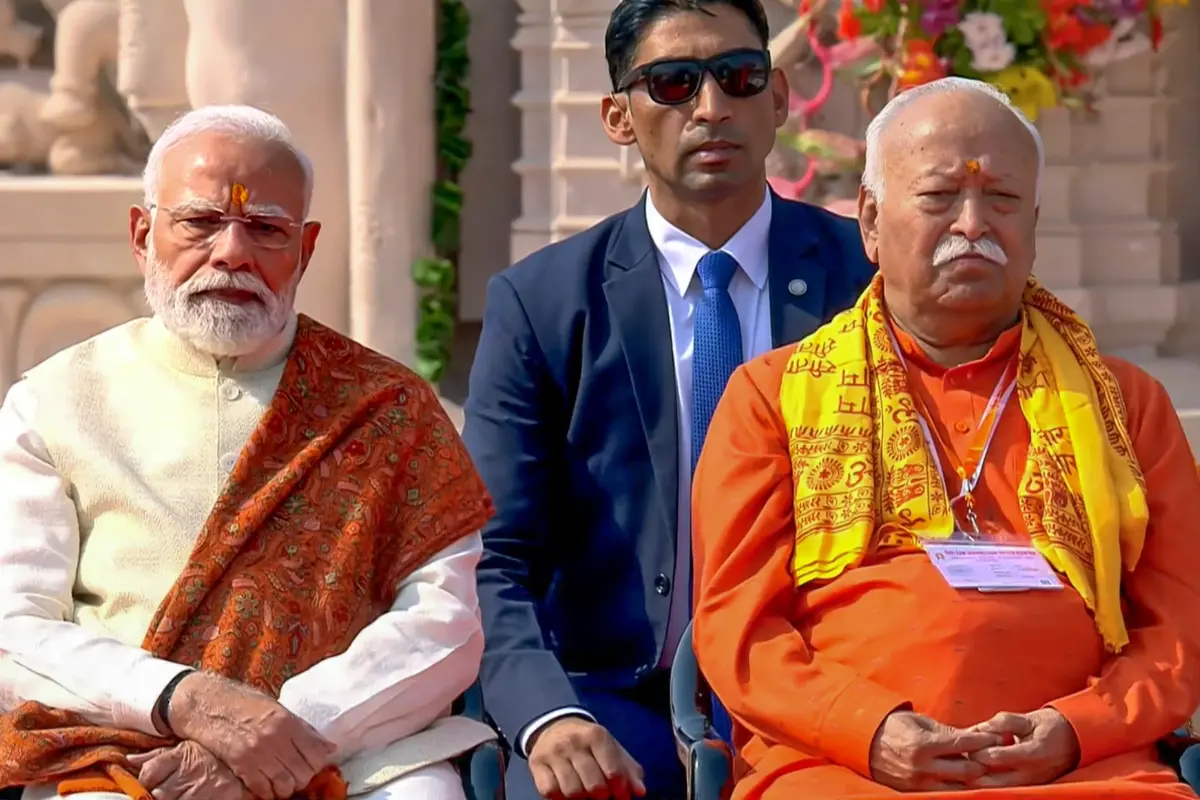
Rashtriya Swayamsevak Sangh (RSS) chief Mohan Bhagwat, whose organisation is the ideological parent of the ruling Bharatiya Janata Party (BJP), hascautioned that mass agitations aimed at forcing regime change do not fix fundamental national issues, warning that public demonstrations can easily be turned into political tools that divide society.
Addressing the annual Vijayadashami gathering in Nagpur on Tuesday, where he performed traditional shastra puja (weapon worship), the RSS chief stressed that removing governments through street unrest rarely brings real answers.
Global unrest and the warning on regime change
Bhagwat pointed directly to recent political turmoil in countries like Bangladesh, Nepal, France, and Albania. In Bangladesh, student-led rallies against civil service quotas turned into a push for political change that forced Prime Minister Sheikh Hasina to flee. Nepal saw Gen Z protests force the resignation of Prime Minister K.P. Sharma Oli over corruption and economic troubles. Meanwhile, France faced fresh Yellow Vest rallies over high living costs, and Albania saw student demonstrations over poor education and corruption.
Bhagwat asserted that foreign entities and self-serving groups frequently manipulate such unrest for their own ends.
"They claim that changing a regime will change the situation, but that has never really happened," he said.
He added that a stronger India will naturally limit the influence of foreign forces, making the nation a target for those who wish to weaken its progress. While certain global powers want India to grow, they do not want it to become powerful enough to challenge their international dominance.
Demands for constitutional limits and peaceful solutions
Turning to the role of demonstrations in a democratic nation, Bhagwat said that public agitations must focus on resolving grievances rather than widening social divides.
"Problems will remain, and protests are inevitable in a democracy. But what should the purpose of protests be? They should be aimed at finding solutions," he remarked.
He warned that when agitations move away from public welfare, they create hostility towards specific individuals, groups, or beliefs. Calling for calm among political leaders, law enforcement agencies, and demonstrator collectives, Bhagwat insisted that public actions must remain peaceful and constructive.
"However intense our emotions may be, we must respect the limits set by our Constitution, the norms of civilised public discourse and standards of decent conduct," he urged.
Youth protests and political tensions across India
The RSS chief's speech comes as Indian youth collectives and Gen Z student groups stage nationwide non-violent protests over accountability and institutional fairness. Formations like the Cockroach Janta Party (CJP) have spearheaded major student movements.
In July 2026, widespread anger over NEET exam paper leaks forced Union Education Minister Dharmendra Pradhan to step down. By October 2026, demonstrations shifted to Delhi and Jammu, where protesters demanded the removal of Chief Election Commissioner Gyanesh Kumar over voter list revisions.
The BJP-led Centre responded to the protests with strict police crackdowns, internet blockades, and mass detentions. Senior ruling party figures, including Uttar Pradesh Chief Minister Yogi Adityanath, claimed that opposition parties were weaponising young citizens to manufacture a Bangladesh-style "regime change".
Bhagwat serves as the Sarsanghchalak (head) of the RSS, which acts as the ideological parent body of the ruling Bharatiya Janata Party (BJP). Prime Minister Narendra Modi was himself a full-time RSS worker (pracharak).