Red Fort blast: NIA chief says probe nearly complete, one fugitive suspected to be in Afghanistan
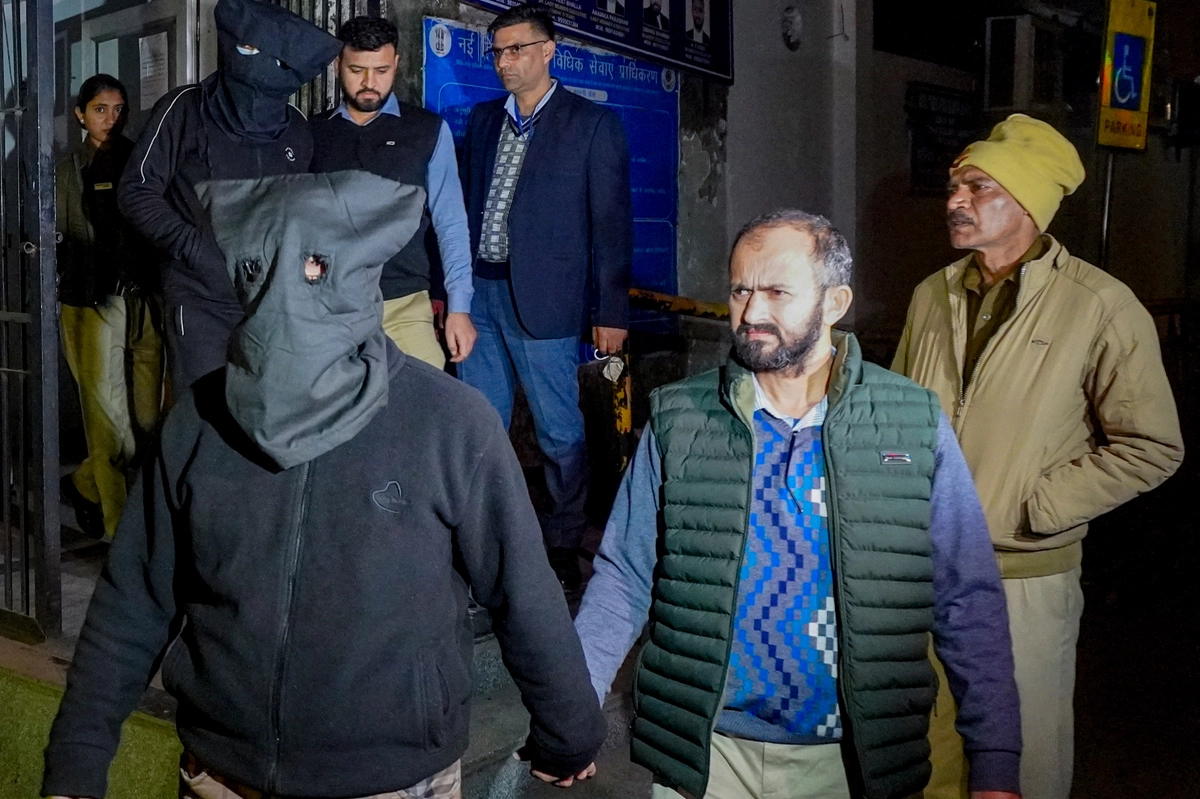
New Delhi: Only one fugitive, suspected to be hiding in Afghanistan, remains at large in connection with last year's Red Fort area car bomb blast, and the investigation into the case is almost complete, NIA Director General Rakesh Aggarwal said on Friday.
The process of filing chargesheets in the case has also commenced, he said.
"As far as the Red Fort blast case is concerned, the investigation is almost complete, and the process of filing a chargesheet has also started in it. So in that, except for, I think, one man who is perhaps in Afghanistan, other than that, there is no other fugitive or anyone else," Aggarwal told reporters.
Though he did not name the accused, Dr Muzafar Rather, who was suspected to have fled to Afghanistan, is among those being pursued by the Jammu and Kashmir Police, which exposed the entire case.
The high-intensity vehicle-borne improvised explosive device (VBIED) blast rocked the Red Fort area in the national capital on November 10 last year, killing more than 12 people, injuring several others and causing extensive damage to property.
The National Investigation Agency (NIA), which took over the probe from the Delhi Police, filed a 7,500-page chargesheet against 10 accused before a special court at the Patiala House Courts here in May this year.
According to the central anti-terror agency, all 10 accused, including the main perpetrator, Pulwama-based Dr Umar Un Nabi (deceased), were linked to Ansar Ghazwat-ul-Hind (AGuH), an offshoot of Al-Qaeda in the Indian Subcontinent (AQIS). Both AQIS and its manifestations were notified as terrorist organisations by the Ministry of Home Affairs in June 2018.
The NIA had said a detailed scientific and forensic investigation had unravelled a major "jihadi conspiracy" involving several radicalised medical professionals inspired by the ideology of AQIS and AGuH.
The identity of Dr Nabi, a former assistant professor of medicine at Faridabad-based Al-Falah University, was established through DNA fingerprinting. The agency had said charges against him were proposed to be abated. He was driving the explosive-laden car that blew up near the Red Fort.
Apart from Dr Nabi, the other accused named in the chargesheet are Aamir Rashid Mir, Jasir Bilal Wani, Dr Muzamil Shakeel, Dr Adeel Ahmed Rather, Dr Shaheen Saeed, Mufti Irfan Ahmad Wagay, Soyab, Dr Bilal Naseer Malla and Yasir Ahmad Dar.
The probe showed that after a failed attempt to migrate to Afghanistan via Turkiye, described as "hijrat", the accused held a clandestine meeting in Srinagar in 2022 and reconstituted the outfit as "AGuH Interim".
Under this banner, they allegedly launched "Operation Heavenly Hind" with the aim of overthrowing the democratically elected Indian government and imposing Sharia rule, the agency had said.
As part of the alleged conspiracy, the accused recruited members, propagated violent ideology, stockpiled prohibited arms, including AK-47 and Krinkov rifles and country-made pistols, and manufactured triacetone triperoxide (TATP) explosives using commercially available chemicals and specialised laboratory equipment procured online and offline.
The accused had also fabricated and tested various types of improvised explosive devices, including rocket- and drone-mounted devices, to target security establishments in Jammu and Kashmir and other parts of the country, the agency had said.
The investigation into the wider terror network, allegedly run by the "Doctor Module", began after posters of the banned Jaish-e-Mohammed outfit were pasted on the outskirts of Srinagar on the intervening night of October 18 and 19 last year. The posters warned of attacks on police and security forces in the Valley.
Treating the incident as a serious matter, Srinagar Senior Superintendent of Police G V Sundeep Chakravarthy formed several teams to investigate the case.
The Srinagar Police registered a case and examined CCTV footage, which led to the arrest of three locals -- Arif Nisar Dar alias Sahil, Yasir-ul-Ashraf and Maqsood Ahmad Dar alias Shahid. All three had previous cases related to stone-pelting, officials said.
Their interrogation led to the arrest of Maulvi Irfan Ahmad, a former paramedic who had become an imam in Shopian. He allegedly supplied the posters and used his access to radicalise the doctors, officials said.
Further questioning of the arrested accused led the Srinagar Police to Al-Falah University in Faridabad, where two doctors -- Dr Muzammil Ahmad Ganaie alias Musaib, a resident of Koil in south Kashmir's Pulwama, and Dr Shaheen Sayeed, from Lucknow – were arrested.
A large quantity of arms and ammunition, along with 2,900 kg of ammonium nitrate, potassium nitrate and sulphur, was seized, officials said.
Aware of the crackdown by the police and central agencies, Dr Umar Un Nabi, who was driving an explosive-laden car, began shifting his base to evade arrest.
Nabi, a 28-year-old doctor from Pulwama, emerged as a key operative in the network spanning Kashmir, Haryana and Uttar Pradesh, and was believed by officials to be among its most radicalised members.
Officials suspected that he was planning a powerful VBIED blast around the anniversary of the Babri Masjid demolition on December 6 last year.
He allegedly planned to place a VBIED at a crowded location in the national capital or a site of religious importance before fleeing, officials said.