India's economic outlook: RBI governor forecasts resilient growth amidst global uncertainties
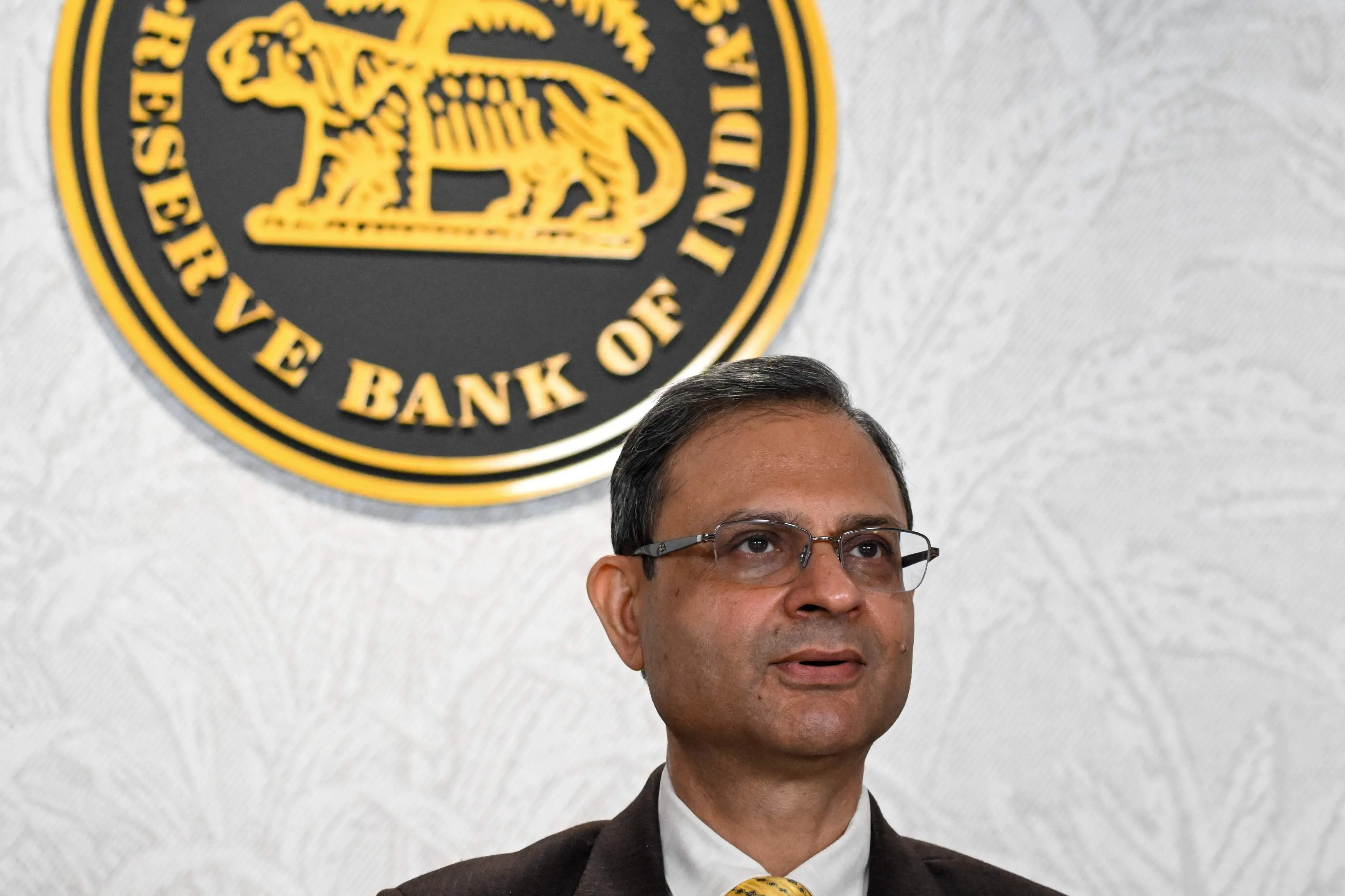
New Delhi: Reserve Bank of India (RBI) Governor Sanjay Malhotra on Friday said that global growth is expected to be marginally higher in 2026 despite rising geopolitical tensions and trade frictions, while emphasising that India’s economy remains resilient with improving growth prospects and controlled inflation, according to minutes of the RBI’s February 4-6 Monetary Policy Committee (MPC) meeting.
Malhotra highlighted that global expansion will be supported by increased technology-related investments, favourable fiscal and monetary policies, and accommodative financial conditions. However, he noted that inflation trends vary across countries, prompting central banks to adopt divergent policy paths as they approach the end of their easing cycles.
“Global investor sentiments remain nervous, and financial markets are volatile amid large fiscal stimulus and geopolitical uncertainty,” Malhotra stated.
Also Read | Timely credit flow to MSMEs remains key policy priority, says RBI Governor
Focusing on India, he said domestic economic activity has remained robust, largely driven by internal demand. Real GDP growth for 2025-26 is projected at 6.5 per cent, with a 90-basis-point increase expected over the previous year. Growth for 2026-27 is also projected to remain strong.
Malhotra noted that growth-supportive measures in the Union Budget, along with recent trade agreements with the European Union and the United States, have strengthened the external sector outlook. “We have increased our projection of real GDP growth by 20 basis points in Q1 and Q2 of 2026-27. These trade deals are expected to boost exports, improve the current account, and attract higher investments,” he said.
On inflation, the Governor reported that price pressures in November and December 2025 remained low and below the lower tolerance threshold. Headline inflation for 2025-26 is projected at 2.1 per cent, while CPI inflation for Q1 and Q2 of 2026-27 is expected at 4.0 per cent and 4.2 per cent, close to the RBI’s target. He highlighted that underlying inflation, excluding precious metals, remains even lower, noting that precious metals contribute about 60-70 basis points to overall inflation.
Assessing India’s macroeconomic fundamentals, Malhotra said the country’s external sector and medium-term outlook remain “healthy and robust.” He added, “Growth prospects are improving while the inflation outlook remains broadly stable. Given the present economic conditions, the current policy rate is appropriate.”
This assessment reinforces India’s position as a resilient economy amid global uncertainty, with strong domestic growth, benign inflation, and improved trade and investment flows supporting the outlook for 2026-27.
ANI