Rashtriya Vigyan Puraskar 2025: Honouring India's scientific pioneers and future leaders
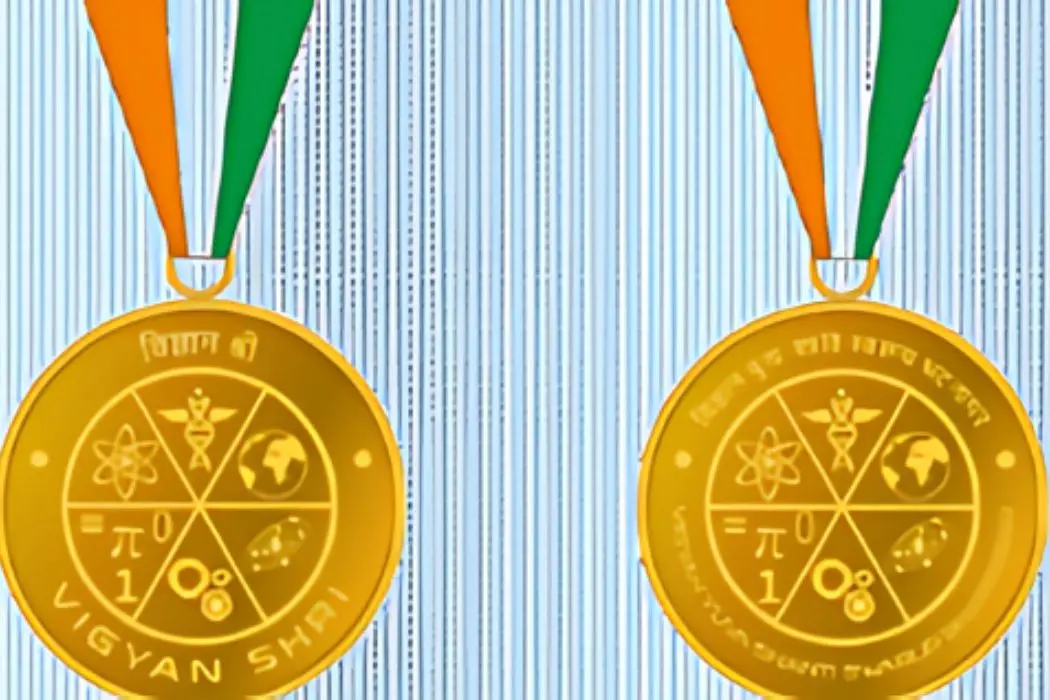
New Delhi: India’s scientific community received high recognition last week with the announcement of the Rashtriya Vigyan Puraskar (RVP) 2025, honouring 24 eminent scientists and one pioneering research team for their transformative contributions across various disciplines.
Building on its inaugural edition, the awards highlight the Union government’s vision of Viksit Bharat through Vigyan, a developed India powered by scientific progress and innovation.
At the top stands the Vigyan Ratna, the country’s highest civilian honour in science and technology, instituted in 2023 and first awarded in 2024 to biochemist Dr Govindarajan Padmanabhan for his groundbreaking research on malaria and drug resistance. Conferred annually on National Space Day (August 23), the award parallels the Bharat Ratna but is exclusively dedicated to lifetime scientific achievement.
Honours across disciplines
The RVP includes three additional categories.
- Eight senior researchers were recognised with the Vigyan Shri for sustained impact in areas such as quantum materials, biotechnology, and sustainable agriculture.
- Fourteen innovators under 45 were named Vigyan Yuva–Shanti Swarup Bhatnagar awardees, a reimagined version of the iconic SS Bhatnagar Prize aimed at nurturing India’s emerging scientific leaders.
- The Vigyan Team Award went to the CSIR Aroma Mission, a consortium that has revitalised aromatic crop cultivation across 60,000 hectares, benefiting over 50,000 farmers in 28 states and generating ₹1,200 crore in rural income since 2017.
Among the Vigyan Shri recipients are a climate modeller whose AI-driven monsoon forecasts have reduced crop losses by 18 per cent in Odisha, and a materials scientist who developed biodegradable polymers from agricultural waste for use in medical implants.
The Yuva honourees include a 38-year-old astrophysicist studying fast radio bursts at the Giant Metrewave Radio Telescope in Pune and a 41-year-old biotechnologist engineering salt-tolerant rice strains currently under field trials in coastal Tamil Nadu.
Streamlined recognition framework
Launched in 2023 to replace 16 separate science awards, the RVP provides a unified, transparent recognition system. Nominations are assessed by a 300-member search and selection committee chaired by Principal Scientific Adviser Ajay Kumar Sood, ensuring a merit-based process.
Unlike earlier awards, the RVP carries no cash prize. Winners receive a sanad, citation, and a panchdhatu medal, symbolising the unity of five classical elements.
The awards will be presented by President Droupadi Murmu at a Rashtrapati Bhavan ceremony on National Science Day, February 28, 2026.
As India aims for a $1 trillion research and innovation economy by 2047, the RVP not only celebrates past achievements but also reflects a growing national commitment to place science at the centre of development.
IANS