Rameswaram murder: Opposition says ‘Stalin failed’, govt calls it sensationalism, victim's family leads mass protest
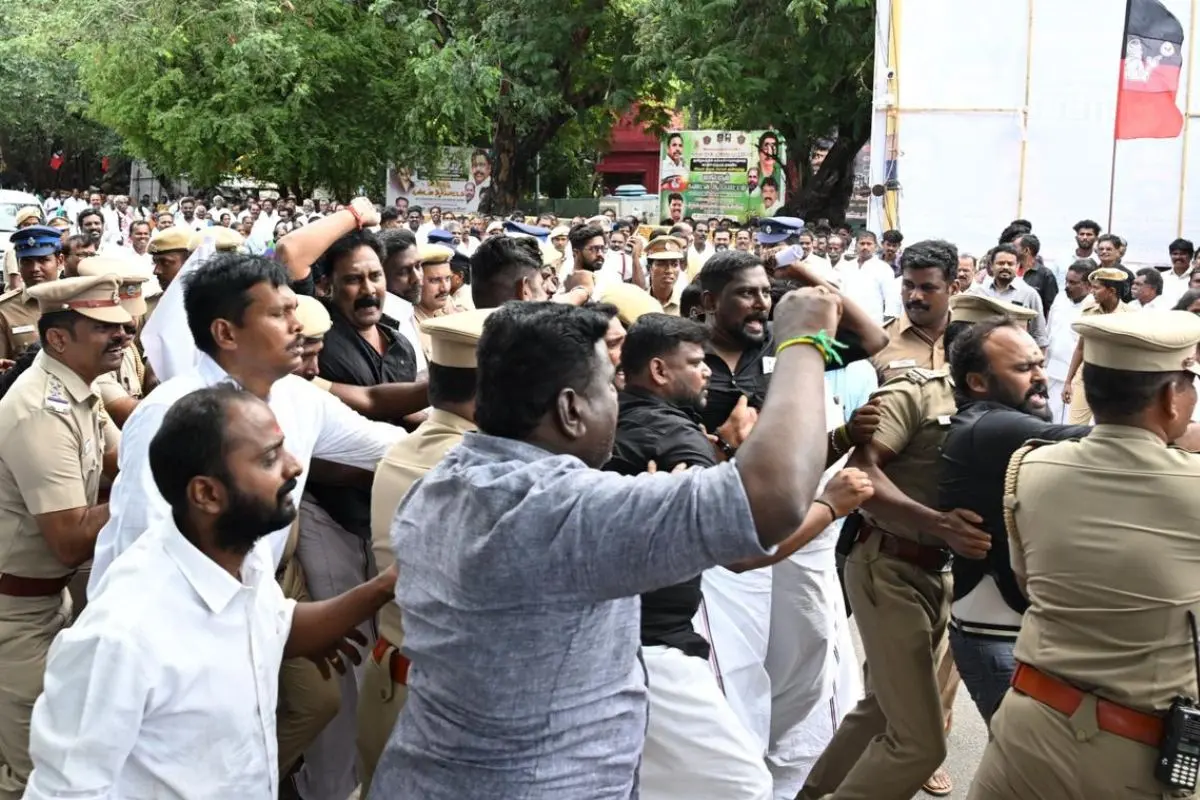
Rameswaram: A day after the brutal murder of a class 12 girl shocked Tamil Nadu, the incident has spiralled into a full-blown political confrontation, with the Opposition launching an intense assault on Chief Minister MK Stalin and the DMK government.
What began as a crime investigation has now morphed into an all-out political slugfest, amplified further by a road blockade staged by the victim’s family and locals demanding swift justice.
The grieving family blocked the Rameswaram–Dhanushkodi road on Thursday, halting traffic and drawing massive public attention.
The protest quickly became political fuel. Opposition parties seized on the visuals of the blockade to accuse the Stalin administration of presiding over a “lawless Tamil Nadu where women are unsafe and criminals roam free.”
Opposition Goes for the Jugular
AIADMK general secretary Edappadi K Palaniswami (EPS) led the charge, accusing Stalin of letting law and order “collapse beyond recognition.”
“If a school-going girl can be murdered in broad daylight, what kind of security is this government claiming to provide?” he asked, calling the Rameswaram blockade “a symbol of public desperation.”
PMK leader Dr Anbumani Ramadoss said the murder exposed “Stalin’s empty promises on women’s safety.”
He reiterated that PMK had repeatedly demanded police deployment at bus stops and school routes — “requests the DMK ignored until a child’s life was taken.” He demanded the death penalty for the accused and ₹25 lakh compensation for the family.
The BJP, too, intensified its attack. State unit chief Nainar Nagenthran said crimes against women had “shot up under Stalin’s rule,” adding that parents now fear sending their daughters out alone.
“Women are not safe under DMK. This murder and the road blockade show total public distrust,” he said, promising that the NDA would “deliver swift justice.”
DMK Cornered as Blockade Becomes the Flashpoint
What began as a family-led protest has snowballed into a political flashpoint. The road blockade, lasting several hours, was broadcast across local networks and social media, becoming a potent symbol for the Opposition.
Leaders repeatedly shared images of halted traffic, arguing that the unrest reflects “a government that has lost control.”
The Stalin government, already facing criticism over other law-and-order issues, now finds itself in a corner. The administration has deployed additional police units to Rameswaram and assured quick legal action, but rivals insist it is “too little, too late.”
Political Optics Overpower the Crime
While the police continue to investigate the murder and interrogate the accused, the political narrative has rapidly overtaken the factual one.
The Opposition is framing the case as yet another example of deteriorating safety under the DMK regime, and the Rameswaram road blockade is being portrayed as a public repudiation of the government’s claims.
With the incident now dominating political discourse, the ruling party is under mounting pressure to respond decisively — not just to the crime, but to the perception battle unfolding around it.