Outrage as BJP leader takes back blankets from Muslim women in Rajasthan | WATCH
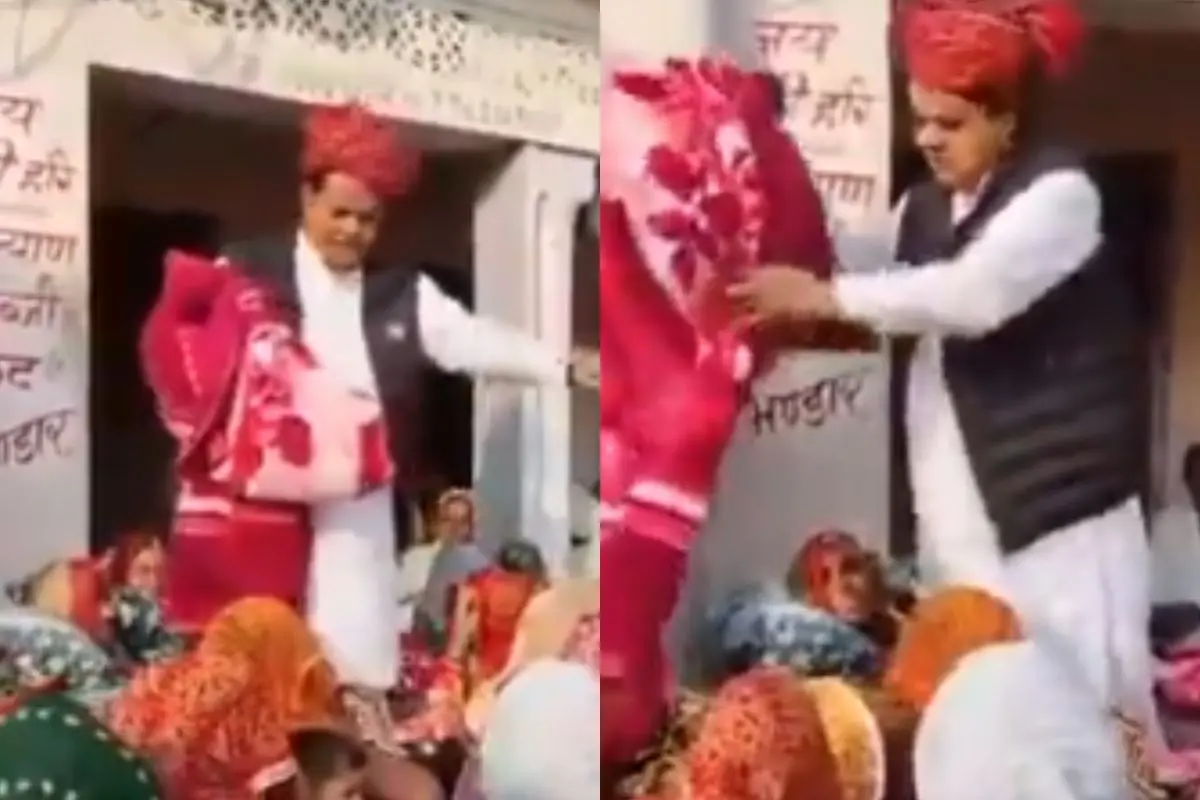
A political storm has erupted in Rajasthan after a video went viral showing BJP leader and former Member of Parliament Sukhbir Singh Jaunapuria refusing to give blankets to Muslim women during a charitable distribution event in Tonk district.
In the footage circulating on social media, Jaunapuria is seen distributing blankets to a group of women. He asks one woman her name, and when she replies with a Muslim name, he instructs his aides not to give her a blanket. He is heard saying that “those who abuse Prime Minister Narendra Modi will not receive blankets,” adding that he “cannot help if anyone is hurt.” The former MP then motions for the women to leave and even takes back blankets already handed out.
When several villagers objected, pointing out that the women had waited for hours and were left empty‑handed, Jaunapuria reportedly refused to engage in an argument, stating that he did not want to debate the matter and left the scene.
Opposition politicians have condemned the conduct. Supriya Shrinate, Congress national spokesperson, accused Jaunapuria of insulting poor Muslim women and described his behaviour as reflective of a “small and disgusting mind.” Congress leaders have branded the act shameful and an insult to both humanity and India’s constitutional values.
Leader of Opposition in the Rajasthan Assembly, Tikaram Jully, also criticised Jaunapuria, saying that asking a woman her religion and then withdrawing the blanket was “highly condemnable” and discriminatory.
Jaunapuria, who served as MP for Tonk‑Sawai Madhopur between 2014 and 2024, defended his actions, claiming the blanket distribution was a personal initiative and not part of any government programme. He asserted that as a private act, he had the discretion to decide who would benefit.