UPI MDR row: As Rahul Gandhi hits ‘UPI tax’, Congress MPs backed calibrated MDR in panel report
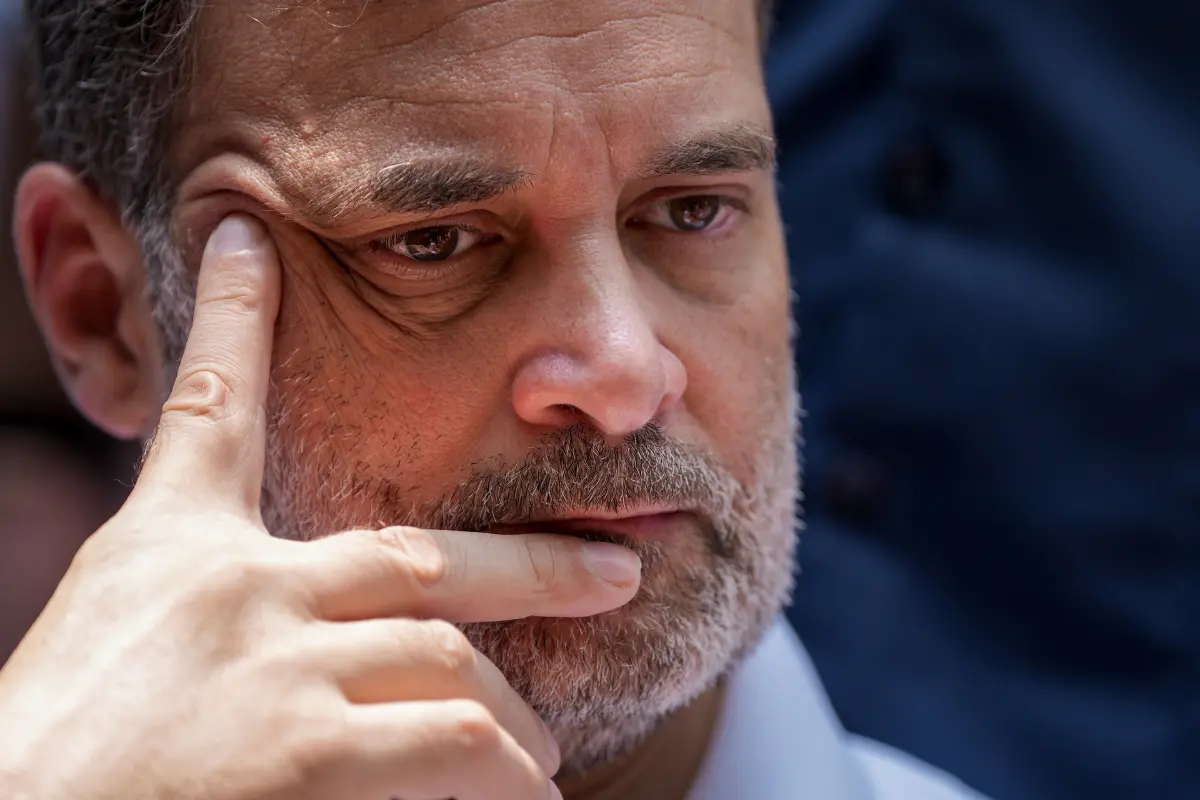
New Dehi: Even as opposition leader Rahul Gandhi sharply criticised the government and demanded a total rollback of the newly announced Merchant Discount Rate (MDR) policy, calling it a "UPI tax", members of his own party were part of a parliamentary panel that previously urged the creation of a viable revenue model for digital transactions.
Former Finance Minister P. Chidambaram and several senior Congress MPs belonged to the Standing Committee on Finance, which highlighted in a recent report that an operational revenue mechanism remains essential to guarantee the long-term financial health of the Unified Payments Interface (UPI) network without placing a continuous strain on public funds.
The parliamentary committee, which counts Congress lawmakers P. Chidambaram, Manish Tewari, Gaurav Gogoi, Kishori Lal, and K. Gopinath among its members, presented its report to Parliament on 12 August this year. In the document, the cross-party panel advocated introducing a tiered MDR framework for UPI transactions and urged authorities to notify and implement the structure without delay.
ALSO READ: Rahul Gandhi attacks PM Modi over new UPI merchant charges
Chaired by Bharatiya Janata Party (BJP) MP Bhartruhari Mahtab, the committee unanimously adopted the report with no formal notes of dissent recorded in official minutes.
The report noted a "massive Rs. 2,000 crore budgetary allocation for 2026-27 designed to offset ecosystem costs caused by the zero-MDR policy on RuPay and low-value UPI transactions".
However, the panel pointed out that while monthly UPI volume is projected to reach 150 billion transactions alongside 600 million new users, the current central subsidy covers only 11 per cent of operational costs incurred by the sector and 14 per cent of potential MDR revenue. This mismatch, the report warned, creates a structural funding shortfall that threatens essential infrastructure investment.
“The Committee would like to emphasise that establishing a viable revenue mechanism is critical to ensuring the UPI ecosystem achieves financial sustainability without perpetually straining the Government exchequer,” the report stated.
The parliamentary panel also voiced serious concern over "the staggering mismatch between the Rs.2,000 crore allocation and the industry's estimated operational cost of Rs.20,700 crore".
“In the view of the Committee, while statutory enablement now exists to permit calibrated MDR on high-value transactions, any delay in notifying and operationalising this framework leaves payment service providers heavily dependent on inadequate subsidies, thereby threatening critical investments in cybersecurity, fraud prevention, and network infrastructure,” the report said.
ALSO READ: Who really pays the 0.4% MDR fee? What the new UPI rules mean for buyers and retailers
Gandhi mounted a fresh assault on the Modi administration on Wednesday over the proposed fee framework for UPI transactions, alleging that the government was yielding to American pressure and targeting Prime Minister Narendra Modi directly. Ruling BJP leaders strongly countered Gandhi's accusations, pointing to the bipartisan parliamentary findings.
Addressing the controversy, government officials clarified that the revised UPI rules apply no fees to person-to-person transfers, ensuring consumers will face zero charges.
Authorities reiterated that individual transfers through UPI will remain completely free of charge regardless of the amount transferred.
Furthermore, merchant payments of up to Rs 2,000, along with transactions protected under existing zero-MDR provisions for small businesses, remain exempt from all transaction fees.
“Consequently, approximately 96% of all P2M transactions will remain unaffected. MDR will apply only to specified merchant transactions above ₹2,000,” the Ministry of Finance said in a statement Tuesday.
The ministry further clarified that the MDR is neither a tax nor revenue gathered by the government or the National Payments Corporation of India (NPCI). Instead, the funds are distributed among digital payment stakeholders, including commercial banks and application developers, to maintain network operational costs and support future expansion of the UPI framework.
ANI