India has stopped producing; handed over that role to China: Rahul Gandhi in US | WATCH
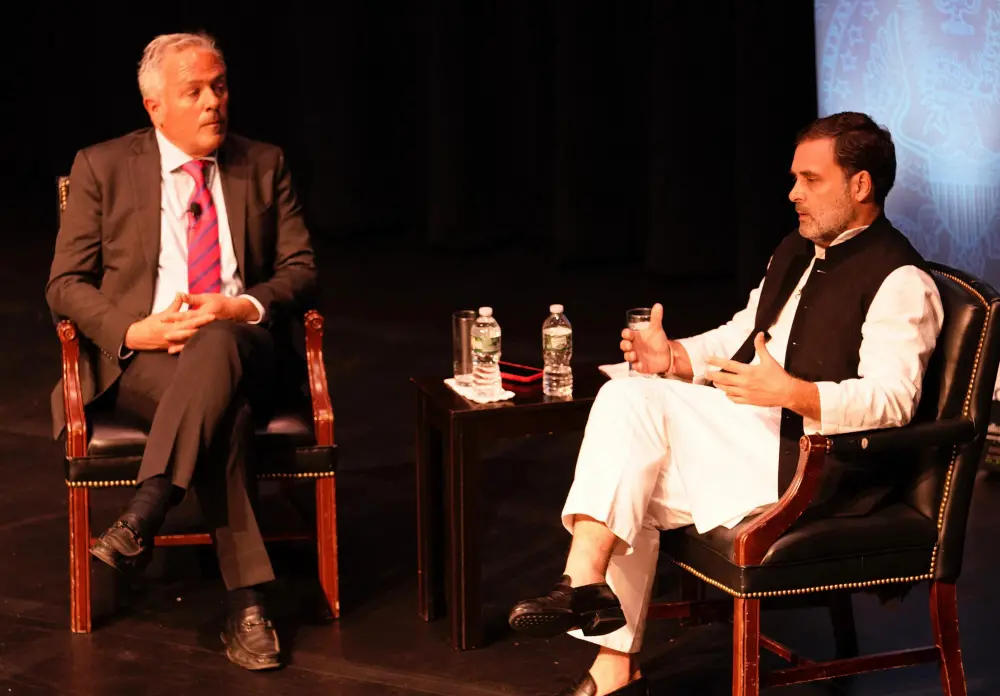
New Delhi: Congress leader and Leader of Opposition in Lok Sabha, Rahul Gandhi, has issued a stark warning about India's economic health, claiming that the nation has effectively "stopped producing." Speaking at Georgetown University, Gandhi highlighted the dire consequences of this shift, particularly the rising unemployment rate and the lack of blue-collar job opportunities in India.
In his address, Gandhi criticized the current economic framework for its failure to stimulate domestic production. He pointed out that while India's IT sector employs a mere 1-3% of the population, adding that there is a glaring absence of opportunities for young people seeking blue-collar jobs. "The only way to create those jobs is to start producing. India has stopped producing. If you look at our top businesses—Adani, Ambani, and the big players—they don’t produce. That’s the real issue. There is a whole set of structures that don't allow production. For example, GST is anti-production. You need to completely rethink your approach."
Gandhi contrasted India’s current situation with historical and global trends, noting the shift of global production power to China. Gandhi emphasized that the Indian economy suffers from a lack of production-oriented policies, with many large businesses opting to outsource rather than manufacture domestically.
" If you wanted to buy a car in the '60s, you would want to buy an American car; if you wanted to buy a refrigerator, you would want to buy an American refrigerator. The West and India handed over that role to China...The reality is that the cellphone you are using, the shirts you are wearing, and the shoes you are wearing—most of them are not made in the United States, Europe, or India; they are made in China," he pointed out.
The Congress leader also criticized the structural challenges within India’s economy, including the inefficacies of the Goods and Services Tax (GST) and the preference of major monopolies to import goods rather than produce them locally.
"We have district collectors; we should have district producers. We need to focus on increasing production. We are not doing that because large monopolies prefer not to produce. It’s much more convenient to sell Chinese products. You make a profit from it; you don’t have to deal with the complexities of production, labor issues, or conflicts that production entails. And you make a significant amount of money, but it’s not sustainable. You can see social tensions rising and unemployment increasing. That’s what India needs to address," he opined.