Rahul Gandhi sits on dharna at Delhi Police station, seeks FIR over student’s pellet injuries
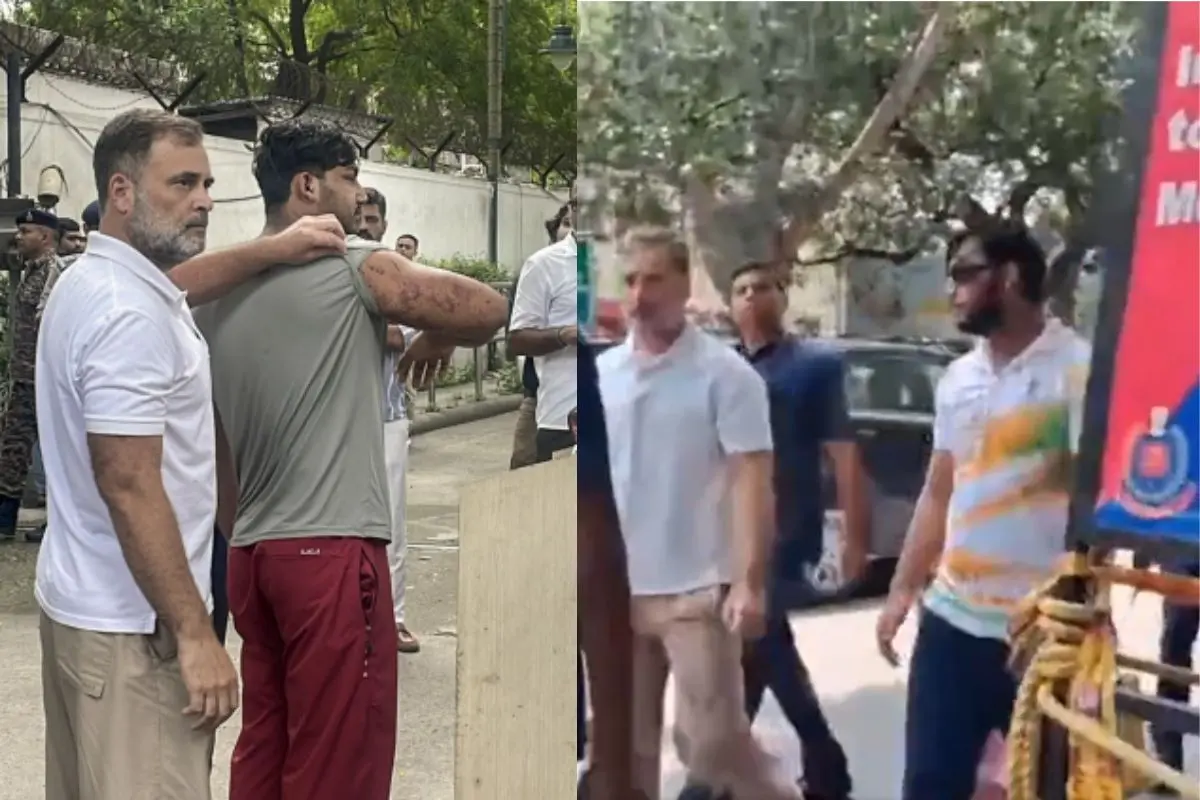
Congress leader and Lok Sabha Leader of Opposition Rahul Gandhi on Friday staged a sit-in at Delhi’s Parliament Street police station after his demand for an FIR over pellet injuries suffered by a youth during a July 20 protest was not accepted.
Gandhi was accompanied by Sahil Lochab, who suffered pellet injuries to his eyes and abdomen during the protest and later underwent surgery at the AIIMS Trauma Centre.
The Congress leader had first visited Mandir Marg police station with Lochab and sought registration of an FIR. After the demand was not accepted, Gandhi proceeded to Parliament Street police station and met the deputy commissioner of police (DCP).
When the discussions with the DCP failed to resolve the matter, Gandhi sat on a dharna inside the police station, pressing for the registration of the case.
The complaint relates to alleged police action against students during the July 20 protest, including allegations that pellet guns were used against the demonstrators.
Rahul Gandhi had accused Amit Shah of authorising force
The latest move comes days after Gandhi directly blamed Union Home Minister Amit Shah for the alleged use of force against the protesting students.
At a press conference on July 25, Gandhi alleged that Shah had authorised the use of lethal weapons, including pellet guns, during the protests.
"We hold Amit Shah directly responsible for the violence that has taken place against our students," Gandhi said, alleging that the Home Minister had authorised the use of such weapons. He said the issue would be raised in Parliament.
Gandhi also linked the student protests to what he described as failures in India's education, employment and institutional systems. He said the students were demanding an apology from Prime Minister Narendra Modi and argued that the protests reflected a deeper problem.
According to Gandhi, the government should view the protests as a warning and address the concerns of young people rather than continue to ignore them.
With agency inputs