Parliament Winter Session Day 12: ‘Ram Rajya Bill’ ignites MGNREGA uproar as ‘Sabka Bima’ push, repeal law row rock House
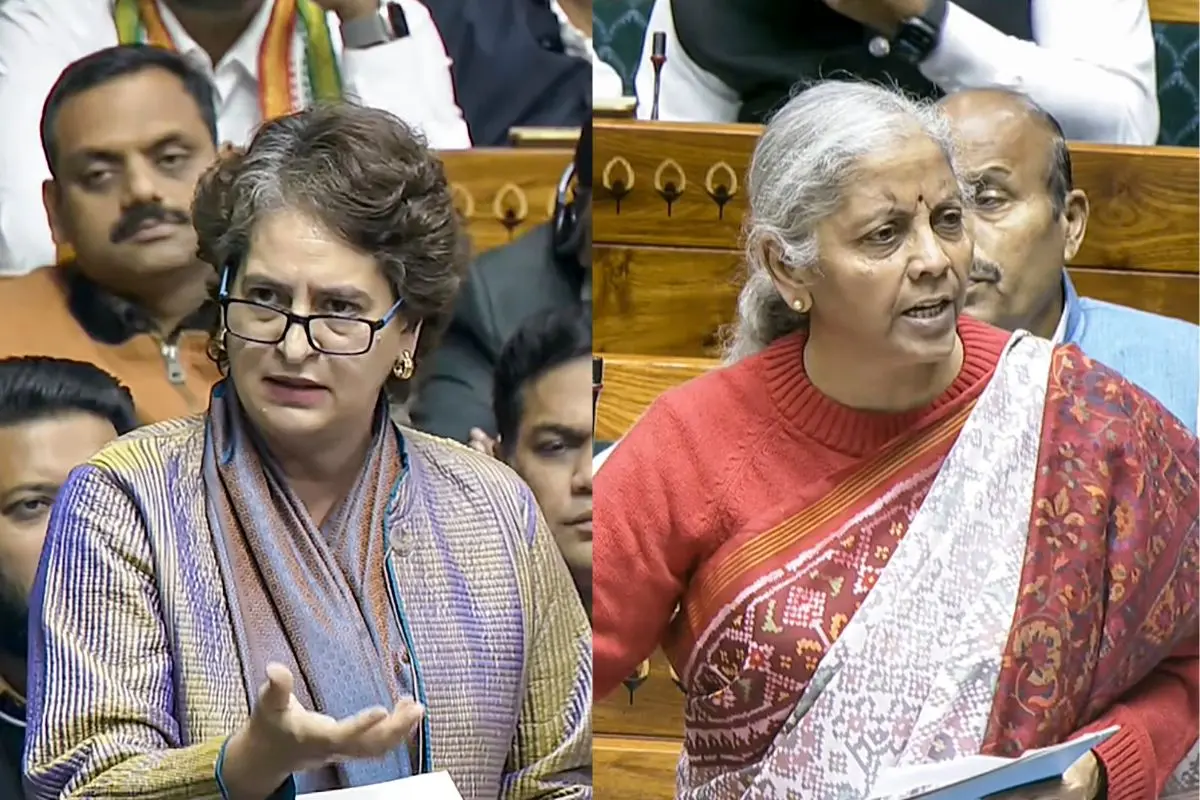
The Lok Sabha witnessed a stormy Day 12 of the Parliament Winter Session as the Opposition mounted sustained protests against the government’s move to repeal MGNREGA and replace it with the Viksit Bharat Guarantee for Rozgar and Ajeevika Mission (Gramin) Bill, 2025, disrupting proceedings even as several key legislations were introduced and debated.
Congress MP Priyanka Gandhi Vadra, along with other Opposition leaders, protested inside and outside Parliament, alleging that the proposed bill would dismantle the rights-based framework of MGNREGA.
The protests intensified when Agriculture Minister Shivraj Singh Chouhan introduced the VB–G RAM G Bill in the Lok Sabha, describing it as being in the spirit of Mahatma Gandhi and aimed at establishing “Ram Rajya.”
Opposition members strongly objected, accusing the government of weakening the statutory guarantee of 100 days of rural employment.
Congress MP Priyanka Gandhi Vadra mounted a sharp attack on the government inside the Lok Sabha, opposing the proposed repeal of MGNREGA and its replacement with the Viksit Bharat Guarantee for Rozgar and Ajeevika Mission (Gramin) Bill, 2025.
Speaking amid loud protests from the Opposition benches, Gandhi Vadra warned that the move would dilute the rights-based framework of the rural employment scheme, which guarantees 100 days of work to the poorest households.
Questioning the government’s emphasis on renaming and restructuring schemes, she asked whether wages or actual employment security had been strengthened, arguing that the proposed changes only create an illusion of expansion while weakening the statutory right to work.
Amid the ruckus, Finance Minister Nirmala Sitharaman introduced the Sabka Bima Sabki Raksha (Amendment of Insurance Laws) Bill, 2025, proposing to raise foreign direct investment in the insurance sector to 100 per cent.
Defending the move, Sitharaman said expanding insurance coverage for marginalised sections has been a priority of the Modi government, including during the COVID-19 pandemic. The bill seeks to amend the Insurance Act, LIC Act, and IRDAI Act to boost penetration, strengthen policyholder protection, and improve ease of doing business.
The Lok Sabha also took up the Repealing and Amending Bill, 2025, tabled by Union Law Minister Arjun Ram Meghwal, who said the government was abolishing obsolete, British-era laws to move India out of a colonial mindset.
However, Congress MP Dean Kuriakose criticised the move, alleging that the government was “clearing its books” by repealing its own post-2015 legislation rather than outdated colonial laws.
Meanwhile, NCP MP Praful Patel defended the use of Electronic Voting Machines, stating that no proof has ever been offered to show how EVMs can be tampered with.
He recalled past elections, including 2014, to argue that electoral outcomes have often surprised political parties and warned against creating unnecessary distrust in democratic institutions.
In the Rajya Sabha, BJP MP Iranna Kadadi accused the Karnataka government of neglecting farmers, citing crop losses, lack of procurement centres, and rising farmer suicides, and urged state intervention to prevent further distress.
Union Parliamentary Affairs Minister Kiren Rijiju informed the House that the Sustainable Harnessing and Advancement of Nuclear Energy for Transforming India (SHANTI) Bill, 2025, would be taken up for discussion on Wednesday.
With repeated disruptions and sloganeering by Opposition MPs over the MGNREGA repeal and renaming of schemes, proceedings remained tense through the day, underlining the deep political divide on welfare, governance, and reform priorities.