WATCH | Pakistanis rush to Wagah Border as India suspends SAARC Visa Scheme: Here’s why
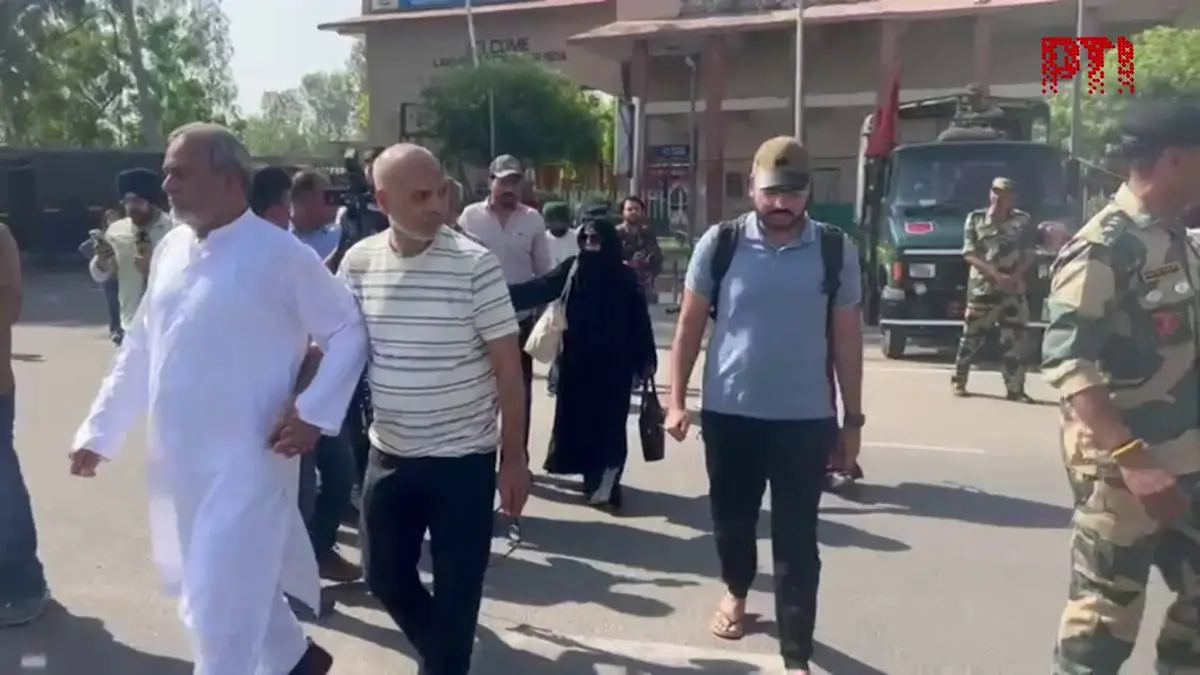
Pakistani nationals have begun queuing up at the Attari-Wagah border after India suspended the SAARC Visa Exemption Scheme (SVES) for Pakistan. The move follows the recent terror attack in Jammu and Kashmir’s Pahalgam, which left 28 people dead, including tourists. India has set a 48-hour deadline for Pakistani nationals currently in the country under SVES to leave. Videos posted by news agencies PTI and ANI on social media show several Pakistani nationals crossing the border, complying with the new directive.
What triggered the suspension of the scheme?
The suspension came in the wake of the Pahalgam attack, which was claimed by The Resistance Front (TRF), a proxy group linked to the Pakistan-based Lashkar-e-Taiba. The attack occurred at Baisaran meadow, a scenic spot in the region. In response, the Cabinet Committee on Security (CCS), headed by Prime Minister Narendra Modi, met to consider countermeasures. One of the key outcomes was the cancellation of SVES visas for Pakistani nationals, with Foreign Secretary Vikram Misri announcing the 48-hour exit directive.
What is the SAARC Visa Exemption Scheme?
Launched in 1992 by the South Asian Association for Regional Cooperation (SAARC), the SVES was created to foster regional integration and promote people-to-people contact among its member countries—India, Pakistan, Bangladesh, Sri Lanka, Nepal, Bhutan, Maldives, and Afghanistan. The scheme allowed select individuals to travel visa-free within SAARC countries using a special document called a ‘Visa Sticker’. These stickers were valid for one year and were issued to individuals travelling from their respective countries.
The SVES covered 24 categories of individuals, including government dignitaries, parliamentarians, judges of higher courts, senior officials, journalists, sportspersons, and business leaders. Each SAARC member country could periodically review and update the eligible categories. The scheme was considered an important tool for enhancing diplomatic, cultural, and economic ties across the region.
For Pakistani citizens, the scheme enabled simplified and visa-free access to India for specific groups such as diplomats, senior officials, business delegates, journalists, and cultural ambassadors. The SVES played a crucial role during tense bilateral periods by keeping communication and cooperation channels open. Although India has paused or limited access under the scheme in the past, this is the first time it has been entirely suspended for Pakistan with immediate effect. All previously issued SVES visas to Pakistani nationals have now been cancelled.
What is India’s message through this move?
By revoking the SVES for Pakistan, India has taken a decisive step aimed at increasing diplomatic pressure on Islamabad. The move reflects a broader zero-tolerance stance on terrorism, especially in light of the attack in Jammu and Kashmir. According to the CCS and Foreign Secretary Vikram Misri, the suspension aligns with the global standard of adopting strict measures against terrorism.