Bihar without a cabinet: Who takes decisions after Nitish Kumar steps down?
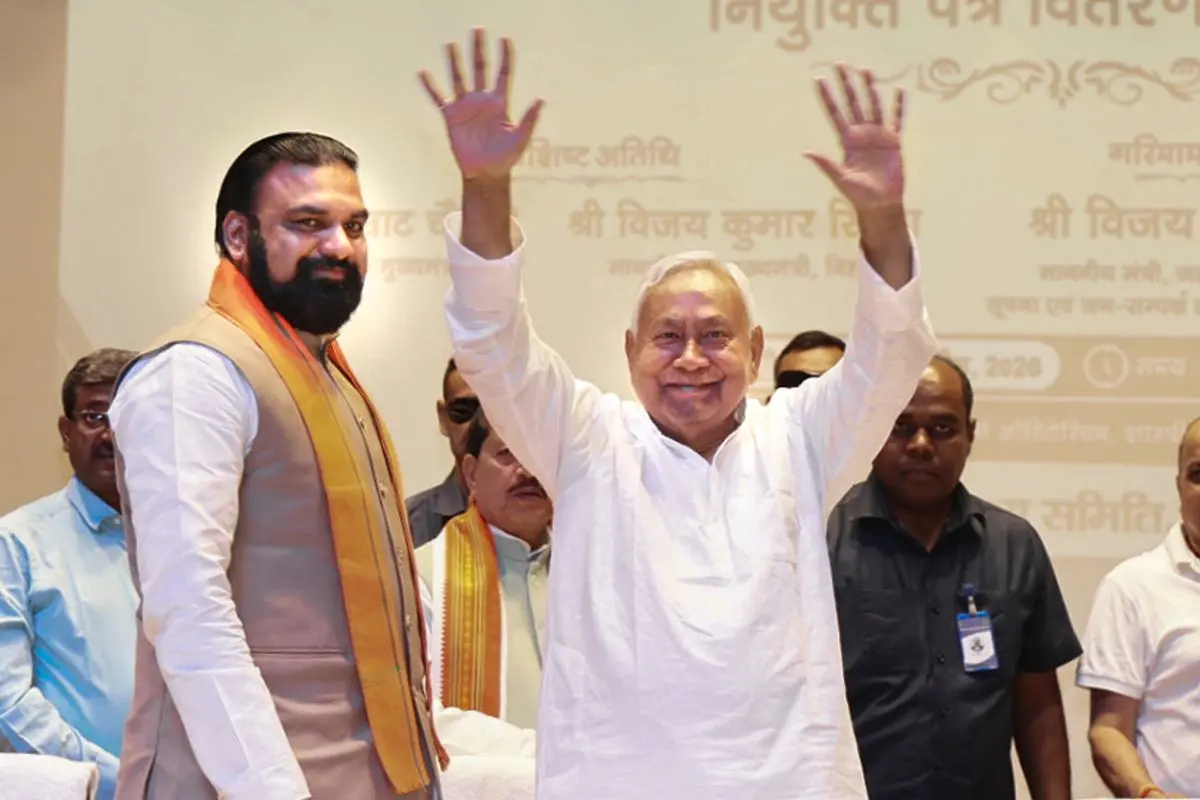
Patna: Nitish Kumar resigned as the Chief Minister of Bihar on April 14, 2026, bringing an end to one of the longest and most influential tenures in the state’s political history.
Before stepping down, the leader of the Janata Dal (United) (JD(U)) chaired a final cabinet meeting in Patna, after which the council of ministers was formally dissolved. He then met Governor Syed Ata Hasnain and submitted his resignation at Lok Bhawan.
The move effectively dissolved the existing government, leaving the state under a transitional phase until a new administration is formed.
Why Nitish Kumar resigned
While no single official reason has been publicly detailed, the resignation comes against the backdrop of shifting political alignments and mounting pressure within Bihar’s coalition dynamics.
Nitish Kumar has, over the years, switched alliances between major blocs, including the Bharatiya Janata Party (BJP) and opposition parties, reflecting a strategy centred on political stability and power balance. However, such shifts have also led to periodic tensions with allies and rivals alike.
The timing of the resignation suggests:
- Possible realignment of alliances ahead of upcoming elections
- Internal political calculations within JD(U) and its partners
- Strategic positioning to enable a new government formation under a different leadership structure
Additionally, recent controversies and sustained opposition criticism may have added to the political pressure surrounding his leadership, although these were not officially cited as reasons for stepping down.
What happens next in Bihar
Following the resignation, the constitutional process for government formation is set in motion. Governor Syed Ata Hasnain will play a key role in determining the next steps.
Immediate next steps:
The Governor may invite the largest party or alliance to stake claim to form the government
Parties will need to demonstrate majority support in the Bihar Legislative Assembly
A new Chief Minister will be appointed once a viable government is formed
Possible political scenarios:
- BJP-led government formation
The Bharatiya Janata Party is widely expected to attempt forming the next government, either independently or with allies, depending on legislative support.
- Coalition reshuffle
The Janata Dal (United) could still play a role in a reconfigured alliance, depending on negotiations with national and regional players.
- Opposition bid for power
Opposition parties, including those led by Lalu Prasad Yadav and Tejashwi Yadav, may explore the possibility of forming an alternative coalition if numbers permit.
- Floor test in Assembly
Any newly formed government will be required to prove its majority through a floor test, ensuring constitutional legitimacy.
- Possibility of fresh elections
If no party or alliance is able to secure a majority, Bihar could face a situation leading to early elections or temporary central intervention.
Why this development matters
Nitish Kumar’s resignation is a major political turning point with wide-ranging implications:
- It marks the end of a leadership era defined by coalition politics and administrative continuity
- It opens the door for a potential shift in governance under new leadership
- It could significantly alter electoral strategies ahead of upcoming polls
- It highlights the evolving nature of alliances in Indian state politics
As Bihar awaits its next Chief Minister, the coming days will be crucial in determining the state’s political direction and stability.