Women report abuse, not seek judgement: NHRC warns police against victim-shaming
New Delhi: The National Human Rights Commission has issued an advisory on Women's Safety at Work and Public Spaces, recommending measures to improve women's safety and the handling of complaints involving gender-based violence.
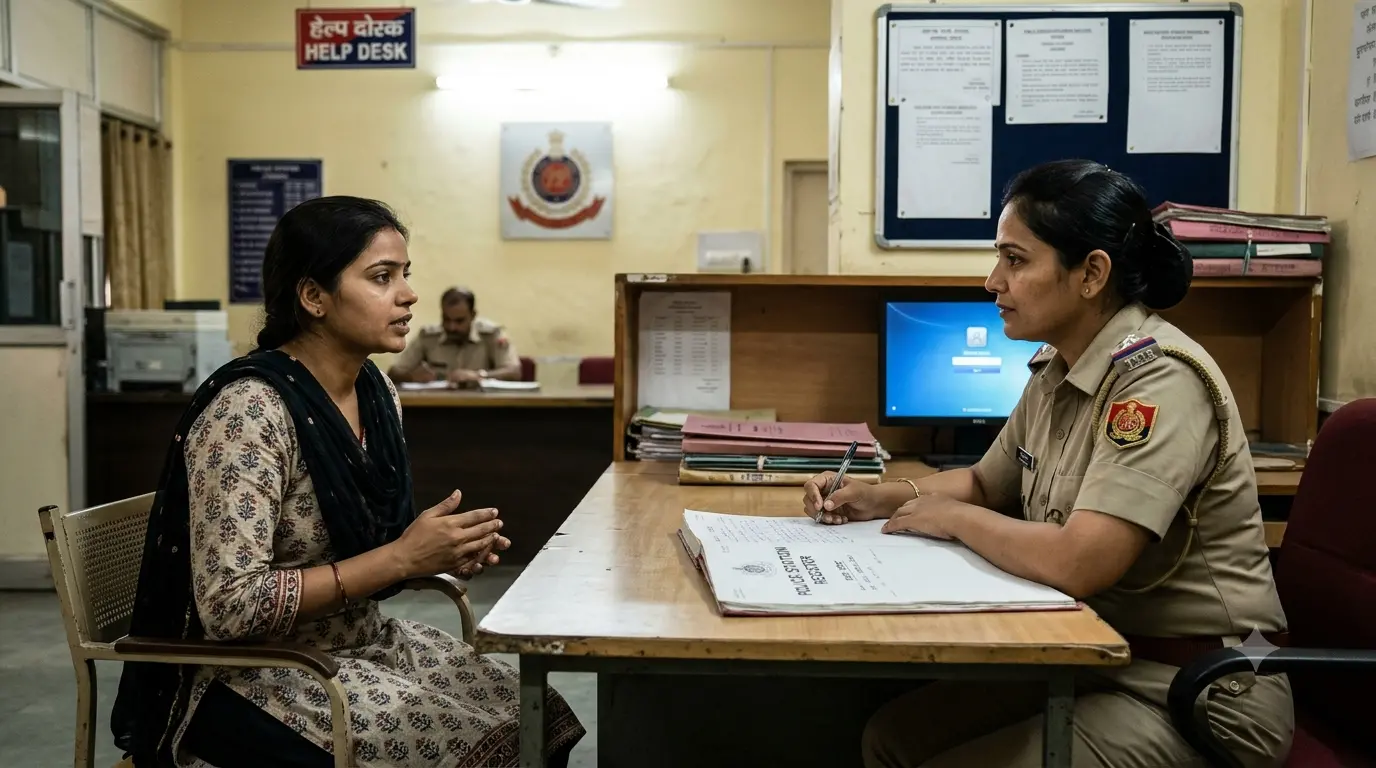
The advisory, dated October 23, calls for police personnel to be trained to avoid moral judgements and victim-shaming when survivors approach police stations to report violence or harassment.
The NHRC noted that survivors sometimes face resistance and moral policing while trying to register complaints. It recommended that the concerned ministry consider developing a standard operating procedure setting out clear protocols for dealing with survivors of gender-based violence.
The procedure should be widely circulated, including through social media, according to the advisory.
Police patrolling and faster emergency responses
The commission has recommended regular police patrolling in areas that are deserted at night and locations identified as crime hotspots.
It has also called for time-bound response standards for helplines and police arrival when violence occurs in public spaces.
The advisory highlights the need to ensure that every police station has a functional Women's Help Desk. According to figures cited by the NHRC, 14,658 of the country's 16,109 police stations had a Women's Help Desk as of December 2025.
The commission recommended that steps be taken to establish functional help desks in the remaining police stations so women in distress can access assistance.
NHRC flags growing risks from AI deepfakes and online abuse
The advisory warns that gender-based violence is no longer confined to physical spaces. The NHRC has pointed to a sharp increase in technology-facilitated gender-based violence in recent years, particularly with the growth of digital technology and artificial intelligence.
It has recommended awareness programmes for women across age groups about online abuse, including:
- Revenge porn and the non-consensual sharing of intimate images.
- Doxxing, or the malicious publication of private or identifying information.
- The circulation of explicit images and videos without consent.
- AI-generated deepfakes that misuse a person's likeness.
The commission has also recommended cybercrime awareness programmes in schools, colleges, universities and workplaces. These programmes should explain how victims can report offences and access existing grievance-redressal mechanisms, including the National Cyber Crime Reporting Portal and the Sahyog portal.
Awareness of sexual harassment and legal rights
The NHRC has observed that a lack of awareness about what constitutes sexual harassment, and what steps victims can take after an incident, remains a concern.
It has recommended displaying posters, flyers and other informational material in public spaces and workplaces. These materials should explain forms of harassment, women's legal rights, emergency contact numbers and available complaint mechanisms.
The advisory specifically refers to the Sexual Harassment Electronic Box, commonly known as the SHe-Box portal, which provides a mechanism for reporting workplace sexual harassment.
The recommendations aim to make information about reporting procedures and available support more accessible to women.
The NHRC said it had sent the advisory to the secretaries of 10 Union ministries, including the ministries of Women and Child Development, Education, Health and Home Affairs.
It was also sent to the chairperson and chief executive officer of the Railway Board, as well as the chief secretaries of all states and administrators of Union Territories.
The commission has asked the concerned authorities to implement the recommendations and submit an action-taken report within two months, informing it of progress.