New investigation claims to uncover thousands of 'ghost' voters in Bihar
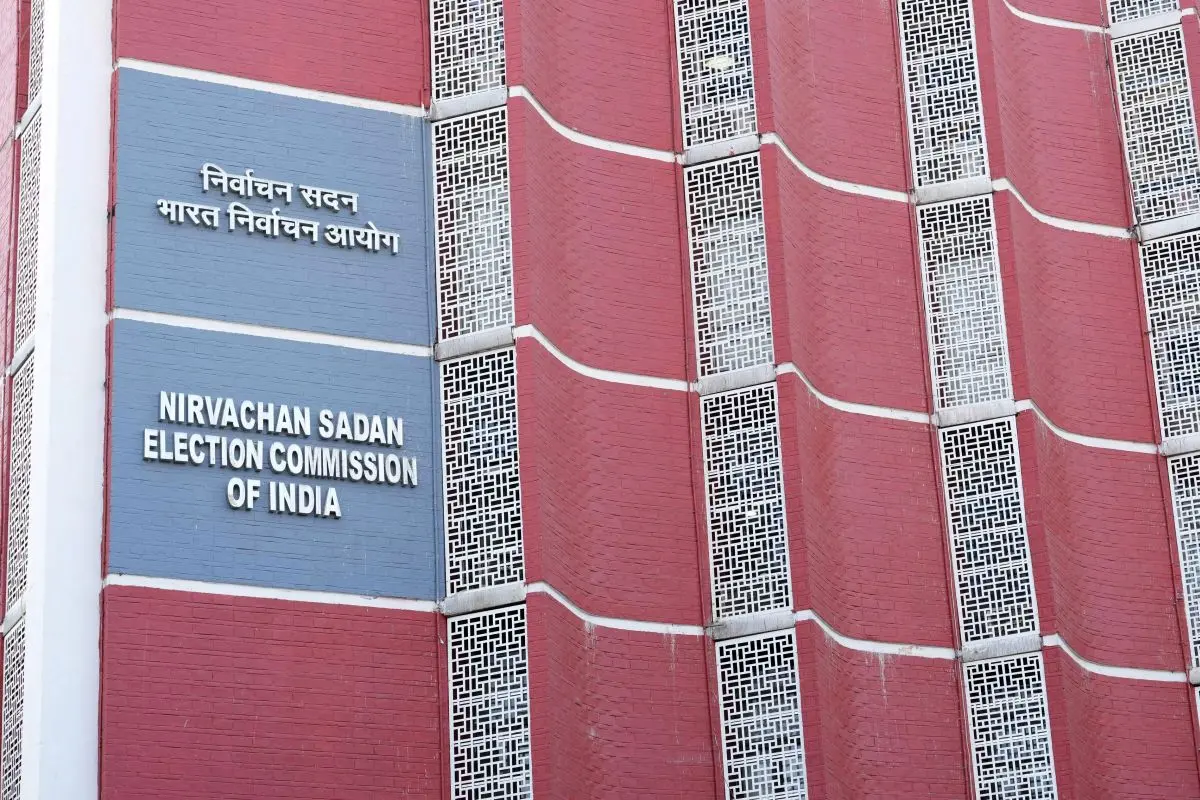
An investigation by The Reporters’ Collective has reportedly unearthed significant and widespread flaws in the Election Commission of India's (ECI) special intensive revision (SIR) of electoral rolls in Bihar, a process the ECI claimed would "purify" the state's voter database.
The investigation reportedly found thousands of voters registered at non-existent or dubious addresses, raising serious questions about the integrity of the process.
In Galimpur, a village in the Pipra assembly constituency, the investigation allegedly found two separate, non-existent houses where the ECI had registered 509 and 459 voters, respectively. The addresses listed individuals from different families, castes, and communities as living together under one roof.
The investigation, which focused on three constituencies -- Pipra, Bagaha, and Motihari -- reportedly found 3,590 cases where 20 or more people were registered at a single address. In total, over 80,000 voters in these three constituencies alone were registered in this manner, potentially compromising nearly 8% of the total voters in the region.
Systemic Failures and Dubious Addresses
The Reporters' Collective claimed to have collaborated with independent data analysts to study the ECI’s newly-prepared voter data and then conducted on-the-ground verification. If true, the findings reveal systemic and large-scale flaws, suggesting that the ECI's hastily executed exercise not only failed to correct past errors but may have introduced new ones.
In the Motihari constituency, one non-existent house was found to have 294 voters from different families registered to the same address. In Bagaha, nine households had over 100 voters each, with the largest having 248 individuals.
During a ground check, The Reporters' Collective said it spoke to voters who were astonished to find their names linked to these "ghost" houses. Shivnath Das, whose son Amit Kumar was one of the 509 people listed at a single address, expressed his disbelief. "How is this possible," he asked. "People live together in the village, with love and brotherhood, but everyone has separate houses. People of the Musahar community live separately, while people of the Das (Baniya) community live separately. Similarly, people of the Jhal (Brahmin) community live separately."
Another voter in Galimpur remarked on the absurdity of a list that placed members of different castes together. "How is it that members from the Manjhi-Musahar caste and Brahmin-Baniya caste are living together? This is the mischief of those who fill the names and numbers," the voter said.
A Hasty Process and Finger-Pointing
The investigation reportedly found that in many cases, voters had not even filled out their own forms. Jadulal Shah, from the Pipra constituency, explained that election officials had filled out the forms for his family. "Only Aadhaar was taken in the name of documents, and for some, they asked for photographs. The rest of the forms they (the department) filled themselves and took away," he said.
Booth-level officers (BLOs), who are at the forefront of the revision, allegedly attributed the mess to a rushed 30-day timeline. One BLO, Shashi Ranjan Jha, told the publication that they often had to stay awake all night to upload documents to the ECI website, which frequently did not work during the day. He also reportedly said they were not properly briefed on how to handle false or wrong addresses.
"We understand that the BLO is the primary and weak link in this entire process, so all questions have to be asked from him, but who will understand his compulsions," Jha lamented.
In a formal response on August 16 to the growing criticism, the ECI shifted responsibility to political parties, stating, "It seems that some political parties and their Booth Level Agents (BLAs) did not examine the Electoral Rolls at the appropriate time and did not point the errors, if any, to SDMs/EROs, DEOs or CEOs."