Why does the West Bengal BJP have an issue with Netaji? The politics behind a growing unease
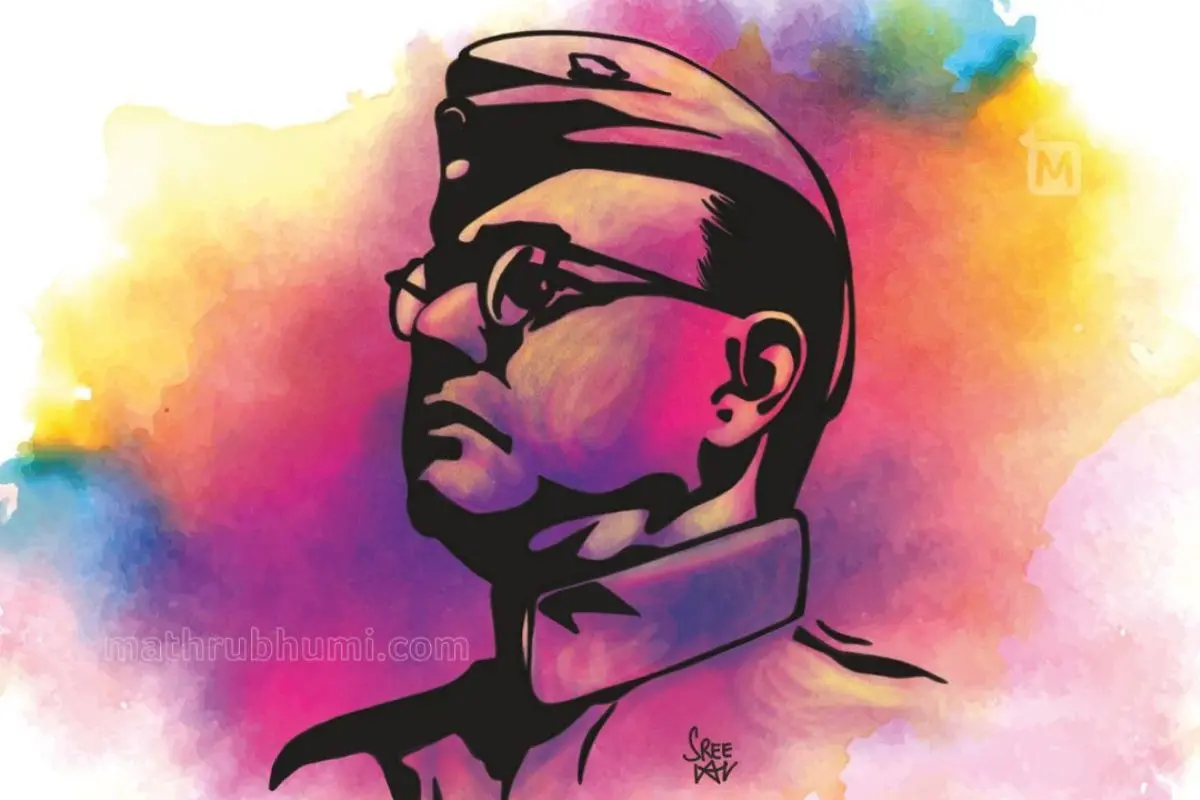
Netaji Subhas Chandra Bose is one of Bengal's most fiercely protected political memories. His name transcends party lines, his image is embedded in the state's public imagination, and his Indian National Army remains one of the most powerful symbols of India's armed resistance to British rule.
Yet, in recent months, a curious pattern has emerged within the West Bengal BJP: some of its prominent leaders have found themselves questioning, diminishing or distancing themselves from aspects of Bose's legacy.
The latest controversy came from BJP Rajya Sabha MP Nagendra Roy, better known as Ananta Maharaj, who questioned Bose's role in building the Indian National Army.
Roy claimed that Netaji could not organise and raise an army like the Azad Hind Fauj and suggested that the force was essentially made up of former British Indian soldiers.
The remarks triggered condemnation across the political spectrum, including from within the BJP.
Soon after, West Bengal BJP president Samik Bhattacharya described members of the Forward Bloc, the party founded by Bose, as 'goons', while contrasting Netaji's politics with those of Syama Prasad Mookerjee.
Individually, such statements can be dismissed as political rhetoric or ill-judged remarks. Together, however, they raise a larger question: why does Netaji appear to be such an uncomfortable figure for a section of the Bengal BJP? The answer lies in the kind of nationalism Bose represented.
The Netaji that Hindutva cannot easily claim
Bose was unquestionably a nationalist, but his nationalism did not rest on religious majoritarianism.
The INA brought together Hindus, Muslims, Sikhs and Christians under one anti-colonial command. Its appeal was built around a common Indian identity rather than a Hindu political identity.
Bose's political vocabulary, therefore, presents a complicated inheritance for a movement seeking to define Indian nationalism primarily through the cultural and political framework of Hindutva. That contradiction becomes particularly stark in Bengal.
The BJP and RSS have spent years attempting to construct a Bengali nationalist lineage that can sit comfortably alongside their broader ideological project.
Syama Prasad Mookerjee provides one obvious anchor. Bankim Chandra Chattopadhyay provides another, particularly through Anandamath and Vande Mataram.
Aurobindo Ghose, selectively interpreted, also offers a connection between Bengali nationalism and Hindu political thought. Netaji is different.
His stature is too immense to ignore, but his political legacy cannot be neatly folded into that narrative. That makes him both indispensable and inconvenient.
Bengal's pantheon is larger than the BJP's preferred lineage
This is where the contest over Bengal's history becomes significant. The state's political and cultural inheritance cannot be reduced to Mookerjee and Bankim.
It also includes Raja Rammohan Roy, Ishwar Chandra Vidyasagar, Rabindranath Tagore, Kazi Nazrul Islam, Khudiram Bose, Maulana Abul Kalam Azad and Subhas Chandra Bose.
Many of these figures represent precisely the liberal, reformist and pluralist traditions that sit uneasily with a majoritarian interpretation of Indian nationalism.
Rammohan Roy challenged practices such as sati and became a foundational figure of the Bengal Renaissance. Vidyasagar fought for widow remarriage and women's education while challenging entrenched social orthodoxy.
Tagore warned against the dangers of aggressive nationalism. Nazrul's poetry became one of Bengal's strongest cultural arguments for Hindu-Muslim unity.
And Bose built an army in which religious identity was secondary to the idea of India.
For the BJP, Bengal therefore presents an unusual ideological challenge. It is a state where some of the most revered symbols of nationalism do not necessarily validate the political tradition the party seeks to establish.
The pattern goes beyond Netaji
The controversy over Bose does not exist in isolation. In November 2025, Madhya Pradesh Education Minister Inder Singh Parmar referred to Raja Rammohan Roy as an 'angrezon ke dalal', or an agent of the British, during a public speech. He later apologised following widespread criticism.
Vidyasagar has also remained at the centre of political conflict. His bust was destroyed at Vidyasagar College during clashes surrounding Amit Shah's roadshow in May 2019.
Responsibility for the incident was fiercely contested, but the episode acquired a significance far beyond the physical destruction of a statue.
Khudiram Bose, another towering figure of Bengal's anti-colonial history, was portrayed as a 'criminal' in the Zee5 series Abhay 2, provoking protests from Bengali groups including Bangla Pokkho.
Students at IIT Kharagpur have also alleged that Maulana Abul Kalam Azad, independent India's first education minister who formally inaugurated the institution, was omitted from a campus display of freedom fighters.
None of these incidents alone establishes a coordinated campaign. But taken together, they reveal a recurring struggle over which parts of Bengal's history receive prominence, which are reinterpreted and which gradually disappear from the centre of the political conversation.
Why Bose is particularly difficult
The BJP has not rejected Netaji. In fact, the party has repeatedly invoked his name and sought to associate itself with his nationalist legacy. That is precisely what makes the recent controversies so revealing.
Bose is difficult to appropriate without also acknowledging the political principles that accompanied his nationalism. His INA included people across religious communities.
His politics cannot simply be reduced to the cultural nationalism associated with the RSS. His anti-colonial credentials are inseparable from the fact that he directly challenged British rule through the Azad Hind movement.
This creates an uncomfortable historical comparison. The RSS did not participate in the mass anti-colonial movement led by Congress, while Bose's political life was defined by an uncompromising confrontation with British rule. The Hindu Mahasabha, meanwhile, participated in coalition governments under British rule during the Second World War, while Congress ministries resigned in protest.
Savarkar's repeated mercy petitions from the Cellular Jail are another part of the broader historical burden surrounding the Hindu nationalist tradition.
That history makes Bose more than merely another freedom fighter. His record becomes a yardstick against which competing versions of Indian nationalism can be measured.
The battle is no longer only about the past
This is why the argument over Netaji is ultimately not an argument about Netaji alone. It is about who gets to define Bengali nationalism.
After the BJP's victory in West Bengal in 2026, the political battle over the state has acquired another dimension: the attempt to reshape its historical and cultural imagination.
The revival of Syama Prasad Mookerjee as a Bengali nationalist icon and the renewed emphasis on Bankim's legacy are part of that effort. But constructing one lineage necessarily raises a question about another.
If Mookerjee becomes the central political symbol of Bengali nationalism, where does Bose stand?
If Bankim becomes the principal intellectual ancestor of Bengali nationalism, what happens to Tagore, Nazrul, Vidyasagar and Rammohan Roy?
And if Netaji's nationalism is celebrated, can it be celebrated without acknowledging its profoundly inclusive character? That is the real dilemma.
The issue is not whether the BJP honours Netaji. It is whether the version of Netaji it wants Bengal to remember can be separated from the political ideas that made him Netaji in the first place.
Bengal's history has never been a single straight line. It is a crowded argument between reformers and conservatives, revolutionaries and constitutionalists, secularists and religious nationalists, poets and politicians.
Trying to simplify that history may make it politically convenient, but it also risks stripping Bengal of the very contradictions that made its contribution to modern India so consequential.
The question facing the West Bengal BJP, therefore, is not simply why it has a problem with Netaji. It is whether it can claim Bose without confronting the nationalism he actually represented.