Nepal floods: Is rising water putting UP border districts at risk as rivers swell downstream?
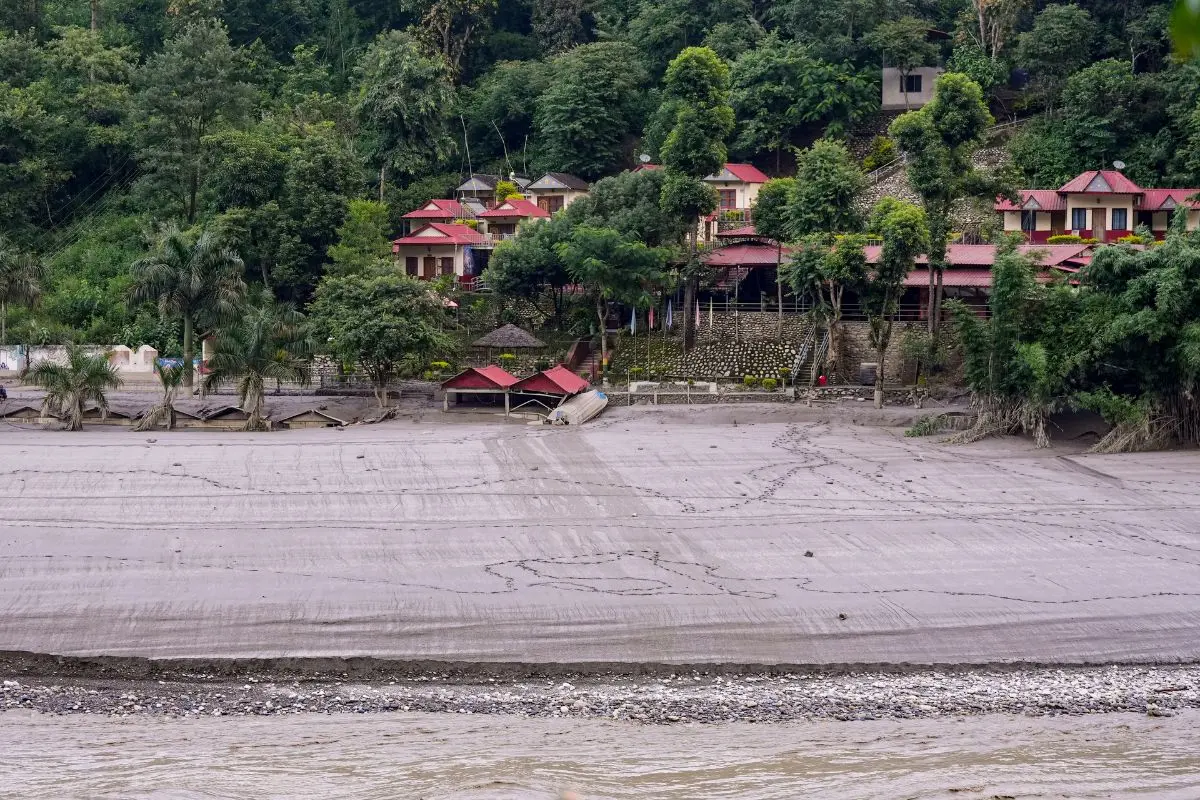
Lucknow: The Uttar Pradesh administration has sounded a high alert in Maharajganj and Kushinagar districts and intensified monitoring of rivers and water bodies downstream of Nepal, following devastating flash floods in the neighbouring country.
The floods have killed at least 177 people and left thousands missing, according to reports. Nepal’s disaster management authorities have put the number of missing people at 826, while Nepal Foreign Minister Shisir Khanal said nearly 300 Indian tourists are among those unaccounted for.
The Uttar Pradesh administration, which shares a border with Nepal, is closely monitoring rivers including the Gandak and other water channels receiving water from Nepal. Officials have been directed to remain prepared for any sudden rise in water levels and to keep rescue and relief teams on standby.
High alert in Maharajganj
In Maharajganj, senior officials, including Additional District Magistrate Prashant Kumar, have been deployed in vulnerable riverine areas to monitor the water level and flow of the Gandak, Darjaniya, Tail Fall and other rivers and channels receiving water from Nepal.
Officials have been asked to remain alert so that rescue and relief operations can be launched immediately if water levels rise suddenly.
Villages along riverbanks and low-lying areas are being closely monitored, with preparations in place to evacuate residents if necessary.
Kumar said the administration was fully prepared and that water levels and river flows were being monitored continuously. He urged residents to avoid going unnecessarily close to rivers, follow official advisories and not pay heed to rumours.
Kushinagar steps up preparations
In neighbouring Kushinagar, officials have intensified preparations amid rising water levels in the Gandak, locally known as the Narayani.
District Magistrate Mahendra Singh Tanwar, accompanied by Superintendent of Police Keshav Kumar, inspected vulnerable riverside villages and the Valmikinagar barrage.
Residents were urged to remain alert and stay away from rivers and low-lying areas.
The administration is particularly monitoring villages in sandy stretches along the river, where large numbers of people and livestock live close to the water. Officials said arrangements were being made to shift residents to safer locations if water levels rise sharply.
Valmikinagar barrage under watch
The Valmikinagar barrage in Bihar is also being closely monitored, with all 36 gates opened.
According to the district administration, the discharge increased from around 1.04 lakh cusecs at 8 pm to 1.36 lakh cusecs at 9.30 pm and 1.42 lakh cusecs at 10 pm.
Officials are also monitoring river pressure at vulnerable stretches of the Narwa Jot AP embankment, including the sections between 3 and 4 km, the spur at 10.518 km and the stretch between 13 and 14.5 km.
A State Disaster Response Force (SDRF) team equipped with rescue equipment has been deployed and kept on alert.
Police personnel in the Khadda, Hanumanganj, Tarayasu Jan and Sevarahi police station areas have also been alerted. Two platoons of the Provincial Armed Constabulary (PAC) have been deployed, with two additional platoons sought.
The administration has directed officials to use loudspeakers to alert residents in vulnerable villages. Drinking water, mobile toilets and other essential facilities are also being arranged as a precaution.
Other UP districts monitor river levels
Union Minister of State for External Affairs and Gonda BJP MP Kirti Vardhan Singh expressed grief over the deaths and the disappearance of Indian tourists in Nepal.
He said the Indian government was assisting in relief and rescue operations and that the National Disaster Response Force (NDRF) had reached Nepal to search for missing people using modern equipment and technology.
Singh said water levels and changing weather conditions were being monitored continuously in border districts, including Lakhimpur Kheri, Gonda, Bahraich and Maharajganj.
According to him, a system is also in place to receive advance information about water released from Nepal.
CWC tracks rising water levels
The Central Water Commission's (CWC) Daily Water Level and Forecast Bulletin dated August 27 showed rising water levels at several locations.
The Rapti was rising at Madhwapur in Bihar, where the water level stood at 124.54 metres at 8 am. The river was also rising at Sarju (Babai) in Gaighat, as well as at several stations along the Kwano and Sarda rivers.
The Rapti recorded 40 mm of rainfall at Bhinga, 36.4 mm at Madhwapur and 43.6 mm at Balrampur during the 24-hour period ending at 8.30 am on Thursday.
The Sarda at Banbasa in Uttarakhand received 67 mm of rainfall and stood at 217.6 metres at 8 am. At Kabir Ganj in Uttar Pradesh's Pilibhit, the Sarda was rising at 163.23 metres.
The CWC said the Ghagra at Turtipar in Uttar Pradesh's Ballia was above its warning level, standing at 64.06 metres against the warning level of 63.01 metres. However, the water level there was falling.
Relief efforts planned for Nepal
In Balrampur, a condolence meeting was held at the Samajwadi Party office to pay tribute to those killed in the Nepal disaster.
Gaisri MLA Rakesh Yadav, whose constituency borders Nepal, announced that the Samajwadi Party would send relief supplies to flood-affected areas in Nepal. The material will include medicines, medical equipment, food packets, tents, tarpaulins and drinking water.
Meanwhile, yajnas and prayers were held in Vrindavan for the safety of people affected by the Nepal floods. The programme is scheduled to continue until the situation improves.
The heightened vigilance in Uttar Pradesh comes as Nepal continues search, rescue and relief operations following the devastating floods, with authorities on both sides of the border closely watching river levels and the movement of water downstream.
(pti)