Murmu's 14 questions: Here's how SC answered to queries on powers of Governors and President
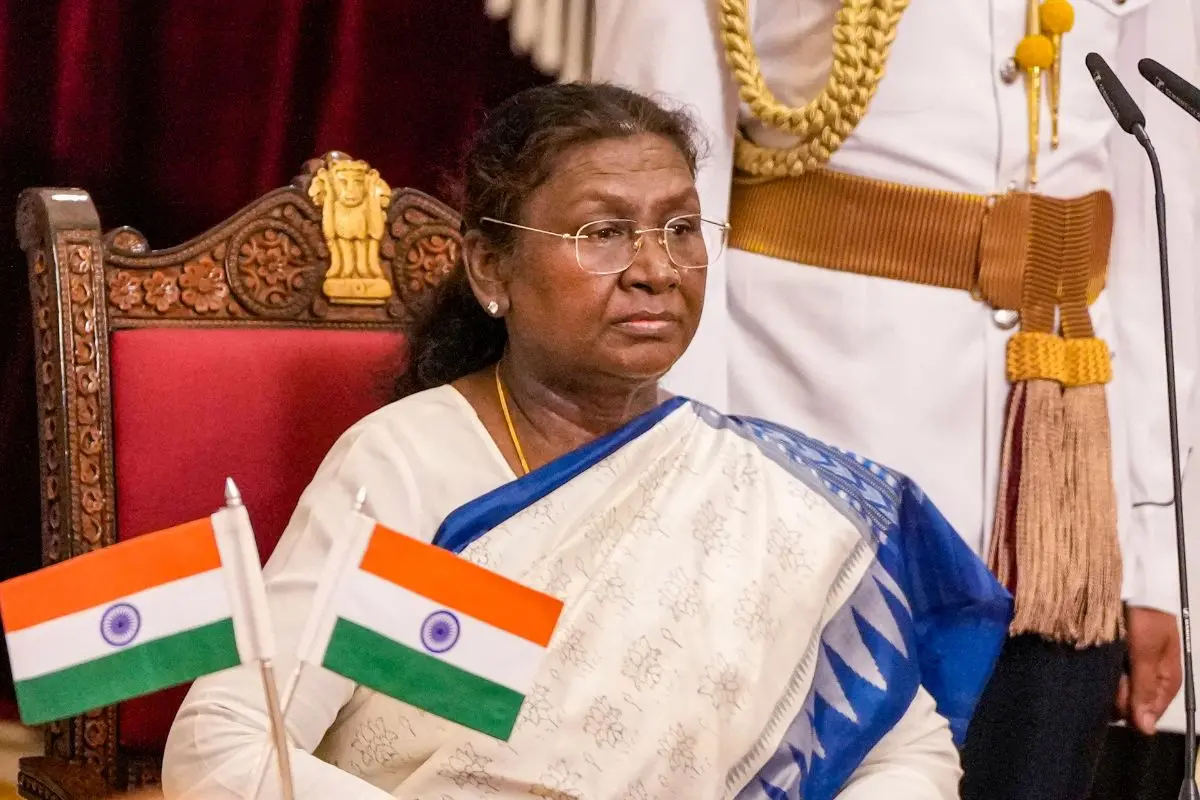
The Supreme Court on Thursday delivered an advisory opinion clarifying that courts cannot “impose” timelines on the President or State Governors for acting on Bills passed by State Legislatures. A Constitution Bench led by Chief Justice of India BR Gavai issued the opinion while answering 13 of 14 questions referred by President Droupadi Murmu under Article 143.
The Court held that though the Constitution allows elasticity in how these high offices discharge their legislative roles, prolonged and unexplained inaction may still invite limited judicial intervention.
Murmu had sought clarity on the interpretation of Articles 200 and 201, particularly relating to discretion, accountability, and whether the judiciary could prescribe deadlines. The Court offered detailed answers to eleven questions and declined to answer three, citing irrelevance or excessive breadth. Here is a detailed examination of what Murmu asked and how the top court responded.
1. What are the constitutional options before a Governor when a Bill is presented to him under Article 200 of the Constitution of India?
The Court held that the Governor has three constitutional options under Article 200: (i) to assent; (ii) to reserve the Bill for the consideration of the President; or (iii) to withhold assent and return the Bill to the Legislature with comments. The third option—to withhold and return—is only available to the Governor when the Bill is not a Money Bill. The first proviso to Article 200 restricts the existing options rather than offering a fourth distinct alternative.
2. Is the Governor bound by the aid & advice tendered by the Council of Ministers while exercising all the options available with him when a Bill is presented before him under Article 200 of the Constitution of India?
The Court opined that the Governor enjoys discretion in choosing among the three constitutional options and is not bound by the aid and advice of the Council of Ministers while exercising this function under Article 200. This conferral of discretion is essential to initiating the dialogic process.
3. Is the exercise of constitutional discretion by the Governor under Article 200 of the Constitution of India justiciable?
The Court concluded that the discharge of the Governor’s function under Article 200 is not justiciable, meaning the Court cannot perform a merits review of the decision taken. However, in "glaring circumstances of inaction that is prolonged, unexplained, and indefinite," the Court may issue a limited mandamus directing the Governor to discharge the function within a reasonable time period, but without commenting on the merits of the exercise of discretion.
4. Is Article 361 of the Constitution of India an absolute bar to the judicial review in relation to the actions of a Governor under Article 200 of the Constitution of India?
Article 361 is an absolute bar against personally subjecting the Governor to judicial proceedings. However, this immunity cannot negate the limited scope of judicial review concerning prolonged inaction by the Governor under Article 200. While the Governor retains personal immunity, the constitutional office itself remains subject to the jurisdiction of the Court.
5. In the absence of a constitutionally prescribed time limit, and the manner of exercise of powers by the Governor, can timelines be imposed and the manner of exercise be prescribed through judicial orders for the exercise of all powers under Article 200 of the Constitution of India by the Governor?
The Court ruled that prescribing timelines for the exercise of powers under Article 200 through judicial orders is not appropriate due to the absence of a constitutionally prescribed time limit. The text of Articles 200 and 201 was framed to provide a sense of elasticity for constitutional authorities to perform their functions, and imposing timelines would be strictly contrary to this design.
6. Is the exercise of constitutional discretion by the President under Article 201 of the Constitution of India justiciable?
For similar reasons as held for the Governor under Article 200, the President’s assent under Article 201 is not justiciable.
7. In the absence of a constitutionally prescribed timeline and the manner of exercise of powers by the President, can timelines be imposed and the manner of exercise be prescribed through judicial orders for the exercise of discretion by the President under Article 201 of the Constitution of India?
No. The President, like the Governor, cannot be bound by judicially prescribed timelines in the discharge of functions under Article 201.
8. In light of the constitutional scheme governing the powers of the President, is the President required to seek advice of the Supreme Court by way of a reference under Article 143 of the Constitution of India and take the opinion of the Supreme Court when the Governor reserves a Bill for the President's assent or otherwise?
The President is not required to seek advice from the Supreme Court under Article 143 every time a Governor reserves a Bill. The subjective satisfaction of the President is sufficient. Advice may be sought if there is a lack of clarity, or if the President otherwise requires it.
9. Are the decisions of the Governor and the President under Article 200 and Article 201 of the Constitution of India, respectively, justiciable at a stage anterior into the law coming into force? Is it permissible for the Courts to undertake judicial adjudication over the contents of a Bill, in any manner, before it becomes law?
The decisions are not justiciable at a stage anterior to the law coming into force. It is impermissible for the Courts to undertake judicial adjudication over the contents of a Bill in any manner before it becomes law, although the discharge of the Court’s advisory role under Article 143 is not considered 'judicial adjudication'.
10. Can the exercise of constitutional powers and the orders of/by the President/Governor be substituted in any manner under Article 142 of the Constitution of India?
No. The exercise of constitutional powers and the orders of the President or Governor cannot be substituted in any manner under Article 142. The Court clarified that the concept of ‘deemed assent’ of Bills is not allowed by the Constitution or Article 142.
11. Is a law made by the State legislature a law in force without the assent of the Governor granted under Article 200 of the Constitution of India?
No. There is no question of a law made by the State Legislature coming into force without the assent of the Governor under Article 200. The Governor’s legislative role under Article 200 cannot be supplanted by another constitutional authority.
12. In view of the proviso to Article 145(3) of the Constitution of India, is it not mandatory for any bench of this Hon'ble Court to first decide as to whether the question involved in the proceedings before it is of such a nature which involves substantial questions of law as to the interpretation of constitution and to refer it to a bench of minimum five Judges?
The Court declined to answer this question. It was deemed irrelevant to the "functional nature" of the reference, as it concerned Article 145(3) and the composition of Supreme Court benches hearing constitutional questions.
13. Do the powers of the Supreme Court under Article 142 of the Constitution of India limited to matters of procedural law or Article 142 of the Constitution of India extends to issuing directions /passing orders which are contrary to or inconsistent with existing substantive or procedural provisions of the Constitution or law in force?
The Court declined to answer this question fully, finding it "worded in such broad terms that it is not possible to answer it in a comprehensive and definitive manner". However, the scope of Article 142 regarding the functions of the Governor and President was addressed under Question 10.
14. Does the Constitution bar any other jurisdiction of the Supreme Court to resolve disputes between the Union Government and the State Governments except by way of a suit under Article 131 of the Constitution of India?
The Court declined to answer this question, finding it irrelevant to the functional nature of the reference concerning the assent to bills.
The Supreme Court avoided answering three of the fourteen questions referred by the President, returning Questions 12, 13, and 14 as either irrelevant to the functional nature of the reference or overly broad.
The core opinion strongly underscores the view that India’s constitutional machinery thrives on "dialogue, reconciliation and balance, and not obstructionism". While emphatically rejecting the possibility of courts fixing deadlines or invoking ‘deemed assent’ through Article 142, the bench affirmed a limited mechanism for judicial review.