Will your international flight shift airports? Mumbai airlines question Navi Mumbai transfer plan
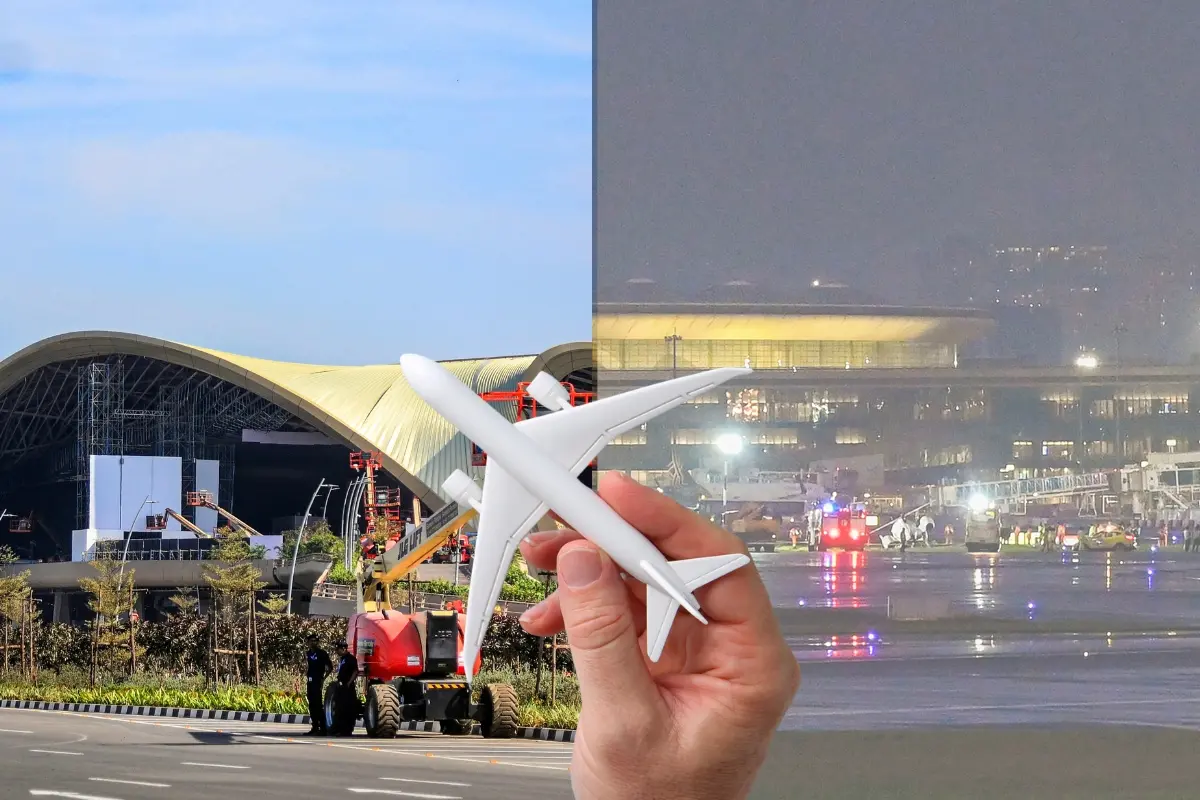
Airlines operating from Mumbai have opposed a proposal to move a part of the city’s international flights to the upcoming Navi Mumbai International Airport (NMIA), saying the plan requires wider consultation and clear information before any decision is taken. The dispute could affect how international flights are distributed between the two airports from the summer schedule of 2027, with implications for passengers travelling to and from Mumbai.
The Airline Operators Committee (AOC), which represents 47 airlines operating at Mumbai airport, has said its members have not agreed to any reduction in flight slots or the transfer of international operations to Navi Mumbai. It has asked Mumbai International Airport Ltd (MIAL), which operates Chhatrapati Shivaji Maharaj International Airport, to follow the prescribed slot-allocation guidelines before making changes to airline operations.
Proposal to move five million international passengers
MIAL has proposed shifting around five million international passengers annually from Mumbai airport’s Terminal 2 (T2) to NMIA from the summer schedule of 2027. The proposal is aimed at managing passenger traffic as Mumbai airport prepares to redevelop Terminal 1 (T1).
The airport operator has asked airlines to arrange video meetings with their network planning teams to discuss the proposed redistribution of flights. It has set October 21 as the deadline for completing these consultations and plans to present a transition plan at the next stakeholder meeting on October 28.
However, airlines have made it clear that discussions with individual carriers should not be treated as collective approval for the move. In a letter to MIAL on Saturday, the AOC demanded evidence to justify the proposed transfer and said no international operations should be shifted or flight slots reduced without following the required process.
For passengers, the key question is whether the proposal will lead to changes in the airport from which their international flights depart. If the plan goes ahead, some travellers who currently use Mumbai’s T2 may have to travel to NMIA instead, depending on which flights are transferred. This could affect their journey to the airport, connecting transport arrangements and overall travel time.
Airlines question the need to reduce flight slots
The AOC has also questioned why international departure slots at Mumbai airport need to be reduced when the existing terminals have different levels of capacity and utilisation.
According to the committee, T1 currently handles fewer than 10 million passengers annually, against a stated capacity of 15 million. At the same time, T2 is expected to gain an additional five million passengers’ worth of capacity by March 2027.
The airlines have asked MIAL to provide terminal-wise capacity and passenger utilisation figures to explain the need for the proposed changes. They want a clearer assessment of how the redevelopment of T1 will affect airport operations and whether the required passenger traffic can be managed without reducing international flight slots.
The issue is important because flight slots determine when airlines can take off and land at a busy airport. Reducing or reallocating these slots can affect an airline’s schedule, aircraft deployment and ability to serve particular routes.
For travellers, changes to flight slots could eventually influence departure timings, available connections and the choice of flights. However, no passenger-level changes should be assumed until the airport operator and airlines reach an agreement and the relevant arrangements are confirmed.
Airlines seek a detailed Terminal 1 redevelopment plan
The AOC has asked MIAL to share a detailed plan for the refurbishment of T1 before alternative operational arrangements are considered. This includes the scope of the work, its timeline, structural safety assessments and information on how the terminal will operate during redevelopment.
The committee has also sought clarity on the capacity of each terminal and how much of that capacity is currently being used. It wants these details to be made available before any decision is taken that could affect airline slots or the location of international operations.
The first phase of T1’s redevelopment is scheduled to begin on January 15, 2027. Airlines are seeking clarity on how the work will be carried out, how much capacity will be affected and how passenger traffic will be managed during the transition.
Such information is important for airlines as they plan their schedules months in advance. It is equally relevant to passengers, who depend on stable flight schedules and clear information about their departure airports.
Dispute began over winter flight schedules
The disagreement first emerged over a proposal by MIAL to temporarily reduce 265 of Mumbai airport’s 770 weekly international departure slots from October 25. The proposed reduction was intended to make room for passengers affected by the partial redevelopment of T1.
The plan could have affected 46 Indian and foreign airlines, with around 38 international departures a day facing cuts. Airlines objected, arguing that the winter flight schedule had already been approved in June and that preparations for aircraft deployment were under way.
The Union Ministry of Civil Aviation intervened on October 3 after the objections were raised. Following a meeting on October 13, MIAL assured airlines that their historical slots would remain untouched until March 2027.
The airport operator also said a follow-up meeting would be held on October 28, with individual airlines engaging with its teams on network planning and slots in the meantime.
The AOC has stressed that the Ministry of Civil Aviation’s slot-allocation guidelines issued in May 2013, along with the International Air Transport Association’s Worldwide Airport Slot Guidelines, must be followed. It has asked MIAL not to treat the proposed traffic redistribution as a final decision or take action affecting airline slots without proper consultation.
Two airports, one larger aviation network
NMIA is expected to provide additional capacity for the Mumbai metropolitan region, where the existing airport faces constraints on expansion. Distributing traffic between the two airports could help accommodate future growth, but the transition also needs to work for airlines and passengers.
The central challenge is to balance the need for additional airport capacity with the operational requirements of airlines that have already planned their schedules. Any transfer of flights must also take into account how easily passengers can reach each airport, particularly those travelling from different parts of Mumbai and neighbouring areas.
For passengers, the distinction between the two airports is significant. A flight moved from T2 to NMIA would mean travelling to a different location, potentially changing road travel time, transport costs and arrangements for reaching the airport. Passengers with connecting flights or onward ground transport may also need to plan differently.
The immediate disagreement does not mean that international flights have already been shifted to NMIA. The proposal remains subject to further discussions, and the October 28 stakeholder meeting is expected to be an important step in determining the way forward.
The larger question is how Mumbai can use both airports to accommodate growing air travel without creating unnecessary uncertainty for airlines and passengers. A clear transition plan, supported by capacity data and meaningful consultation, will be essential to ensuring that the expansion of airport infrastructure translates into a smoother travel experience.