‘Whole new game!’ PM Modi uses GTA 6 launch to showcase India's development since 2013: What the claims leave out
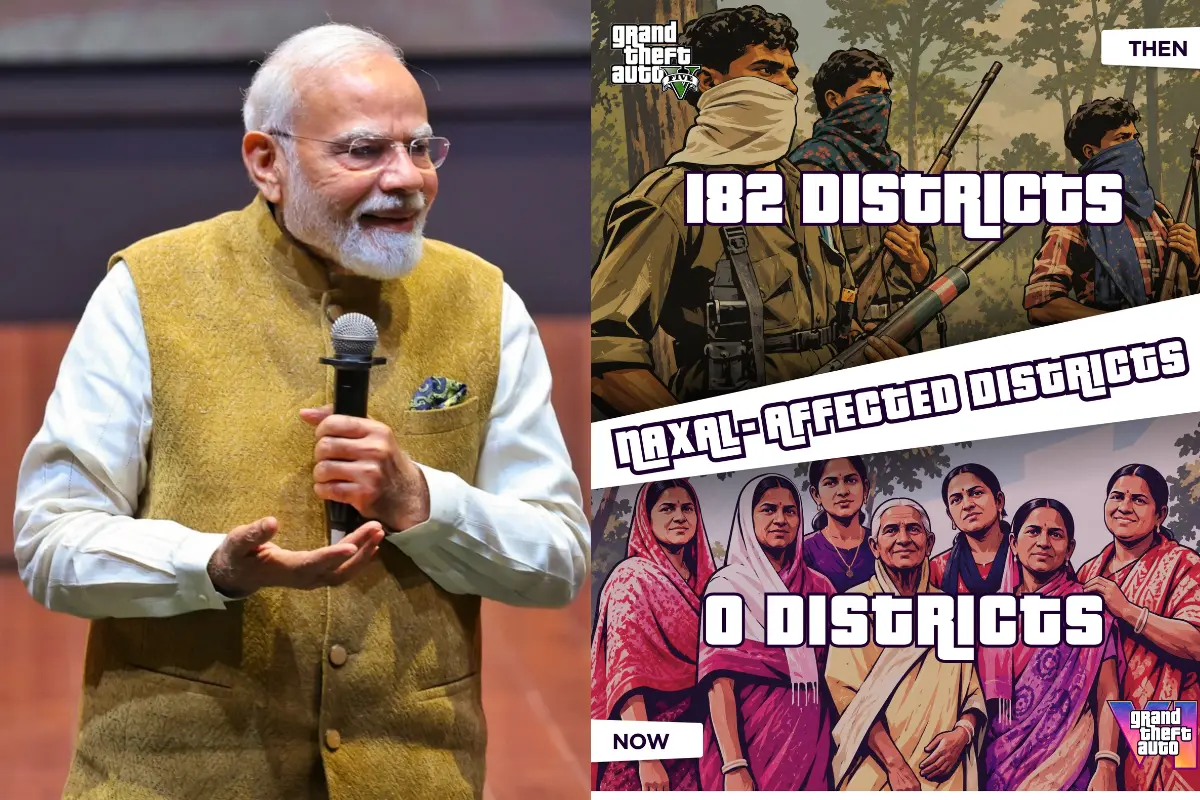
New Delhi: Prime Minister Narendra Modi has brought India's development story into the conversation around one of the world's most anticipated video game releases, using the launch of Grand Theft Auto VI (GTA 6) to highlight changes in the country since the release of its predecessor in 2013.
In a post shared on social media on Thursday, November 19, Modi wrote, "India is playing a whole new game!" He accompanied the statement with 10 slides titled "Between GTA V and VI, here's how", presenting a series of comparisons between India's position in 2013 and its current status.
The post used the 13-year gap between the two games as a timeline for showcasing changes in the economy, infrastructure, energy, sanitation, defence and technology.
Among the developments highlighted were India's position as the fastest-growing major economy, a reduction in poverty, the expansion of solar power capacity, the completion of the sanitation mission, greater electrification, increased defence exports, the opening up of the space sector to start-ups and a reduction in Naxal-affected districts.
The comparison also carries a political message. GTA V was released in September 2013, when the Congress-led United Progressive Alliance (UPA) was in power. The BJP-led National Democratic Alliance (NDA) came to office in May 2014, following the general election.
By placing the two periods side by side, the post presents the changes as part of India's journey over the years, while implicitly drawing a contrast between the UPA and NDA periods.
What the GTA comparison highlights
The slides cover several areas in which India has undergone significant changes over the past decade.
On the economic front, the post contrasts the concerns about India's macroeconomic position in 2013, when the country was included in the widely discussed 'Fragile Five' grouping, with its current position among the fastest-growing major economies.
It also highlights poverty reduction and the expansion of public infrastructure and welfare initiatives. In sanitation, the comparison points to the Swachh Bharat Mission, while the energy section focuses on the growth of solar power capacity and electrification.
The technology and strategic sectors feature prominently as well. The slides refer to the expansion of India's space ecosystem to private start-ups and the growth of defence exports. They also highlight the reduction in the number of districts affected by Left-Wing Extremism.
These are important areas of policy and public investment. However, the scale of progress in each requires more than a simple before-and-after graphic to establish how much has changed and what drove that change.
The political message behind the gaming reference
Modi's use of GTA 6 is also an example of how political communication increasingly draws on popular culture and internet trends to reach younger audiences.
The reference gives a familiar timeline to a complex development narrative. Rather than presenting a conventional government report, the post uses the release of a globally recognised video game to make a political comparison more shareable.
It is not the first time Modi or government-linked social media accounts have used popular internet culture. In 2019, during the second edition of Pariksha Pe Charcha, Modi responded to a parent's concern about online gaming by asking, "Yeh PUBG wala hai kya?" The remark became widely discussed.
In 2025, the official MyGov account also shared AI-generated, Ghibli-style images featuring Modi and other world leaders, attracting attention online.
The GTA post follows a similar approach: connect a trending cultural moment with a political message.
GTA 6 launches after a 13-year wait
The post coincided with the global rollout of Grand Theft Auto VI on Thursday. Developed by Rockstar Games, the title follows GTA V, which was released in 2013.
The long-awaited game has attracted significant attention from players and the gaming industry. Reuters reported that early reviews gave it a Metacritic score of 99, placing it among the highest-rated games on the platform.
The release has also drawn attention because of its reported development costs and the commercial expectations surrounding it.
What the 13-year comparison leaves out
The central question is not whether India has changed since 2013. It has. The more important question is whether the slides provide enough evidence to establish the scale of that change and how much credit can reasonably be assigned to one government.
1. The timeline does not begin with the Modi government
GTA V was released in September 2013, around eight months before Modi became Prime Minister in May 2014. Therefore, the comparison covers two different political administrations, but the 2013 starting point is not the beginning of the NDA government's tenure.
It also does not account for the fact that many infrastructure projects, welfare programmes and policy initiatives take years to plan and implement. Their outcomes can extend across successive governments.
2. Economic growth needs more than a ranking
Calling India the fastest-growing major economy highlights its growth rate relative to other large economies. But that alone does not explain changes in per capita income, employment, wages, household purchasing power or inequality.
A country can record strong GDP growth while the benefits are distributed unevenly. A fuller assessment would examine these indicators alongside the headline growth rate.
3. Poverty reduction depends on how poverty is measured
The claim of falling poverty needs a clear explanation of the methodology used. Estimates based on extreme poverty, multidimensional poverty and national poverty thresholds measure different things.
The reference period, survey data and poverty line also matter. Without these details, a before-and-after comparison may give an incomplete picture of changes in living standards.
4. Infrastructure achievements need outcome-based assessment
The expansion of sanitation, electrification and solar capacity represents measurable areas of development. But the number of toilets built does not automatically establish sustained usage, just as electrification figures do not necessarily describe the reliability or affordability of electricity supply.
Similarly, installed solar capacity is not the same as the amount of electricity actually generated or supplied to consumers. The distinction between infrastructure creation and its everyday impact matters.
5. Defence exports and space-sector growth need context
Higher defence exports and the entry of private companies into the space sector are significant developments. However, a meaningful assessment would also examine the value and composition of exports, domestic manufacturing capabilities, dependence on imported components and the commercial performance of private space ventures.
6. The political credit question is more complicated
The post presents a broad national transformation through a comparison that implicitly contrasts the UPA and NDA periods. But development is rarely the result of a single administration. Existing programmes, earlier investments, private-sector activity, state government decisions and changing global economic conditions can all influence outcomes.
A more complete scorecard would distinguish between projects initiated before 2014, those launched after 2014 and the results achieved during each period.
Modi's GTA 6 reference is an effective piece of political communication because it turns a complicated development narrative into an easily recognisable comparison. But a social media carousel is not the same as an independent assessment of India's progress.
The real test is whether the claims stand up when examined through comparable data, transparent methodologies and outcomes experienced by households. India's transformation deserves to be assessed through evidence, not just a memorable gaming reference.