Mamata Banerjee says she won’t resign: What if a CM of a losing party doesn’t step down?
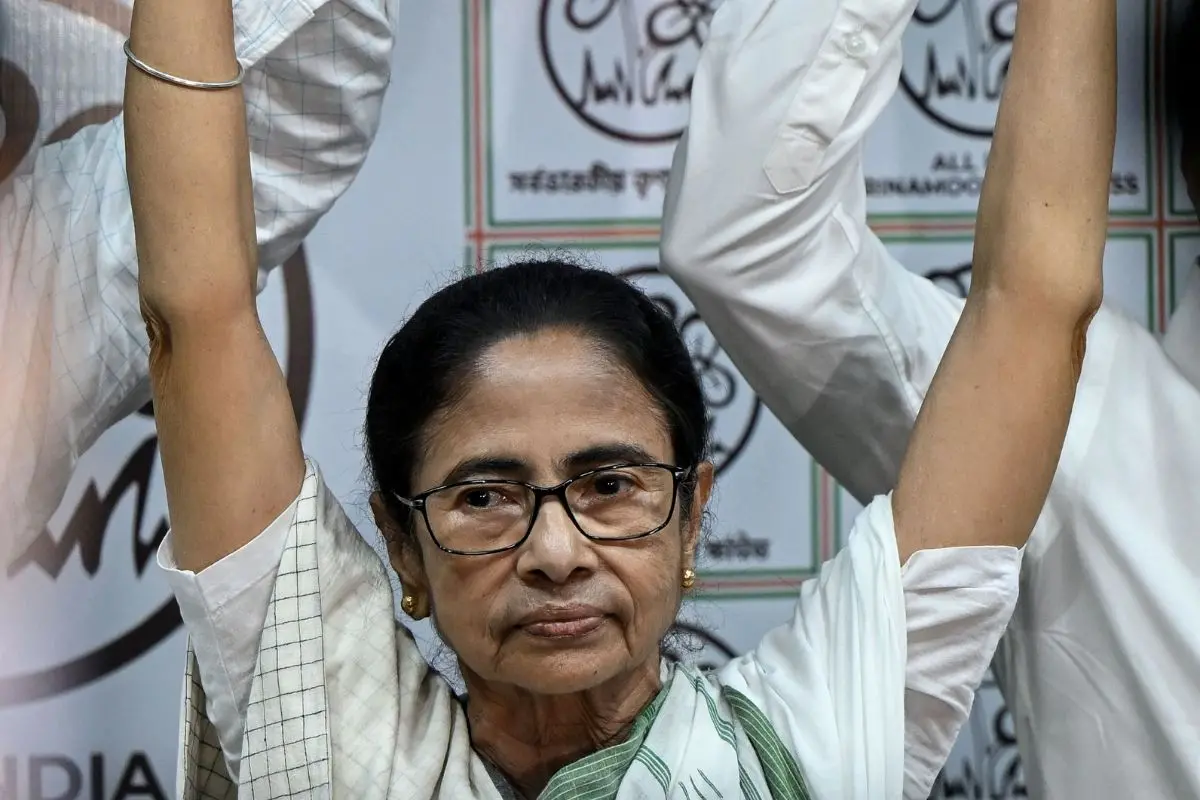
West Bengal Chief Minister Mamata Banerjee has refused to resign after the BJP’s sweeping victory in the 2026 Assembly elections, claiming the mandate was “stolen” and alleging a conspiracy involving the Election Commission.
Addressing a press conference in Kolkata on May 5, the Trinamool Congress (TMC) supremo said her government was not defeated by public mandate but by “manipulation” during the counting process.
“The question of my resignation does not arise, as we were defeated not by a public mandate but by a conspiracy,” Banerjee said, while alleging irregularities in nearly 100 constituencies.
Her remarks came a day after the BJP crossed the majority mark in the 294-member West Bengal Assembly, effectively ending the TMC’s 15-year rule in the state.
However, can a chief minister legally continue in office after losing the Assembly majority? The Constitution makes the answer clear: NO.
What does the Constitution say?
Under Article 164 of the Constitution of India, a chief minister can remain in office only as long as they enjoy the confidence of the Legislative Assembly.
The Article states that ministers, including the chief minister, “hold office during the pleasure of the Governor.” In practice, this means the CM must command a majority support in the House.
Once election results show that the ruling party no longer has the numbers to form the government, the incumbent chief minister is constitutionally expected to resign or advise dissolution of the Assembly before the new House is constituted.
Can Mamata Banerjee refuse to step down?
Technically, a chief minister may delay resignation briefly, but cannot continue indefinitely after losing majority support.
With the Election Commission already issuing the notification for the constitution of the new Assembly, the process of government formation has formally begun.
The BJP, having secured a clear majority, is entitled to stake a claim to form the next government.
If the outgoing CM refuses to resign, the Governor can intervene and ask the chief minister to prove a majority on the floor of the House.
If that becomes impossible due to election results and expiry of the Assembly term, the Governor can dismiss the government and invite the majority party to form the new administration.
What happens after May 7?
The term of the 17th West Bengal Legislative Assembly ends on May 7, 2026. After that date, Mamata Banerjee’s current tenure automatically comes to an end unless she is sworn in again with majority support.
Since the BJP has won over 200 seats, constitutional convention and Assembly arithmetic leave little room for ambiguity over government formation in Bengal.
Can election results be challenged?
Yes. A party can challenge the results in court by filing election petitions alleging malpractice, counting irregularities, or procedural violations.
However, such legal challenges do not stop the formation of a new government unless a court specifically orders otherwise.
For now, despite Banerjee’s refusal to resign, the constitutional process in West Bengal is expected to move forward with the BJP preparing to elect its legislative leader and form the next government.