Odisha govt frees convict who burnt alive Graham Staines, kids; greeted with 'Jai Shri Ram' slogans
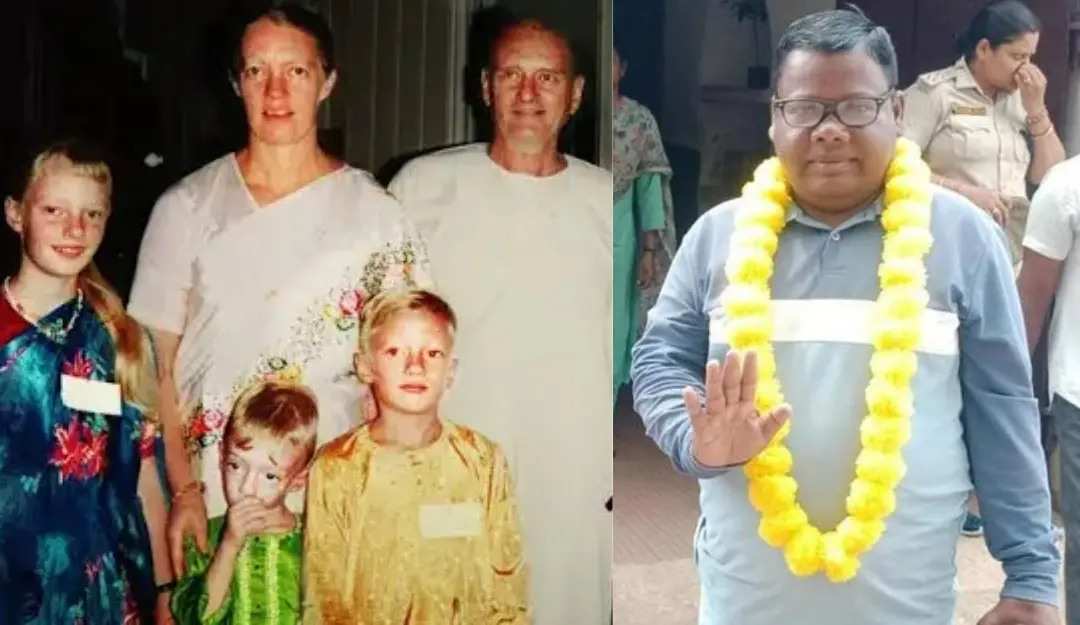
Odisha: On April 16, 2025, Mahendra Hembram, who was sentenced to life imprisonment for his role in the gruesome 1999 killings, walked out of Keonjhar jail, some 200 km from Bhubaneswar. Hembram’s release, granted on the grounds of good behaviour, has led to celebrations by his supporters, despite the horrific nature of the crime that shocked India and the world.
His release was recommended by the Odisha State Sentence Review Board after 25 years behind bars. Hembram’s crime, along with his accomplices, had shocked the world—a group of assailants set fire to a vehicle in which Graham Staines, a Christian missionary, and his two young sons, Philip and Timothy, were sleeping. The family was tragically burned alive, a brutal act that drew national and international condemnation.
A brutal act of hate
The murder was a horrific and senseless act of violence. Graham Staines, who had been working in the tribal regions of Odisha to help leprosy patients, and his two sons were caught in an attack that was rooted in communal hatred. The assailants, including Mahendra Hembram, were part of a mob that deliberately set fire to the vehicle where the family was sleeping.
Hembram, aged 25 at the time, was one of the individuals who contributed to this gruesome act, which left the missionary and his sons to perish in a burning van. The entire episode is considered one of the most brutal and senseless crimes in recent Indian history, highlighting the dangerous blend of religious extremism and violence.
The crime not only left a deep emotional scar on the Staines family and their community but also resonated globally, with widespread outrage over the cruelty of the attack. In the aftermath, several of the accused were arrested, and Mahendra Hembram was convicted along with 13 others by a CBI court. However, his release after serving just 25 years in prison is seen as a controversial act, considering the brutality of the crime he was part of.
Hembram's release and celebration
Despite the monstrous nature of his crime, Hembram’s release has been celebrated by certain groups, particularly those aligned with the Sangh Parivar, a collection of Hindu nationalist organisations. Upon his release, Hembram was garlanded by his supporters, who raised slogans of "Jai Shri Ram," a chant associated with Hindu nationalist politics. His supporters praised him for his “good behaviour” during his time in prison, but this celebration has raised significant ethical and legal questions.
Many critics argue that the celebration of a convicted murderer by these groups is deeply troubling. The fact that Hembram, who participated in such a brutal act, is being treated as a hero by some sections of society is seen as a troubling endorsement of hate-driven violence. This raises serious concerns about the glorification of individuals involved in communal violence and the potential for it to incite further division and hate.
Supporters of the release, particularly from the Sangh Parivar, argue that Hembram’s rehabilitation is a positive outcome, suggesting that people can change over time. However, critics believe that celebrating his actions sends the wrong message about justice and accountability. The very fact that he was involved in such a horrific crime makes it difficult for many to accept his release, especially when he is being treated as a hero by a section of society that has historically aligned itself with the perpetrators of such violence.
The status of Dara Singh and other convicts
While Hembram’s release has taken centre stage, the prime convict in the case, Dara Singh, remains in prison. Singh, who was the mastermind behind the killings, was initially sentenced to death, but his sentence was later commuted to life imprisonment. A campaign for his release had garnered significant political backing, including from Mohan Majhi, the current Chief Minister of Odisha, during his time as an MLA from Keonjhar. However, Dara Singh’s fate remains tied to ongoing legal processes, and his release remains uncertain.
The case also involved a number of other individuals, some of whom were acquitted, while others had their sentences reduced. Hembram’s release has reignited the debate over justice and rehabilitation, particularly for individuals involved in crimes driven by communal hate.
The broader question of justice and rehabilitation
The release of Mahendra Hembram poses difficult questions about justice in cases of communal violence. On one hand, the principle of good behaviour and rehabilitation is part of the criminal justice system. On the other hand, the nature of the crime, the loss of innocent lives, and the political undertones of Hembram’s release cast a long shadow over the decision.
Hembram’s supporters claim that he has reformed during his time in prison, but critics argue that this should not erase the brutality of his crime or the political context in which it occurred. The fact that some members of the Sangh Parivar are celebrating his release highlights the complex intersection of justice, politics, and communal identity in India today.
Mahendra Hembram’s release after 25 years in prison has sparked fierce debate over the issues of justice, rehabilitation, and accountability. While the legal system has granted him freedom on the grounds of good behaviour, the celebration of his release by certain political groups has raised ethical concerns. The brutal nature of the Graham Staines murder and the political ramifications of Hembram’s release are likely to continue to stir controversy in the coming weeks. As India grapples with these questions, the case remains a stark reminder of the complexities surrounding communal violence and the quest for justice.