Maharashtra's election strategy: Why women voters matter, how are parties wooing them
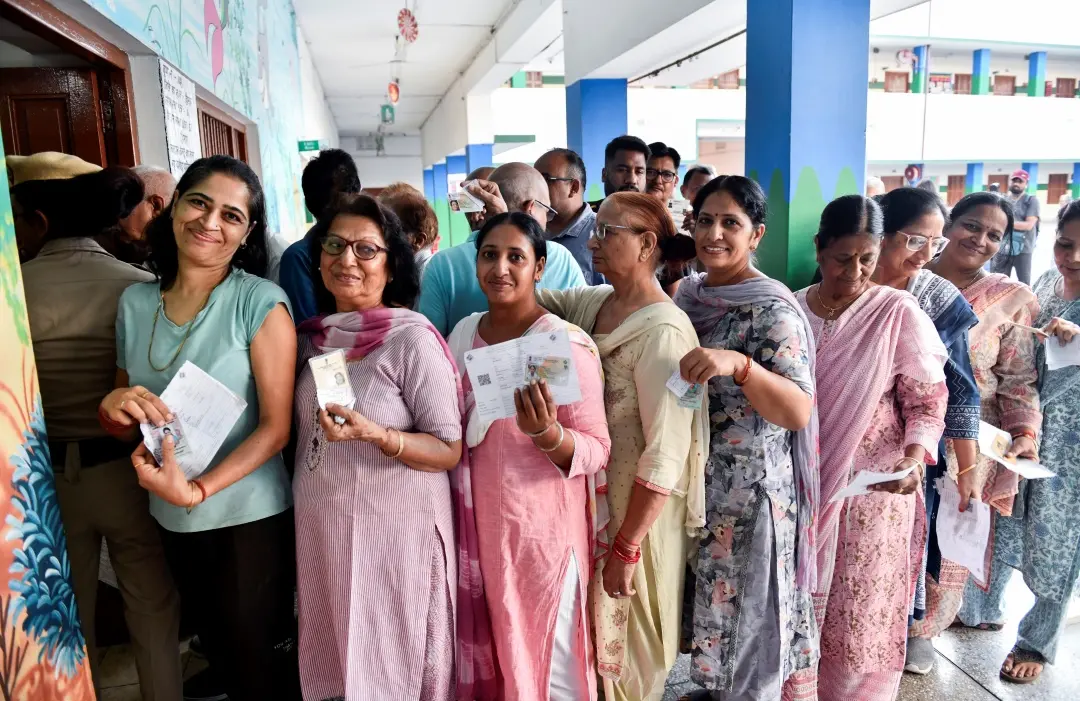
Maharashtra is facing a crucial election season, with the assembly polls scheduled for November 20. As political parties gear up for the high-stakes battle, one demographic is emerging as a key focus: women voters. With women constituting 48.7% of Maharashtra’s electorate—approximately 4.67 crore registered female voters—politicians are increasingly focusing their attention on securing the women’s vote. In a state where women now outnumber men in five districts and the gender ratio has improved from 929 in 2011 to 933 in 2024, women’s participation and preferences have never been more critical.
In addition, the government’s welfare schemes, aimed at women, have become central to the state’s election rhetoric. The Ladki Bahin Yojana, introduced by the Maharashtra government, is a prime example of how parties are attempting to secure the women’s vote ahead of the upcoming elections.
Ladki Bahin Yojana: A game changer for women's empowerment?
The Ladki Bahin Yojana, launched by Chief Minister Eknath Shinde’s government in June 2024, promises a monthly stipend of Rs 1,500 to women aged 21-65 from families with an annual income of less than Rs 2.5 lakh. The scheme is being hailed as a game-changer by political figures like Madhya Pradesh Chief Minister and senior BJP leader Mohan Yadav, who believes it could influence the outcome of the elections. By October 15, 2.3 crore women had already received the stipend.
For the ruling Bharatiya Janata Party (BJP), this initiative is a cornerstone of its election strategy. Prime Minister Narendra Modi has praised the scheme, positioning it as a major step toward empowering women. He also pointed out the government's broader focus on women’s welfare, including the distribution of houses under the PM Awas Yojana, in the names of women, and the "Lakhpati Didi" initiative, which has helped over three crore women earn an income of Rs 1 lakh or more annually.
Additionally, the BJP is promising to raise the stipend under the Ladki Bahin Yojana to Rs 2,100 per month if it retains power. The party’s manifesto also includes the recruitment of 25,000 women in the police force, a 30% reduction in power bills, increased pensions for senior citizens, and enhanced payouts under the Kisan Samman Yojana for farmers—policies aimed at appealing to multiple voter bases, including women.
MVA's counteroffer for women empowerment
The opposition Maha Vikas Aghadi (MVA), which includes the Shiv Sena, Nationalist Congress Party (NCP), and Congress, is also targeting women with a range of promises. The MVA has introduced the Mahalaxmi Scheme, which promises Rs 3,000 per month to women, higher than the BJP’s offer. This is part of the alliance's broader push for women's empowerment. In addition to the financial support, the MVA has promised free bus rides for women, addressing issues of mobility and safety.
In a bid to appeal to the state’s vast agricultural community, MVA has also proposed a farm loan waiver of up to Rs 3 lakh, which could resonate with rural women who often manage household finances and are directly impacted by the agricultural crisis. For the unemployed, educated youth—a large portion of whom are women—the MVA promises Rs 4,000 per month, doubling the BJP’s pledge.
Furthermore, the MVA has included provisions to ease the burden of household expenses. Their promise to provide six LPG cylinders at Rs 500 each per year aims to assist lower-income households with rising fuel prices.
Why women votes matter:
As Maharashtra heads toward its assembly elections, both Mahayuti and MVA are trying to outdo each other with welfare measures, financial assistance, and schemes aimed at women’s empowerment. Whether it’s the Ladki Bahin Yojana or the Mahalaxmi Scheme, these promises are more than just electioneering—they are an acknowledgement of the growing political power of women in the state. With nearly half of Maharashtra’s voters being women.