‘Jai Jawan, Jai Kisan’: Remembering Lal Bahadur Shastri on his 122nd birth anniversary
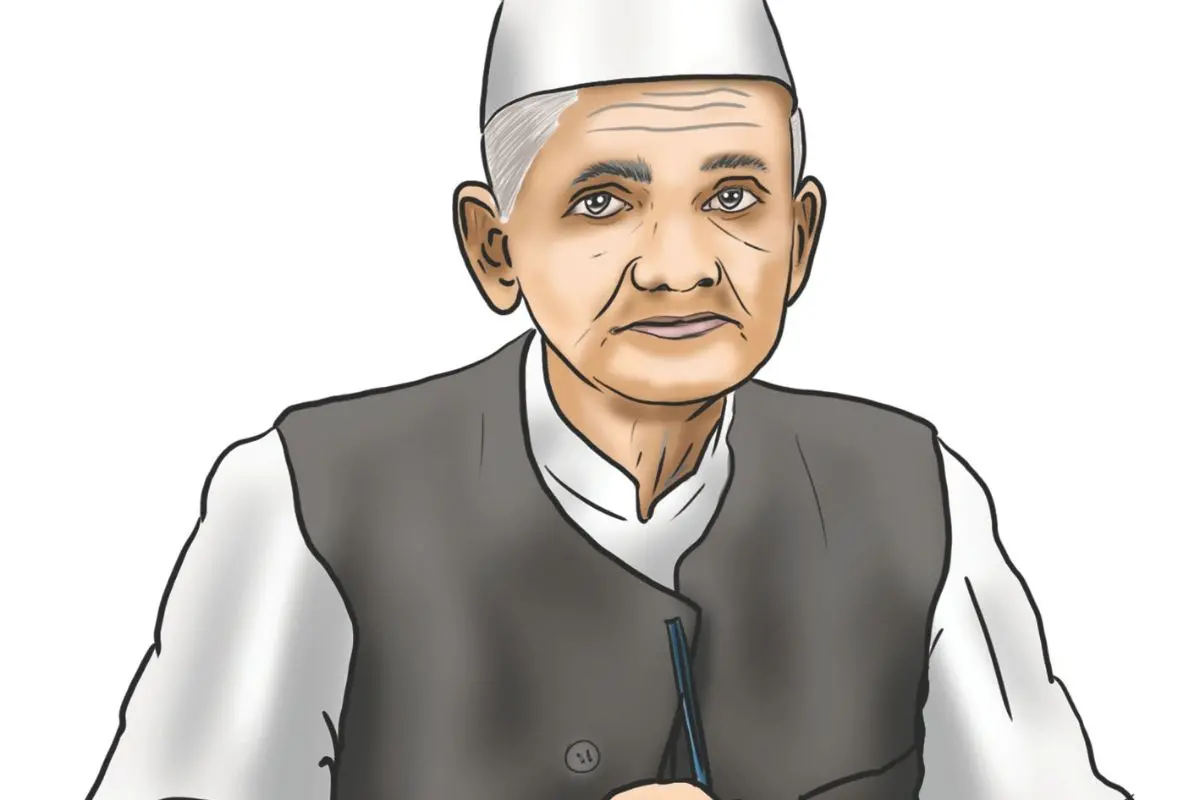
New Delhi: October 2 marks the birth anniversary of former Prime Minister Lal Bahadur Shastri, who led India through one of the most challenging periods in the country’s early post-Independence history.
Born on October 2, 1904, in Mughalsarai, Uttar Pradesh, Shastri became Prime Minister in June 1964, following the death of Jawaharlal Nehru. He remained in office until his death in January 1966.
Shastri is remembered for his simple lifestyle, understated leadership and association with India’s freedom struggle. His tenure as Prime Minister coincided with the 1965 India-Pakistan war, food shortages and efforts to strengthen the country’s agricultural production.
‘Jai Jawan, Jai Kisan’
Perhaps the phrase most closely associated with Shastri is ‘Jai Jawan, Jai Kisan’, which translates to ‘Hail the soldier, hail the farmer’.
The slogan underlined the importance of India’s armed forces and farming community at a time when the country was dealing with security concerns as well as food shortages. It became one of the defining expressions of Shastri’s leadership and his emphasis on national defence and agricultural self-reliance.
Shastri also supported efforts linked to increasing food production and strengthening the agricultural sector during his time in office.
From freedom fighter to Prime Minister
Shastri was drawn to the freedom movement as a young student. At 16, he responded to Mahatma Gandhi’s call to join the Non-Cooperation Movement and left his studies.
He later studied at Kashi Vidya Peeth in Varanasi, where he was awarded the title ‘Shastri’, meaning scholar. He went on to participate actively in the freedom struggle and spent several years in British prisons.
After Independence, Shastri entered government in Uttar Pradesh before moving to national politics. He held several key portfolios in the Union Cabinet, including Railways, Transport and Communications, Commerce and Industry, and Home Affairs.
Why did Shastri resign as Railway Minister?
Shastri’s resignation as Railway Minister following a major train accident is often cited as an example of his approach to public accountability.
He stepped down from the Cabinet accepting moral responsibility for the accident. Prime Minister Jawaharlal Nehru accepted the resignation while making it clear that Shastri was not personally responsible for what had happened.
The episode became an important part of Shastri’s public image and his reputation for personal responsibility in public office.
Leadership during the 1965 war
As Prime Minister, Shastri faced a major military challenge when India went to war with Pakistan in 1965.
His leadership during the conflict, alongside his emphasis on food production, gave wider resonance to the slogan ‘Jai Jawan, Jai Kisan’.
The war ended with the signing of the Tashkent Declaration on January 10, 1966. Shastri and Pakistan’s President Ayub Khan signed the agreement in Tashkent, then part of the Soviet Union, agreeing on measures aimed at restoring peaceful relations between the two countries.
Shastri died in Tashkent the following day, January 11, 1966, aged 61.
Shastri’s enduring legacy
More than six decades after his death, Shastri’s name remains associated with simplicity, public service and his leadership during a difficult period in India’s history.
Prime Minister Narendra Modi also paid tribute to Shastri on his birth anniversary on Thursday. Posting on X, Modi said, “Homage to Lal Bahadur Shastri Ji, whose simplicity and dedication to the nation remain deeply inspiring.”
Shastri’s birth anniversary falls on the same day as Gandhi Jayanti. His famous call of ‘Jai Jawan, Jai Kisan’ continues to be associated with India’s soldiers and farmers and remains one of the most enduring phrases from his political career.