Five years post-Article 370 abrogation: Kashmir gears up for Independence Day with renewed hope
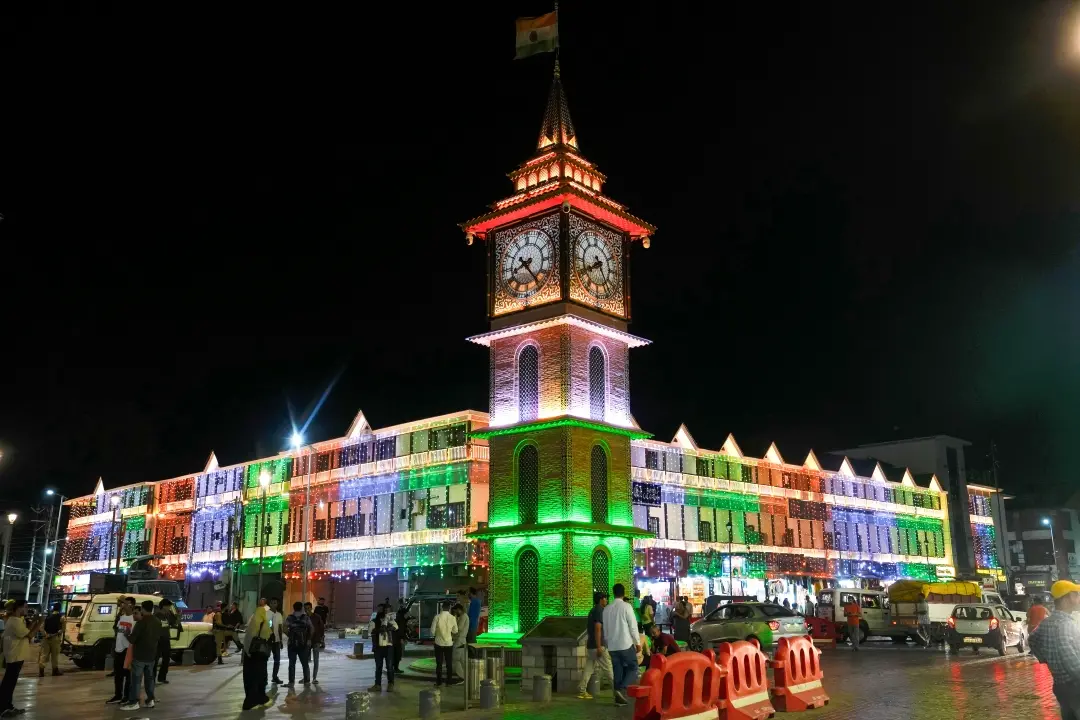
Srinagar: Five years after the abrogation of Article 370, which ended Jammu and Kashmir’s special status, the region has undergone considerable changes. Streets in Srinagar are now decorated with tricolour lights, showcasing the area’s enthusiasm for India's 78th Independence Day on August 15.
Once a centre of separatist activity, Srinagar is now symbolising its integration with the rest of India. The removal of Article 370 has led to enhanced security, a boost in tourism, and a greater sense of unity among the people of Kashmir.
The region is said to be entering a "new era of peace, development, and prosperity." Kashmiris are proudly holding the tricolour and looking forward to being part of India's growth story. Since August 5, 2019, educational institutions have remained open during the summer, a marked change from the frequent disruptions of the past due to stone-pelting and strikes.
Union Minister for Social Justice and Empowerment Ramdas Athawale recently noted that "Kashmir is moving ahead in the direction of peace." On the security front, there has been a “significant improvement,” with Minister of State for Home Affairs Nityanand Rai reporting to the Lok Sabha that "80 percent of deaths have been reduced compared to when the Congress was in power," and at least 200 terrorists have been killed by the Indian Army since the abrogation.
Tourism in Kashmir has surged, with record numbers of visitors in 2023 and 2024. The region is emerging as a popular destination for adventure and golf tourism, with new locations like Gurez, Keran, Teetwal, and RS Pura now accessible to tourists. Government statistics show that 1,08,41,009 tourists visited Jammu and Kashmir from January to June 2024, following a record 2,11,24,674 in 2023. In comparison, 2022 saw 1,88,64,332 tourists, 2021 had 1,13,14,884, and 2020 recorded 34,70,834.
The recent Lok Sabha elections saw the highest voter turnout in 35 years, reflecting increased engagement among Kashmiris. The constituencies of Srinagar, Baramulla, and Anantnag-Rajouri reported record voter turnouts, with Anantnag-Rajouri seeing a turnout of 54.3 percent compared to 14.3 percent in 2019. Overall, the turnout in these constituencies reached 50.63 percent.
Polling took place at 2,338 stations in Anantnag-Rajouri with live webcasting. A total of 20 candidates, including two women, contested in this constituency. Kashmiri migrant voters were also given the option to vote in person or by postal ballot.
Prime Minister Narendra Modi’s visit to the valley and the hosting of high-profile events like the G20 meeting have further highlighted the region’s growing significance. In a May interview, PM Modi stated, "Article 370 was the agenda of only four or five families, not of the people of Kashmir or the country. Removing it has led to greater unity and a sense of belonging among Kashmiris, which is reflected in the elections and tourism."
The abrogation of Article 370 in August 2019, which revoked Jammu and Kashmir's special status and divided the region into two Union Territories—Jammu and Kashmir and Ladakh—marks a pivotal moment in the region’s history, steering it towards greater integration, development, and peace.
Agencies