‘Guide slept through safari, offered tobacco’: Tourist’s Jim Corbett experience goes viral, probe ordered
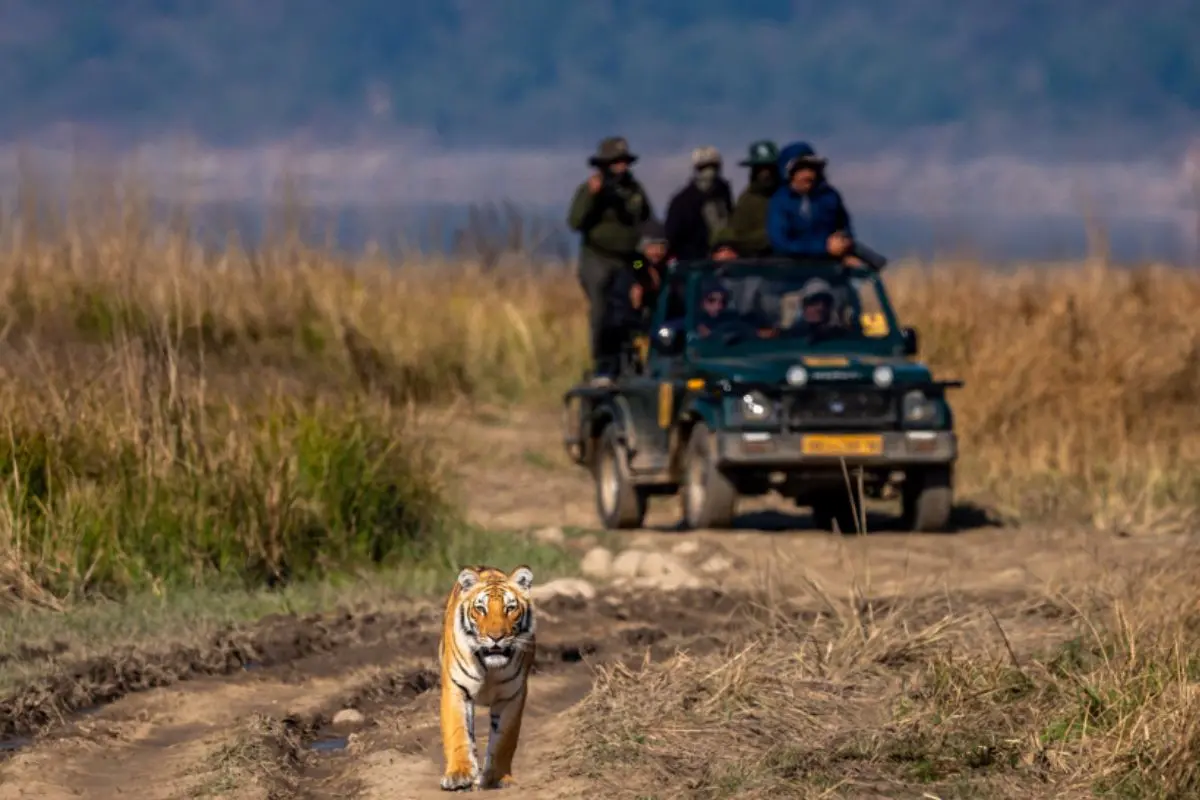
When Rattan Dhillon booked a safari at the famed Jim Corbett National Park in Uttarakhand, he expected a journey into the wild — the rustle of sal leaves, the thrill of spotting a tiger, perhaps even the quiet guidance of a nature expert narrating forest secrets. What he got instead was a guide who, according to Dhillon, “slept through most of the safari, offered us tobacco, and tried to litter inside the park.”
In a post that has since gone viral on X (formerly Twitter), Dhillon described his surreal experience, which has left the internet divided and authorities scrambling for answers.
Meet our guide for the day at Jim Corbett National Park and unfortunately, this is what he had to offer: tobacco.
We even had to stop him from littering by throwing the packet on the ground. After taking a long one-hour nap during the safari, he woke up only to say, “Deer meat… pic.twitter.com/0PZlkWB6Wx— Rattan Dhillon (@ShivrattanDhil1) November 3, 2025
“Meet our guide for the day at Jim Corbett National Park, and unfortunately, this is what he had to offer: tobacco,” Dhillon wrote. “We even had to stop him from littering by throwing the packet on the ground.”
The tourist went on to recount how, after a one-hour nap during the safari, the guide woke up only to remark, “Deer meat tastes good.”
“Not a single word about the park, wildlife, or conservation — just that,” Dhillon added. “It was embarrassing, especially with foreigners on board who were genuinely eager to learn about India’s wildlife.”
Dhillon’s post struck a chord online, drawing over 2.4 million views and hundreds of comments from travellers sharing mixed experiences about India’s wildlife tourism.
Some sympathised, lamenting the state of professionalism among guides. “When compared to guides in Europe, Indian guides are nowhere,” one user claimed. Another defended Corbett’s local guides, saying, “I’ve been to Corbett at least 7–8 times in the past decade. Never faced such an issue.”
Others broadened the discussion to India’s broader eco-tourism culture. “My Kaziranga experience was similar — the elephant safari felt exploitative,” wrote one, while another added, “My guides were always strict about rules like no plastic or food inside parks. You should definitely file a complaint.”
And complain, it seems, Dhillon did. His post quickly reached Corbett Tiger Reserve’s Field Director, Saket Badola, who publicly responded, saying that an inquiry has been ordered and the guide has been banned pending investigation.
“Thanks for bringing the matter to my attention,” Badola wrote. “Such behaviour is not acceptable, if true. Due action will be taken based on the findings.”
The incident has reignited a long-standing debate — about how India’s front-line representatives of nature, the guides and drivers who escort thousands of visitors into sanctuaries each year, often receive minimal training and oversight.
For Dhillon, the experience was not just disappointing, but symbolic. “This is exactly where we fail — when those who represent our natural heritage show zero respect or knowledge about it,” he said.
His viral post might just be the wake-up call India’s eco-tourism sector needs — a reminder that respect for wildlife begins not in the jungle, but with those entrusted to interpret it.