Jayant Narlikar no more: What legacy does India’s astrophysics icon leave behind?
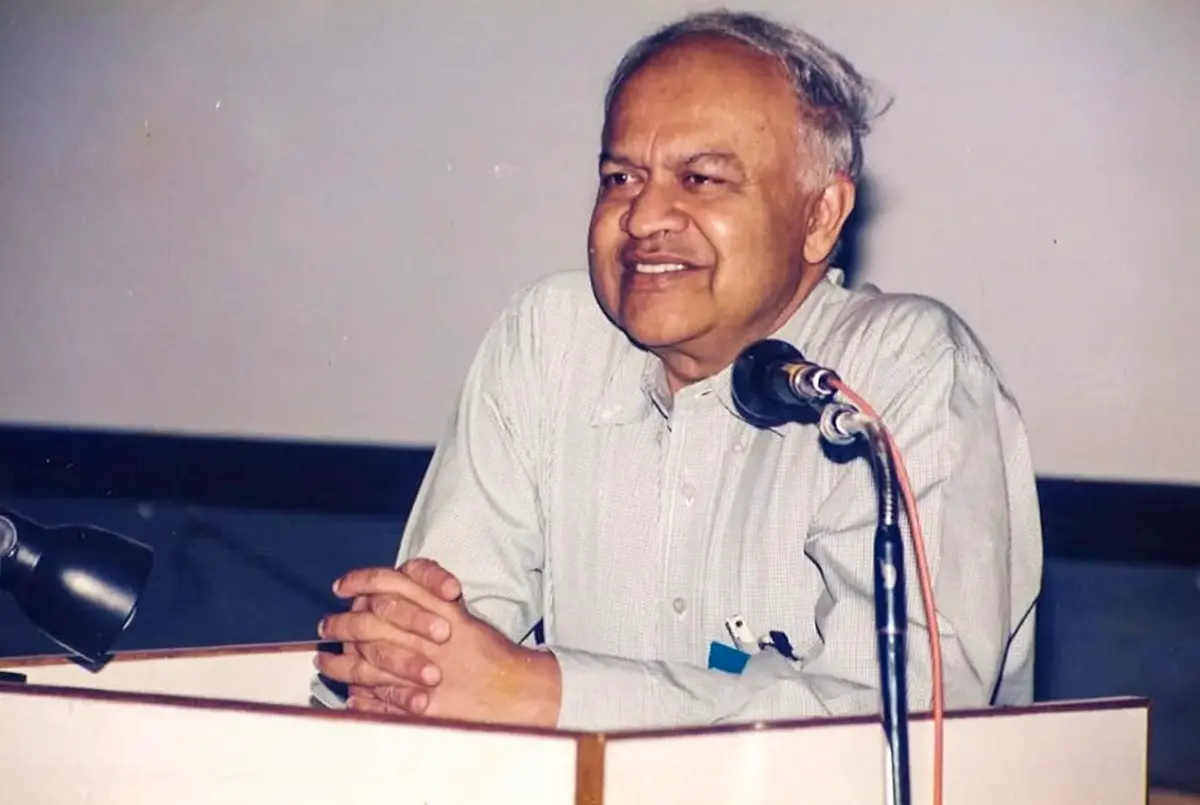
Dr Jayant Vishnu Narlikar, an eminent astrophysicist renowned globally for the Hoyle–Narlikar theory of gravity, passed away peacefully in Pune on Tuesday at the age of 86. Known as a towering figure in Indian science, his contributions to cosmology and science popularisation have left an indelible mark on generations of researchers and science enthusiasts alike.
A Life Devoted to Science and Education
Born on 19 July 1938, Dr Narlikar’s early education took place at Banaras Hindu University, where his father was a professor and head of the Mathematics Department. He later pursued higher studies at Cambridge University in the UK, becoming a Wrangler and Tyson Medalist. There, working with his doctoral adviser Fred Hoyle, he developed the now-famous Hoyle–Narlikar theory of gravity, which challenged existing notions in cosmology.
Returning to India in 1972, Dr Narlikar joined the Tata Institute of Fundamental Research (TIFR), where he expanded the Theoretical Astrophysics Group to international acclaim. In 1988, the University Grants Commission entrusted him with setting up the Inter-University Centre for Astronomy and Astrophysics (IUCAA) in Pune, which he led as founder director until his retirement in 2003. Under his stewardship, IUCAA gained a worldwide reputation for excellence in astronomy and astrophysics.
A Champion of Science Communication
Dr Narlikar was not just a researcher but also a passionate science communicator. Through books, articles, and radio and television programmes, he made complex scientific ideas accessible to ordinary people. His efforts helped cultivate a scientific temper and inspired young minds across the country.
Prime Minister Narendra Modi expressed his condolences, describing Dr Narlikar as "a luminary, especially in the field of astrophysics." Modi added, "His pioneering works, especially key theoretical frameworks, will be valued by generations of researchers. He made a mark as an institution builder, grooming centres of learning and innovation for young minds. His writings have also gone a long way in making science accessible to common citizens."
Recognised and Revered
Dr Narlikar’s achievements earned him some of India’s highest honours. He was awarded the Padma Bhushan at the young age of 26 in 1965, the Padma Vibhushan in 2004, and Maharashtra’s highest civilian award, the Maharashtra Bhushan, in 2011. In 2014, the Sahitya Akademi honoured his Marathi autobiography with its highest prize for regional language literature.
Former ISRO chairman Dr S Somanath remembered him as a "visionary astrophysicist and science communicator who inspired my generation." He highlighted works like ‘The lighter side of gravity’ and ‘Seven wonders of the cosmos’ as inspirations for many.
Congress general secretary Jairam Ramesh called Dr Narlikar "one of the world’s greatest astrophysicists," noting his combination of "formidable scholarship with humility."
A Legacy That Lives On
Maharashtra Chief Minister Devendra Fadnavis praised Dr Narlikar for simplifying scientific subjects for ordinary readers, saying, "We have lost a great scientist and an equally great writer. I pay my heartfelt tribute to him."
Former Union minister Sharad Pawar added that Dr Narlikar's writings and lectures were invaluable in spreading scientific thinking and opposing superstition.
The IUCAA family also expressed deep grief over his passing, announcing that his last rites would be performed with full state honours.