Tamil Nadu jallikattu reforms: Bull owners seek end to subjective token and permission system
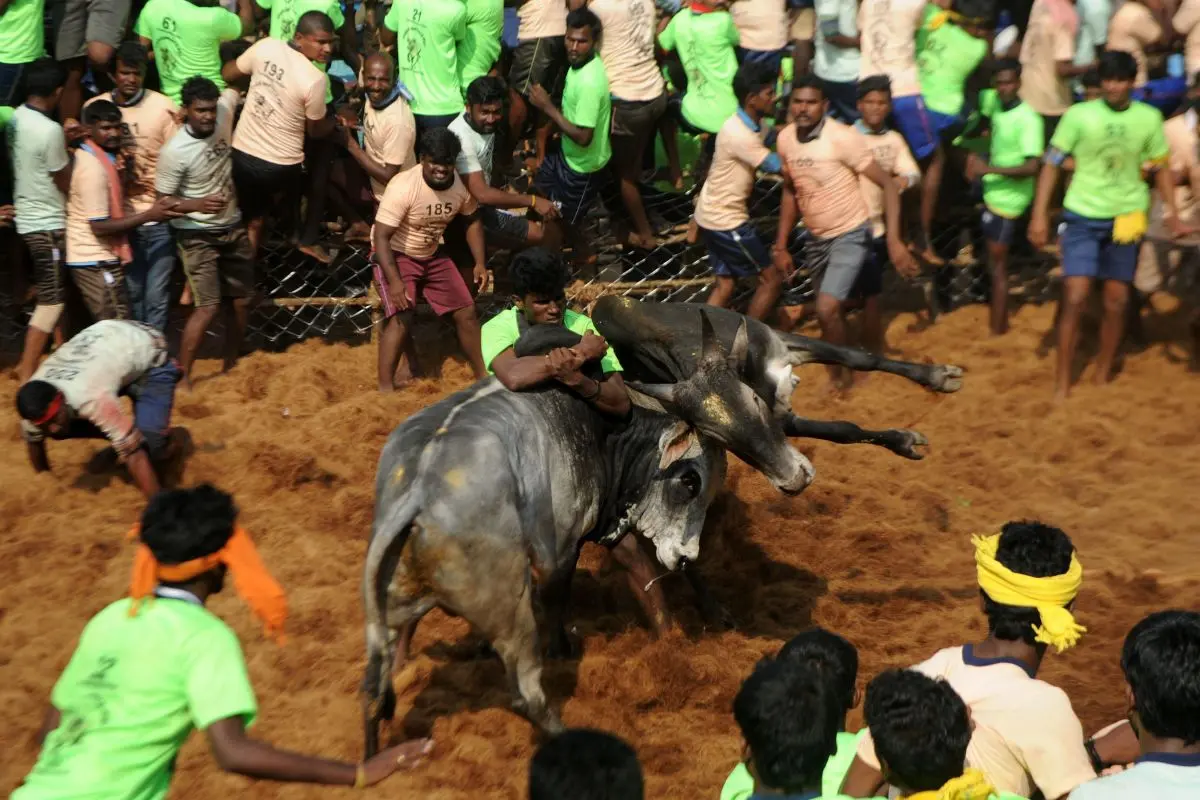
Chennai: As jallikattu events roll out across Tamil Nadu’s delta districts, Madurai region and other parts of the state, several bull owners and jallikattu enthusiasts have raised concerns over what they call an opaque and largely subjective system for issuing tokens and granting approvals for participating bulls.
Owners allege that the selection and approval process at key venues like Alanganallur, Palamedu and Avaniyapuram lacks transparency, scientific assessment and clearly defined evaluation standards. According to them, officials rely heavily on personal judgment instead of objective criteria to assess whether a bull has the physical strength, agility or temperament required for the traditional sport. As a result, they claim, bulls that are not adequately capable of performing are also allowed to enter the arena.
Officials associated with the Tamil Nadu State Animal Welfare Board said that veterinary teams and revenue authorities are primarily tasked with ensuring animal welfare standards and medical fitness. “There is no mechanism to assess a bull’s ability to perform or succeed in jallikattu,” a senior official acknowledged.
Bull owners are required to register their animals on the official portal, ahd.tn.gov.in/jallikattu, to obtain participation tokens and clearance. Typically, between 1,000 and 2,000 bulls are registered for each major event in districts such as Madurai, Pudukkottai, Tiruchy and Sivaganga. However, Tiruchy-based jallikattu activist M P Periyasamy of Jallikattu Meetpu Kazhagam pointed out that only around 600 to 700 bulls eventually receive permission to participate in Madurai’s prestigious events.
He alleged that approvals issued by tahsildars under district collectors are largely influenced by subjective opinions rather than transparent benchmarks. Madurai-based bull owner S Santhana Pandiyan claimed that political influence also plays a role in securing approvals at high-profile venues. “Many owners spend years rearing bulls exclusively for jallikattu, but are denied approval. Several such owners were eventually forced to sell their bulls,” he said.
Officials clarified that under the Standard Operating Procedure, jallikattu events should be hosted between 6 am and 2 pm, with a maximum cap of 400 bulls. However, pressure from local communities often results in permissions being extended to 600 or even 700 bulls. Authorities said feedback from stakeholders would be examined, and appropriate measures may be considered.
Tamil Nadu witnessed a surge in traditional bull-taming events in 2025, hosting 352 events including jallikattu, Eruthu Vidum Vizha and Manju Virattu across 19 districts, involving nearly 1.14 lakh bulls — a sharp rise from 214 events conducted in 2024.
Officials maintain that while safety and animal welfare remain the priority, discussions around reform, fairness and better regulatory clarity are likely to continue as the jallikattu season progresses.
IANS