Setback for Jagdish Tytler in 1984 anti-Sikh riots case; court orders framing of charges
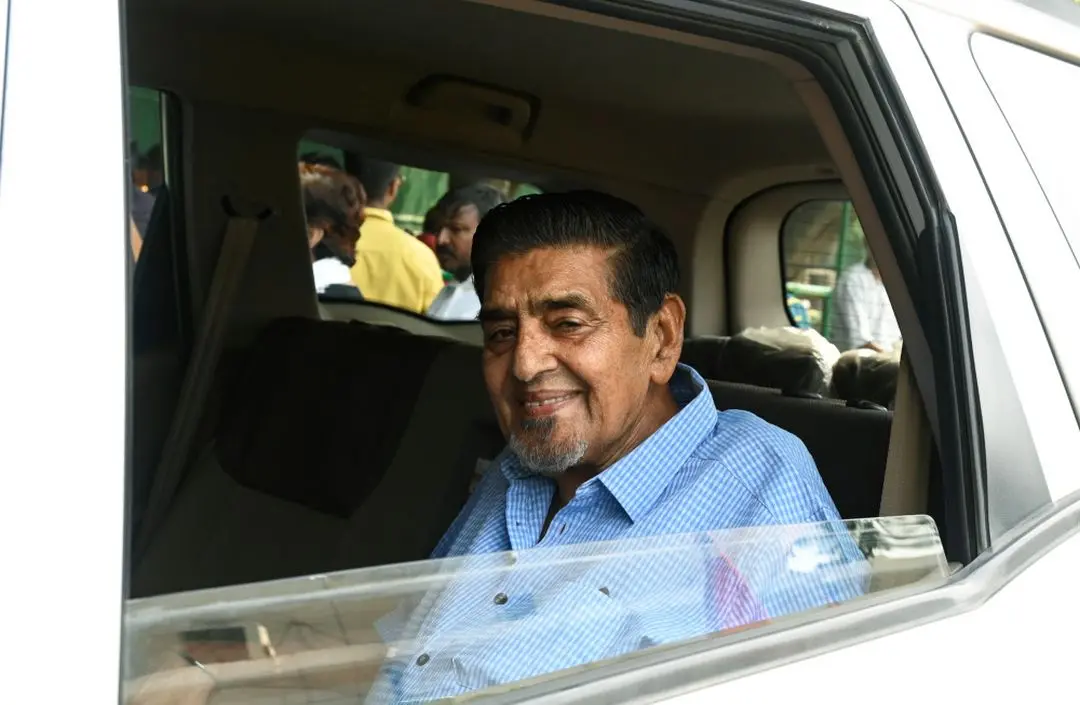
In a major setback for Congress leader Jagdish Tytler, Delhi's Rouse Avenue court has ordered the framing of charges against him in a CBI case related to the alleged killing of three people in Pul Bangash gurudwara area during the 1984 anti-Sikh riots.
Special CBI Judge Rakesh Siyal has determined that there is ample evidence to proceed with a trial against the accused.
"There is sufficient ground to advance the case against the accused," the judge stated.
The court has ordered the framing of charges for multiple offenses, including unlawful assembly, rioting, incitement to enmity between different groups, trespassing, and theft. The matter has been scheduled for a formal charge-framing session on September 13.
BJP: Wheels of Justice are moving
The Bharatiya Janata Party welcomed the Rouse Avenue court's verdict, stating that the 'the wheels of Justice are moving'.
BJP National Secretary Manjinder Singh Sirsa said, "Finally, the wheels of Justice are moving. I wholeheartedly welcome Rouse Avenue Court framing charges against Congress senior leader Jagdish Tytler in connection with the 1984 Delhi massacre."
"For 40 years, CBI alleged Tytler was cocooned by the Congress high command denying justice to innocent Sikhs killed. Tytler stands accused of saying "not enough Sikhs killed". I thank PM @narendramodi Ji, HM @AmitShah Ji and NDA Govt for honouring our demand of reopening the case against Tytler," he added.
What is the case against Jagdish Tytler?
In May 2023, the Central Bureau of Investigation (CBI) filed a supplementary charge sheet against Tytler. During the proceedings, defense attorney Manu Sharma introduced a video from Doordarshan, which depicted the aftermath of Indira Gandhi’s assassination at Teen Murthy House. Sharma argued that the footage showed Tytler present at the location on the day in question.
This claim was contested by the CBI and senior advocate H.S. Phoolka, representing the riot victims. The CBI referenced a statement from Amitabh Bachchan, which indicated that Tytler was not at Teen Murthy House for the entire day on November 1, 1984.
Sharma also pointed out that the CBI had previously filed three closure reports and noted that the charge sheet against co-accused Suresh Kumar Panewala in 2009 resulted in Panewala’s acquittal. Sharma questioned the reliability of witnesses who have emerged only after nearly 40 years, arguing that their testimony might not be trustworthy.
On April 16, the CBI concluded its arguments on the framing of charges, asserting that there were eyewitnesses who saw Tytler inciting the mob during the 1984 riots. The CBI maintained that there is sufficient evidence to proceed with charges against Tytler.
CBI Counsel read statements from four eyewitnesses, including Surender Singh, who alleged that Tytler incited the mob after the assassination of Prime Minister Indira Gandhi. This case pertains to the alleged killing of three Sikhs -- Thakur Singh, Badal Singh, and Gurcharan Singh—at Pul Bangash Gurudwara on November 1, 1984.
The CBI filed a supplementary charge sheet against Tytler on May 20, 2023. Tytler appeared before the court on August 5 following a summons related to the charge sheet and subsequently participated via video conferencing. Earlier, on August 4, 2023, the Sessions Court granted him anticipatory bail.
The charge sheet relates to anti-Sikh riots that occurred in 1984 after the assassination of Prime Minister Indira Gandhi on October 31. The CBI's investigation, initiated in November 2005, focused on an incident where a mob set fire to the Gurudwara Pul Bangash in Delhi, resulting in the deaths of Thakur Singh, Badal Singh, and Gurcharan Singh on November 1, 1984.
The Justice Nanavati Commission of Inquiry, established by the Indian government in 2000, investigated the 1984 anti-Sikh riots. Based on the Commission's report, the Ministry of Home Affairs directed the CBI to investigate the case involving Tytler and others. Evidence gathered during the investigation suggested that Tytler allegedly incited and provoked the mob at Gurudwara Pul Bangash, leading to its destruction and the deaths of three Sikh individuals, as well as the burning and looting of shops.