ISRO marks milestone with 100th launch: GSLV-F15 plants NVS-02 satellite in orbit | VIDEO
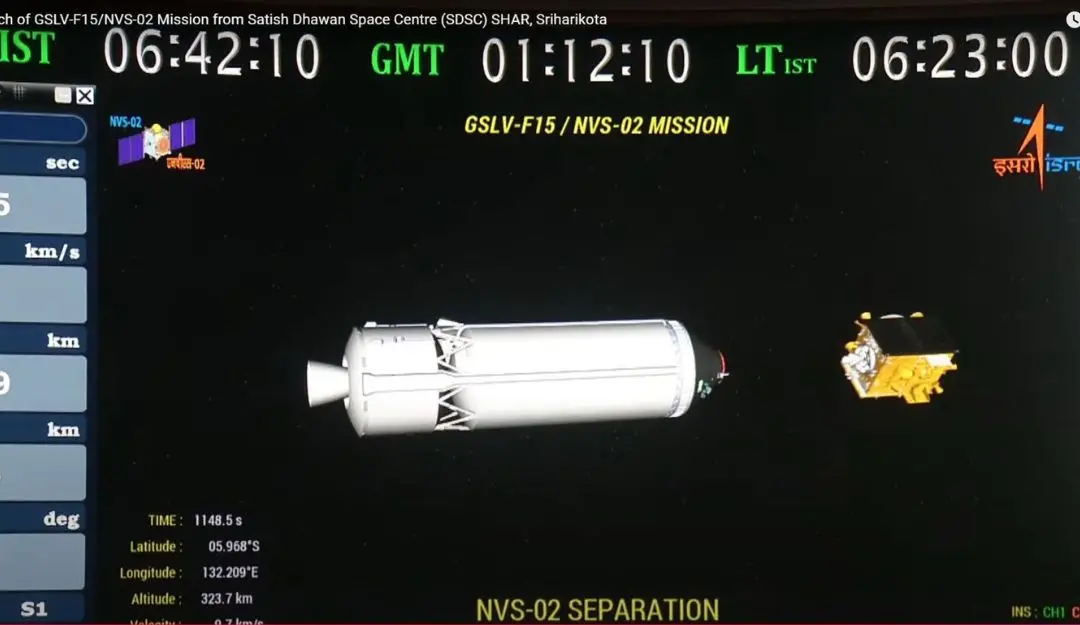
Sriharikota, Andhra Pradesh: The Indian Space Research Organisation (ISRO) has successfully completed its 100th launch from the Sriharikota spaceport with the liftoff of the GSLV-F15 rocket carrying the NVS-02 satellite. The launch took place at 6:23 AM on Monday, marking a significant achievement for India’s space programme.
The GSLV-F15 mission is the 17th flight of India’s Geosynchronous Satellite Launch Vehicle (GSLV) and the 11th flight featuring an indigenous Cryogenic stage. It is also the 8th operational flight using this indigenous Cryogenic technology. The GSLV-F15's payload fairing, a metallic version, has a diameter of 3.4 metres.
The rocket successfully placed the NVS-02 satellite into its designated Geosynchronous Transfer Orbit, as confirmed by ISRO in a statement.
Excited students witness historic launch
Several students were given the opportunity to witness the historic launch in person, sharing their excitement and pride in being part of the milestone event.
Teerth, a student from Gujarat, expressed his enthusiasm: “I came from my college to witness the 100th launch, I am really excited. ISRO is not only launching foreign satellites, but we are also generating income from it, so this is a really impressive step from the Indian government and ISRO."
Another student, Avinash from Bihar, said, “Really excited about it. We are here to witness the takeoff. All the best to the scientists and everyone else who worked on this. We have been trying for four years to witness this and finally got the chance.”
Boosting India’s Navigation System
The successful launch of the NVS-02 satellite also contributes to upgrading India’s Regional Navigation Satellite System (IRNSS), known as NavIC. Director of ISRO's Space Applications Centre (SAC), Nilesh Desai, explained the mission’s significance: “This will increase the number of satellites in our navigation constellation from 4 to 5, improving the overall accuracy of the positioning we get from these satellites."
NavIC, India’s regional navigation system, provides accurate Position, Velocity, and Timing (PVT) services not just within India, but also in a region extending 1,500 km beyond the Indian landmass. With the addition of the NVS-02 satellite, India now has five out of the seven satellites planned for the IRNSS constellation in space.
NavIC: Enhancing India’s positioning services
Desai further highlighted the importance of NavIC, which offers two types of services: Standard Positioning Service (SPS) and Restricted Service (RS). The SPS provides positioning accuracy of better than 20 metres and timing accuracy of better than 40 nanoseconds over the service area.
“This is the 5th in the series of operational NavIC satellites. Older satellites are being replaced by this new series,” Desai added.
The successful launch marks a major milestone for ISRO, reinforcing India's growing space capabilities. With the 100th launch now completed, ISRO continues to demonstrate its technological advancements and commitment to enhancing India’s presence in space exploration.
Agency