Is the India-US relationship facing its biggest crisis in 25 years?
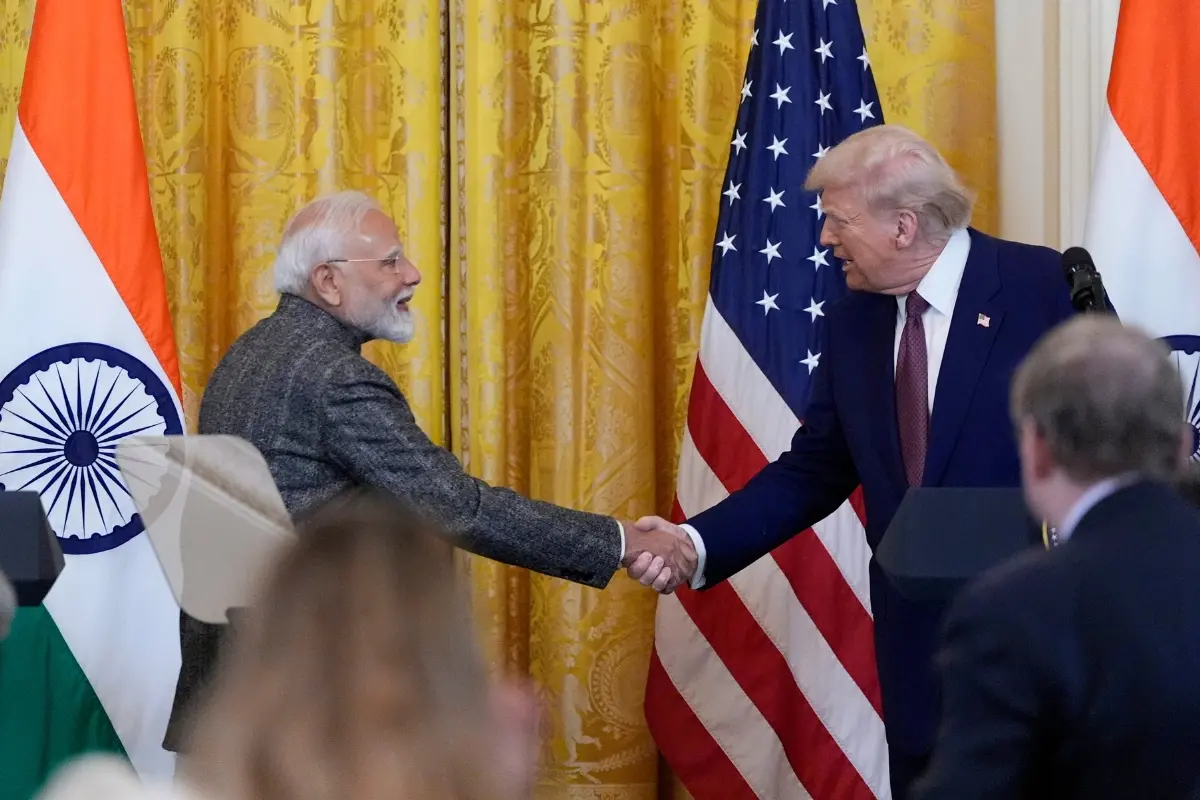
The India-US relationship, nurtured over the past 25 years through bipartisan efforts, now faces serious strain due to recent actions by US President Donald Trump, warns a report from the Carnegie Endowment for International Peace released Tuesday.
Trump’s recent threats to impose hefty tariffs on India, especially over its purchase of Russian oil, risk unravelling decades of diplomatic progress. In a post on his social media platform Truth Social, Trump declared, "India is not only buying massive amounts of Russian Oil, they are then, for much of the Oil purchased, selling it on the Open Market for big profits."
"They don’t care how many people in Ukraine are being killed by the Russian War Machine. Because of this, I will be substantially raising the Tariff paid by India to the USA."
The Carnegie report, authored by Evan Feigenbaum, asserts that India will likely view Trump’s tariff threats as "blunt coercion, gross interference in Indian foreign policy, impractical given India’s oil import needs, and a cynical effort to 'blame India' for the West’s (and Trump’s own) collective failure to get Moscow to stop its war on Ukraine."
Beyond oil, Trump has also threatened additional tariffs on India for its involvement in the BRICS alliance, which includes Brazil, China, Russia, South Africa, and others, a move analysts see as further coercion and meddling in India’s sovereign decisions.
The report highlights a growing contradiction between Trump’s “America First” agenda and Prime Minister Modi’s “Make in India” vision. Trump has openly criticised US companies manufacturing in India, pressuring them to relocate operations back to the US or face penalties.
Adding to New Delhi’s concerns is Trump’s meeting with Pakistan’s Army Chief General Asim Munir at the White House shortly after the deadly April 22 terrorist attack in Jammu and Kashmir. The US administration’s interest in jointly exploring Pakistan’s oil reserves, so soon after the attack, has alarmed Indian officials. The report notes:
"Trump’s fulsome praise for Islamabad and deal-making with Pakistan’s army and government now raises obvious concerns in New Delhi that this too has gone by the wayside. And these concerns have been amplified exponentially because Trump’s moves came within weeks of the April 22 terrorist attack that killed twenty-six Indian civilians in Pahalgam and led to a new outbreak of hostilities between the two countries."
The Carnegie report also points to a broader US trend under Trump of technonationalism, viewing technology sharing with foreign partners with suspicion and favouring keeping American tech domestic. This approach risks stalling co-innovation efforts that have been key to US-India collaboration.
For the first time in two decades, ties with the US have become a highly charged domestic political issue within India. Opposition parties, the media, and public opinion are urging the Indian government not to show weakness in the face of Trump’s aggressive stance.
The report concludes that contentious issues like H1B visas, offshoring, immigration, and technology sharing have become deeply partisan in the US, posing a significant challenge to the future of India-US relations. Overcoming domestic politics to maintain a strong bilateral partnership has been a key achievement since the early 2000s, but the recent developments cast a shadow over the next 20 years of ties. IANS