Independence Day 2024: 10 interesting facts about Red Fort
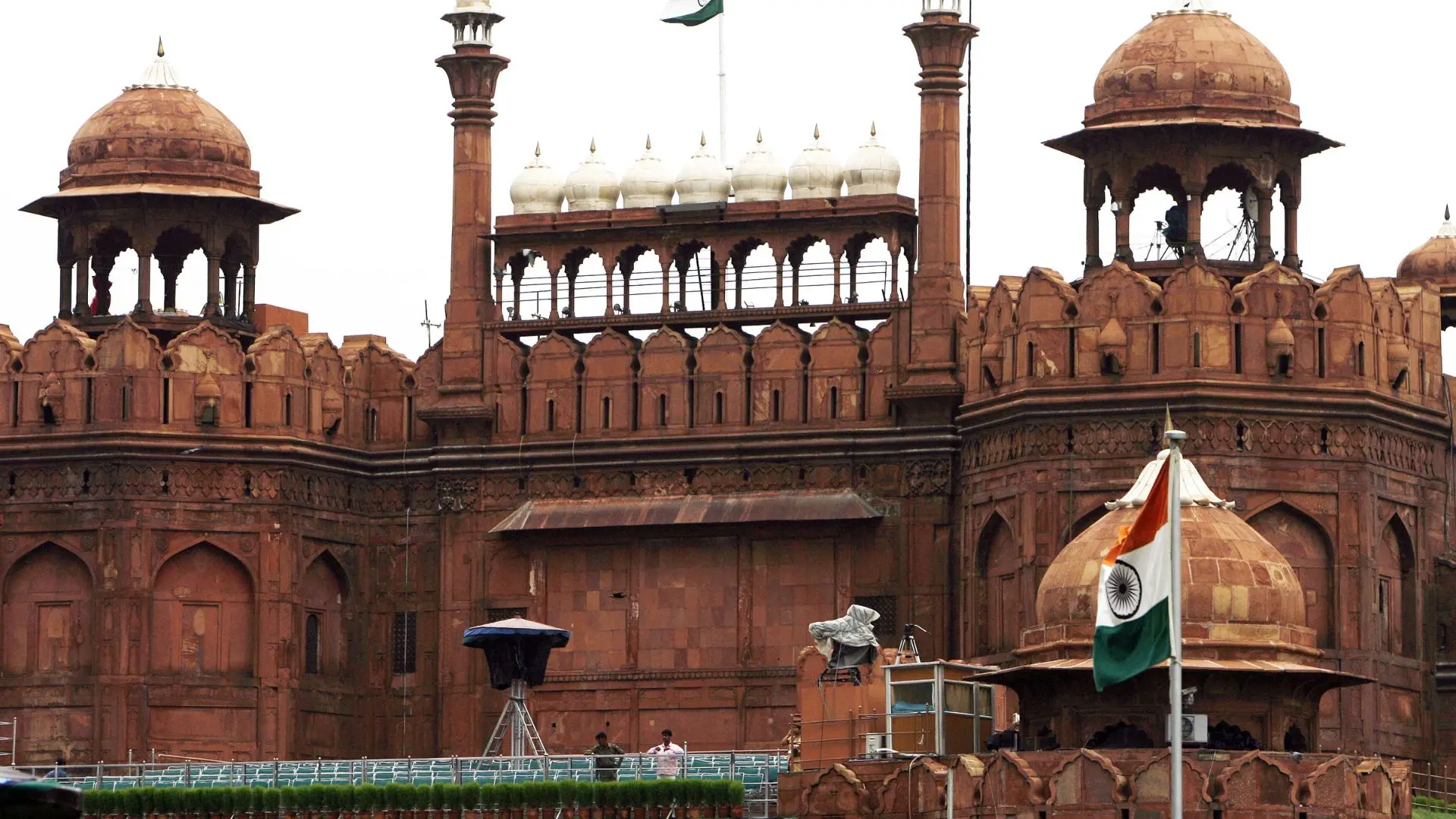
The monument of Red Fort (Lal Qila) in national capital Delhi has withstood the tides of time and the tryst with power. Every year, from the ramparts of the Red Fort, the Prime Minister of India shares his vision with over a billion Indians to take the country on the path of progress. Here are some facts that one must know about this iconic monument.
* The Red Fort Complex was constructed as the palace fort of Shahjahanabad, the then newly-established capital of the fifth Mughal Emperor, Shah Jahan.
* The monument derives its name from the imposing red sandstone walls that enclose it and is situated adjacent to the older Salimgarh Fort, built by Islam Shah Suri in 1546.
* The private apartments within the Red Fort comprise a series of pavilions connected by a continuous water channel, known as the Nahr-i-Behisht (Stream of Paradise).
* Each pavilion of the Red Fort showcases distinctive architectural elements characteristic of Mughal building, reflecting a harmonious fusion of Persian, Timurid, and Indian traditions.
* The Red Fort, situated on the west bank of the Yamuna River, features an octagonal plan with two longer sides facing east and west, and is accessible through four gates: Lahori, Delhi, Yamuna, and Salimgarh.
* The fort's perimeter, spanning 2.41 km, is surrounded by a moat connected to the Yamuna River. A bridge links the Red Fort to the Salimgarh Fort on the northern side.
* The Red Fort, which was tagged the world heritage site by the UNESCO in 2007, has fourteen gates.
* The Lahori Gate, a magnificent three-storeyed structure, serves as the main entrance and is preceded by a barbican added by Aurangzeb. The gate leads to a roofed passage, flanked by double-storeyed arcaded apartments known as Chhatta-Chowk, which houses shops.
* The Delhi Gate is adorned with two elephants, installed in 1903 by Lord Curzon, replacing the originals demolished by Aurangzeb.
* Following the British occupation of the Red Fort in 1857, many of the original buildings were demolished and replaced with military barracks and modern constructions. The barracks were used to detain Indian National Army heroes during their trial. In 1992, the Indian Army handed over the barracks and adjacent open areas to the Archaeological Survey of India. In 1995, the barracks were converted into the Indian National Army Memorial, showcasing photographs, badges, uniforms, and other artifacts.