43,000 tonnes of self-reliance: Key facts about India’s first home-built aircraft carrier INS Vikrant
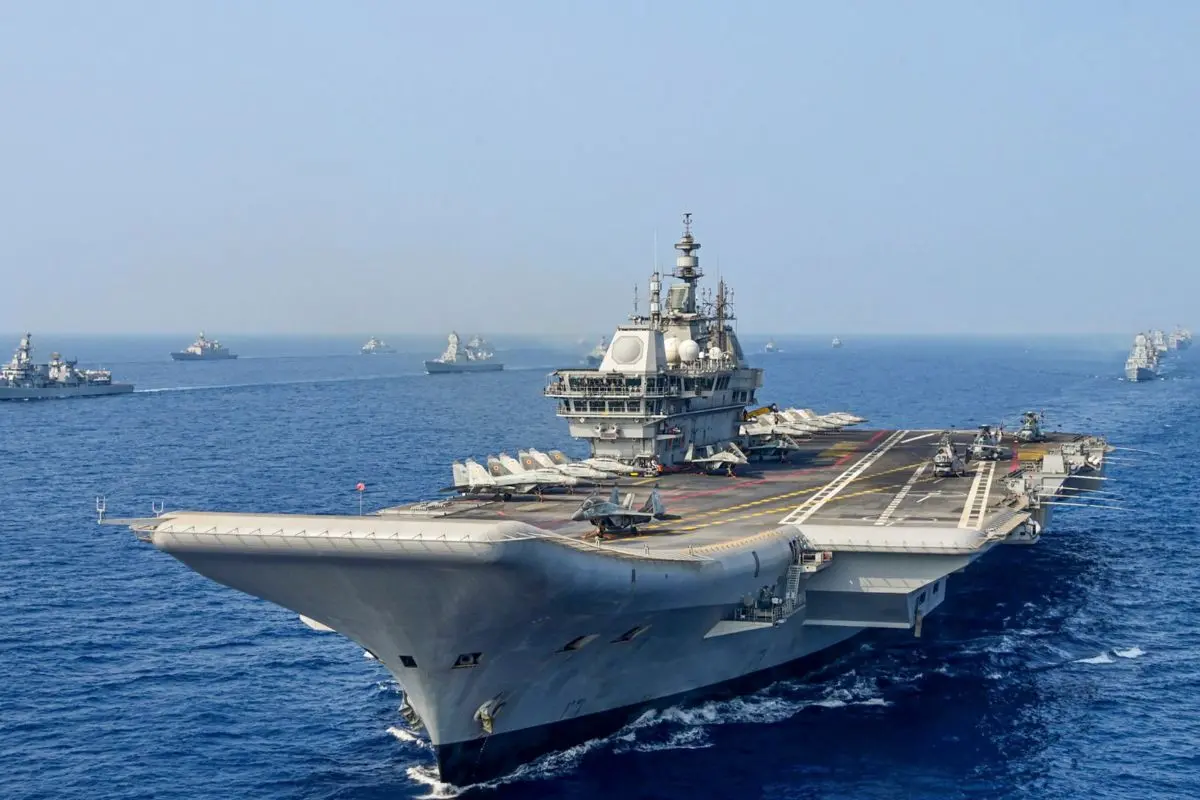
INS Vikrant is India’s first indigenous aircraft carrier, a symbol of the nation’s maritime strength and technological self-reliance. Designed by the Indian Navy’s Warship Design Bureau (WDB) and built by Cochin Shipyard Limited, it solidifies India’s position among a select group of nations capable of designing and constructing aircraft carriers domestically.
Key Facts About INS Vikrant
Commissioned on 2 September 2022, INS Vikrant is a 43,000-tonne warship measuring 262 meters in length and 62 meters in width. It can carry up to 30 aircraft, including MiG-29K fighter jets, Kamov helicopters, and drones. With a top speed of 28 knots (52 km/h), it operates with a crew of about 1,600 personnel, including female officers, and features advanced automation systems, a hospital complex, and over 8 kilometres of internal corridors.
Symbol of Atmanirbhar Bharat
Dubbed a “floating city,” Vikrant embodies India’s Atmanirbhar Bharat (self-reliant India) initiative. Nearly 76% of its components were sourced domestically, involving major Indian industrial players like BEL, BHEL, L&T, Kirloskar, GRSE, and Wartsila India, alongside over 100 MSMEs. The project, costing around ₹23,000 crore, faced design and budgetary challenges but represents a triumph of indigenous military engineering.
Historical and Strategic Significance
INS Vikrant was named in honour of India’s first aircraft carrier (R11), which played a key role during the 1971 Indo-Pak war, particularly in the blockade of East Pakistan (now Bangladesh). The new Vikrant enhances India’s naval capability alongside INS Vikramaditya, enabling dual-carrier operations for extended maritime reach and surveillance.
Recent Developments
On 20th October 2025, Prime Minister Narendra Modi celebrated Diwali with Navy personnel aboard INS Vikrant, commending its contribution during Operation Sindoor, which reportedly left “Pakistan sleepless” after its decisive role in retaliatory naval actions earlier that year.