Won't allow Sri Lanka territory to be used against India's interests, says President Disanayaka
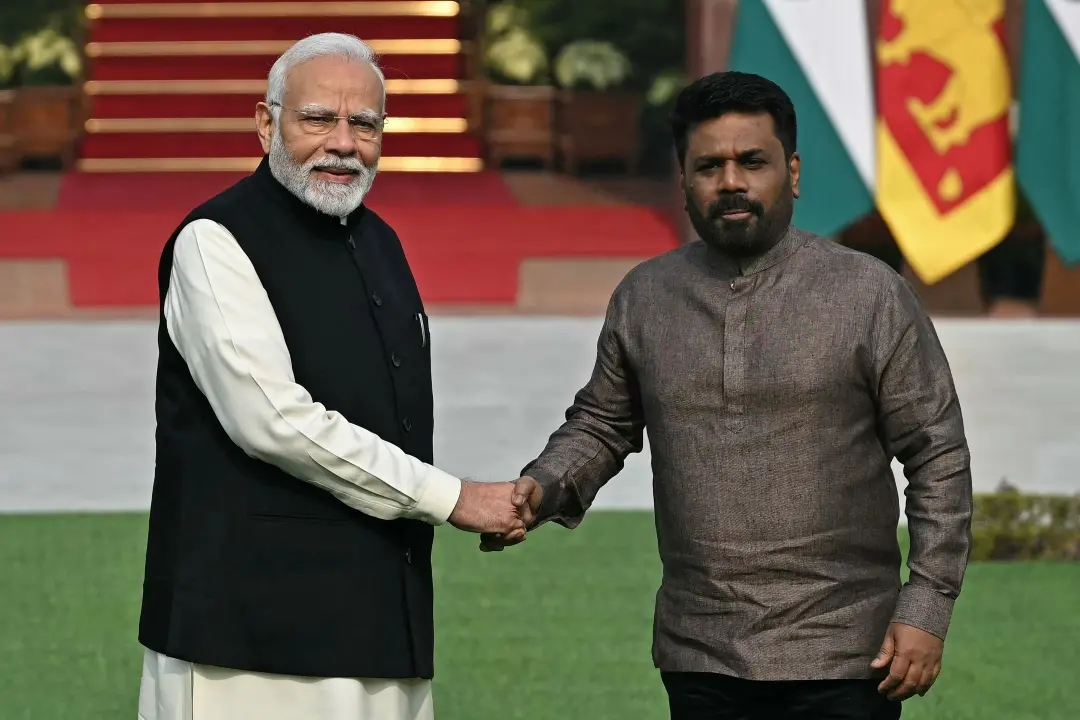
New Delhi: Sri Lankan President Anura Kumara Disanayaka, currently on a three-day visit to India, assured Prime Minister Narendra Modi on Monday that Sri Lanka’s soil will not be used against India’s interests. This assurance came amid growing concerns in India over China’s attempts to strengthen its influence in Sri Lanka. The two leaders held detailed discussions on various issues, including defence cooperation, energy ties, and economic recovery.
Security cooperation and energy ties
During their meeting, PM Modi and Disanayaka reached an agreement to expedite the finalisation of a defence cooperation agreement. Both leaders also agreed to boost energy ties by establishing electricity grid connectivity and multi-product petroleum pipelines.
Modi emphasised that both countries share interconnected security interests and expressed India’s continued support to Sri Lanka's economic recovery. India had extended significant financial aid to Sri Lanka during its economic crisis two years ago, amounting to USD 4 billion.
The leaders also discussed plans to improve physical, digital, and energy connectivity between the two nations. PM Modi announced that India and Sri Lanka would work towards launching a ferry service between Rameshwaram and Talaimannar, following the successful launch of the Nagapattinam-Kankesanthurai ferry service.
Commitment to Sri Lanka’s territorial integrity and Tamil aspirations
In his remarks, President Disanayaka reaffirmed Sri Lanka’s commitment to protecting its territorial integrity and sovereignty, while also promising that Sri Lanka will not allow its land to be used in ways that harm India’s security interests.
He said, “The cooperation with India will certainly flourish, and I want to reassure our continued support for India.”
Prime Minister Modi also spoke about the importance of fulfilling the aspirations of the Tamil people in Sri Lanka. He expressed hope that the Sri Lankan government would implement the 13th Amendment, which provides for the devolution of power to the Tamil community. The issue of provincial council elections and the full implementation of Sri Lanka’s constitution was also discussed.
Fishermen dispute and Sri Lanka’s economic stabilisation
The fishermen dispute between India and Sri Lanka also figured prominently in the talks. Both leaders agreed that a humanitarian approach should be adopted, and the use of force should be avoided in all circumstances.
Modi also reiterated India’s commitment to supporting Sri Lanka’s economic stabilisation efforts, with an emphasis on investment-based and grant-oriented assistance to reduce Sri Lanka's debt burden.
President Disanayaka expressed his gratitude towards India for its immense support during Sri Lanka's economic crisis. He thanked India for its "unparalleled and multi-pronged" assistance, including emergency financing and forex support worth USD 4 billion. He also appreciated India’s help in the ongoing debt restructuring process.
PTI