India slams China over ‘fictitious’ renaming of places, says Arunachal always ours
New Delhi: India on Sunday strongly rejected China’s move to assign “fictitious names” to places in Indian territory, asserting that such actions cannot alter the reality of its sovereignty, including over Arunachal Pradesh.
The reaction came in response to Beijing announcing Chinese names for several places in Arunachal Pradesh.
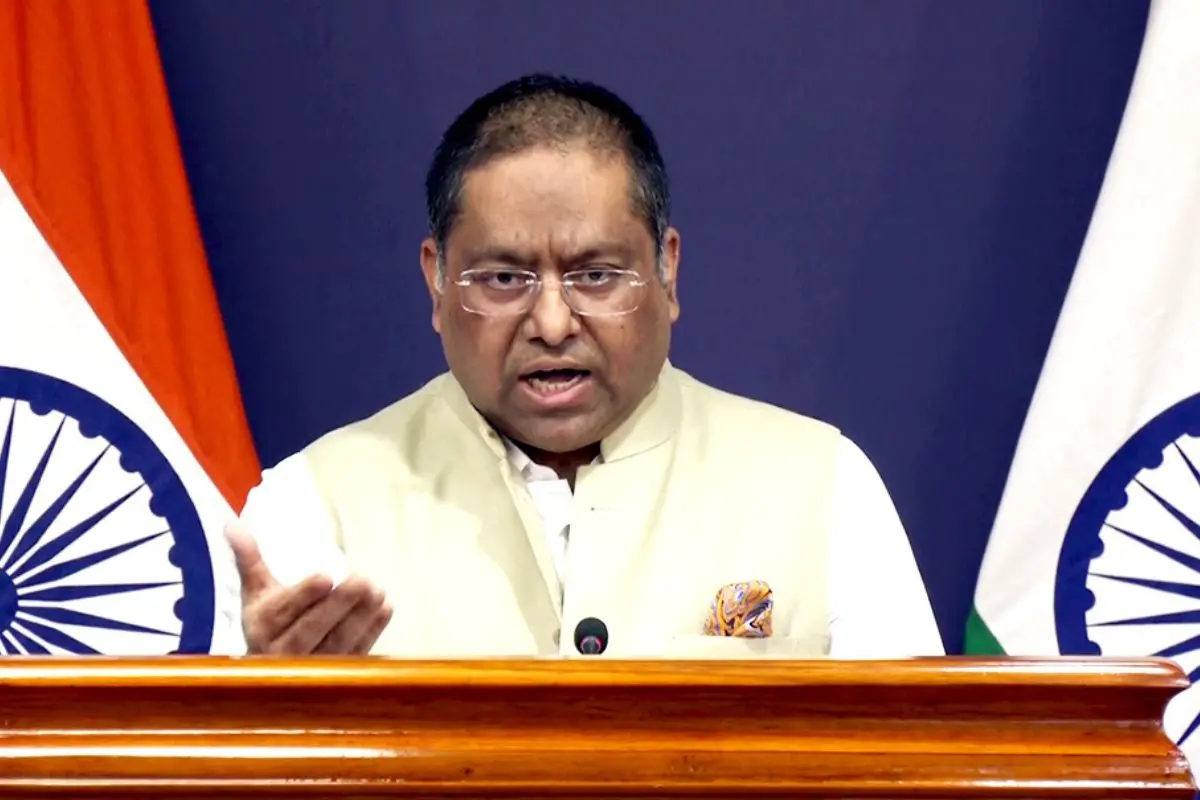
Responding to media queries, External Affairs Ministry spokesperson Randhir Jaiswal said, “India categorically rejects any mischievous attempts by the Chinese side to assign fictitious names to places which form part of the territory of India.
Such attempts by China at introducing false claims and manufacturing baseless narratives cannot alter the undeniable reality that these places and territories, including Arunachal Pradesh, were, are, and will always remain an integral and inalienable part of India.
These actions by the Chinese side detract from ongoing efforts to stabilise and normalise India-China bilateral ties. China should refrain from actions which inject negativity into relations and undermine efforts to create better understanding.”
The statement comes amid continuing tensions between India and China over boundary issues, particularly along the Line of Actual Control (LAC).
In a related development, China has reportedly established a new county named Cenling in its Xinjiang region, close to the borders with Pakistan-occupied Kashmir and Afghanistan, near the strategic Wakhan Corridor.
The move is seen as part of efforts to enhance security in the sensitive region and curb infiltration of Uyghur separatist militants. The new county lies near the Karakoram range and will be administered by Kashgar prefecture, according to reports.
Cenling is the third such administrative unit created by China in Xinjiang in just over a year. Earlier, India had lodged a protest over the creation of Hean and Hekang counties, noting that parts of their jurisdiction fall within its Union Territory of Ladakh.
Hean reportedly includes parts of the disputed Aksai Chin plateau, an area under Chinese control since the 1962 war but claimed by India as part of Ladakh.
India has consistently maintained that such unilateral actions by China have no legal standing and do not change the ground realities along the disputed border.