What Trump tariffs mean for India’s steel industry
Bengaluru: The recent announcement by US President Donald Trump to impose 25 percent tariffs on steel imports has sparked mixed reactions in India’s steel industry. While some businesses in India stand to benefit from the influx of cheaper steel, the country’s steelmakers are concerned about the long-term impact on both the industry and the environment.
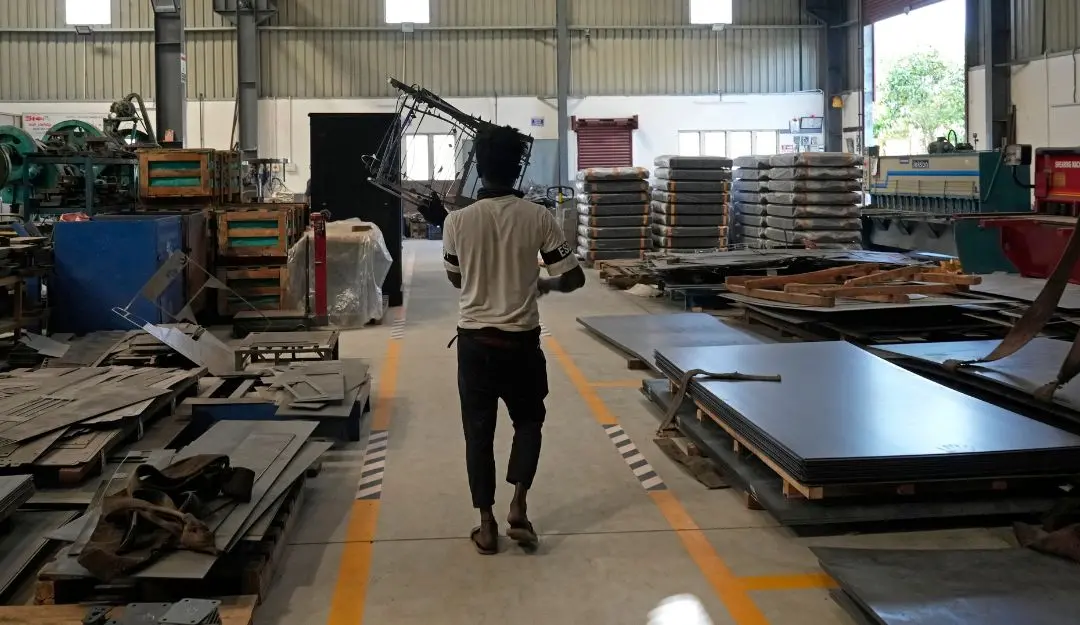
In Bengaluru, small factories churn out steel products ranging from car parts to kitchen appliances, and many workers and industry experts expect that the tariffs will lead to steel being “dumped” in India. As exporting steel to the US becomes costlier for countries like China and South Korea, they may shift their surplus steel to markets like India.
B Praveen, who runs Sun Techpro Engineering, a company that manufactures steel products, explained that his business could see “wafer-thin” profit margins improve as steel prices drop. “For thousands of companies like mine, this can be a good thing,” he said.
Concerns of steel dumping, increased competition
However, not all Indian steel industry players share this optimism. Naveen Jindal, president of the Indian Steel Association, has expressed concerns over the risk of India becoming a target for steel dumping, given that it is one of the few major markets without trade restrictions. He fears that cheap imports could undercut local steel producers and harm efforts to transition to cleaner steel production methods.
India is one of the world’s fastest-growing economies, and demand for steel is increasing rapidly due to urbanisation and industrial growth. The Indian government has set ambitious targets for steel production, aiming to increase output from 120 million tonnes to 300 million tonnes within the next five years.
Environmental impact of increased steel production
One major concern is the environmental impact of ramping up steel production. Steel manufacturing is a significant source of greenhouse gas emissions, contributing up to 12 percent of India’s total emissions. With the country’s steel production set to rise, experts warn that this share could double in the next five years unless the sector adopts cleaner production methods.
Currently, most Indian steelmakers still use coal-based blast furnaces, which are highly polluting. While the government has pledged to invest USD 1.72 billion to help the sector transition to cleaner practices, analysts note that many new expansion plans focus on coal-based production.
Henna Khadeeja, a research analyst at Global Energy Monitor, pointed out that “the strategy is mostly to retroactively decarbonize the steel once the capacity is built in place,” meaning cleaner production may not happen immediately.
Challenges in competing globally
In addition to the environmental impact, India’s heavy reliance on coal-based steelmaking may make it harder for the country to compete in the international market, especially as Europe introduces its Carbon Border Adjustment Mechanism (CBAM). This tax will apply to carbon-intensive products, including steel, imported into Europe starting next year. Countries like China, with less carbon-intensive steel production, are better positioned to avoid this tax, while India’s coal-based steel could struggle to attract buyers.
Easwaran Narassimhan of the Sustainable Futures Collective in New Delhi explained that this would likely hinder India’s ability to export steel to Europe. “China’s steel production is less emissions-intensive, which means it’s going to face a lesser impact from European carbon taxes,” he said.
India’s ambitious climate goals
Despite these challenges, India has set ambitious climate goals, including generating 500 gigawatts of clean power by 2030 and achieving net-zero emissions by 2070. The country is already making strides in solar power, having recently crossed 100 gigawatts of installed capacity, mostly in the last decade.
However, Indian steelmakers are wary of the costs involved in decarbonising their industry. Prabodh Acharya, the chief sustainability officer at JSW Group, one of India’s largest steel companies, emphasised the need to balance growth, economy, and environmental goals. “If you're not financially viable, you cannot exist as a business,” he said.
Agency